


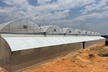
With the world's population likely to increase by nearly another billion people over the next two decades and incomes rising, total food consumption will likely rise by 50-70% by 2050. However, the percentage of people who work in agriculture around the world has decreased by 18% in the last three decades. Therefore, technological intervention is required. Greenhouse farming refers to the practice of growing crops in controlled environments, such as using transparent material to admit natural light for plant growth. This practice provides better product quality and higher input efficiencies of water, nutrients, and crop protection agents compared to outdoor cultivation. Zordi integrates AI and robotics into its operations, reducing labor requirements by up to 80% and autonomously making critical crop care decisions. The company also provides the juiciest strawberries in NYC. In the most recent episode of Women Who Build, they speak with the founder of Zordi, Gilwoo Lee. Gilwoo is a computer scientist with expertise in machine learning and robotics. In the past, she has worked at Facebook, Dreamworks, and Michigan Venture Capital.
Related Articles → See More
-

San Diego farm grows mushrooms on one gallon of water per pound
-

Examining the ways that dry fog humidification aids growers
-

"We can produce more cheaply and consistently without the need to use energy for light or heat"
-
A new temporary immersion bioreactor system in plant propagation
-
Aquaponics Lab launched at Holmdel High School
-
Texas A&M AgriLife modernizes greenhouses to support innovative plant science
-

Scaling Quebec herb production through advanced greenhouse management
-

U.S. vertically grown strawberries launch in Ontario retail
-
Hydrogen-rich irrigation systems shows promise for greenhouse crop performance
-
“We avoid supplying equipment that cannot be fixed locally”