

There's a new crop knocking on the door of European agriculture, and if you haven't heard of it yet, it is the Jack Bean (Canavalia ensiformis). The crop is nearing its debut, with both growers and researchers waiting for the results anxiously. According to Willem Kemmers, if current research continues to yield positive results, there could be demand in Europe for 1,000 to 2,000 hectares of Jack Beans within the next three to five years.
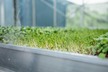
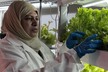
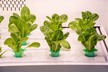
One of the six trial sites currently testing this promising plant is Sustainable Indoor Farming in Bergen op Zoom. Here, the Jack Bean is being grown in a closed cultivation environment, using substrate-based systems. The goal is to gather detailed crop data under fully controlled conditions, focusing on key factors such as light settings, irrigation strategies, and fertilization schedules.
 © Annet Breure | VerticalFarmDaily.com
From greenhouse to medical application
Beyond its agronomic potential, researchers are also taking a close look at the biochemical compounds found in the Jack Bean, with a special focus on its protein fractions. One of the key substances being studied is the enzyme urease, which plays a role in the regeneration process of dialysis fluid, something that is particularly relevant to a technological innovation being developed by Nextkidney, a company working on a less burdensome form of kidney dialysis.
While the current trials mainly focus on understanding the plant's agronomic traits, yield, and the biochemical profile of its seeds, a separate analysis is running in parallel to examine the plant's active compounds. Although there is no direct link to clinical applications at this stage, the outcomes of this first research phase may provide valuable input for follow-up studies. These would explore scalability, consistency of biochemical content, and potential for industrial processing.
Cultivation under Dutch conditions
The Jack Bean is a leguminous plant naturally found in tropical and subtropical regions. As part of the current trials, researchers are exploring how the crop performs under Dutch greenhouse conditions. Special attention is being paid to how the plant responds to light, how flowering can be managed, and how to balance generative and vegetative growth.
The initial results from these studies will help shape the next steps in developing the Jack Bean as a new crop for Europe, with large-scale potential, particularly in the medical sector.
 For more information:
Willem Kemmers
Sustainable Indoor Farming
Tel.: +31 (0)6 2944 7560
[email protected]
www.sustainableindoorfarming.nl