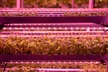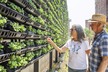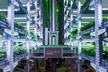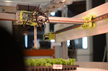


As the specialized division of Spain's ACOM Agrocomponentes, ACOM Lab has spent decades designing and building advanced infrastructure that supports scientific inquiry, from precision-controlled greenhouses to containment labs and climate chambers.
"At ACOM Lab, we create scientific instruments while constructing buildings," explains the technical team. "Each facility is engineered as a tool that enables repeatable, reliable experiments in complex agricultural and environmental domains."
 © ACOM Lab
Precision infrastructures for scientific discovery
ACOM Lab specializes in custom-made research infrastructures where environmental parameters such as temperature, light, CO₂ levels, humidity, and airflow can be adjusted with high accuracy. These systems are integrated with smart automation, IoT-enabled sensors, data acquisition platforms, and biosecurity protocols, allowing researchers to run experiments under highly controlled and reproducible conditions.
With over 25 years of experience dedicated specifically to scientific research facilities, and more than three decades in agricultural technology, ACOM Lab has become a trusted partner for universities, experimental stations, and national research institutes across Spain and abroad.
"Our strength lies in combining structural engineering, environmental control, and digital integration into one seamless system. We work closely with scientists to design adaptable infrastructures that meet very specific and often demanding experimental requirements."
These environments range from climate chambers for plant growth studies, to BSL-2 containment greenhouses for plant pathology, to urban rooftop greenhouses where limited space calls for compact yet sophisticated systems.
 © ACOM Lab
Clean energy in research facilities
Energy efficiency is a fundamental principle in all ACOM Lab projects. In recent years, the division has increasingly incorporated renewable energy systems, energy storage solutions, and intelligent control strategies into its designs.
"Sustainability is no longer optional, but becoming an operational imperative," the technical team explains. "We focus on reducing the environmental footprint of research infrastructures without compromising performance or reliability."
The clearest example of this commitment is the zero-emissions research greenhouse at the University of Murcia — the first of its kind in Spain. This facility integrates a closed-loop system that includes photovoltaic solar panels, an electrolyzer, a metal hydride-based hydrogen storage tank, and a fuel cell that powers the internal climate controls. Designed and built by ACOM Lab, it serves as both a functional laboratory and a pioneering demonstration of energy-autonomous, off-grid research environments.
"This project proves that advanced climate control systems can be powered entirely by clean energy. It's a milestone in integrating sustainability with high-performance scientific infrastructure."
 © ACOM
Joining collaboration with technical adaptability
One of ACOM Lab's defining characteristics is its collaborative project approach. Every facility is developed in close consultation with the research teams who will use it. This ensures that technical specifications, biological safety standards, and experimental needs are all addressed from the outset.
"Our clients are experts in plant science, environmental research, and biotechnology, and we listen closely to them," the technical team affirms. "We tailor everything from structural layout to sensor positioning so that their experiments can run smoothly and yield valid, actionable data."
Flexibility is key, especially when designing for projects that require multiple climate zones, biological containment, or advanced automation for continuous, unattended operation. ACOM Lab delivers solutions that evolve with the scientific objectives of its clients.
 © ACOM
Selected projects across Spain
ACOM Lab's portfolio includes some of the most advanced research infrastructures in Spain. These include BSL-2 containment greenhouses at CSIC Córdoba, supporting cutting-edge plant pathology and biotechnology research; a rooftop greenhouse installation on an urban university campus, optimized for space efficiency and climate control; walk-in growth chambers at IRTA in Catalonia, providing ultra-precise environments for controlled experimentation; and a climate greenhouse for cereal crop research at Aula Dei – CSIC in Zaragoza.
"What unites these projects is not the type of structure, but the engineering challenge behind them," the technical team states. "We design with purpose, for science."
 © ACOM
Responding to a changing research landscape
Demand is rising for research infrastructures that support energy independence, digital integration, and climate resilience. "The scientific sector is evolving, and infrastructure must evolve with it," the technical team says. "Whether it's integrating AI-driven climate controls or reducing energy consumption through smart systems, our goal is to give researchers full control and full confidence in their environments."
"Through engineering, automation, and environmental control, we provide the physical and digital tools that help researchers move from hypothesis to results faster, more accurately, and with less variability."
For more information:
ACOM © ACOM
Tomás Albaladejo
[email protected]
www.acom.es