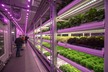

Students at Watson Chapel Junior High School in Pine Bluff recently enjoyed a lunch of catfish they raised themselves, according to Dr. Karleah Harris, associate professor for the University of Arkansas at Pine Bluff (UAPB) Department of Human Sciences. The youth grew the catfish in the school's aquaponics system in which plants and fish are raised together in a recirculating water system.
"The students were joined by Watson Chapel's teachers, staff and administrators as they harvested, cooked and eventually ate delicious, sustainably raised fish," Dr. Harris said. "The event highlighted how working with the aquaponics system has been a powerful, hands-on experience for the students and their teachers."
Khrista Henson, a student at Watson Chapel Junior High, said harvesting fish in her school was a unique and memorable experience.
"I had never done anything like this before – it was a fun, creative and interactive experience," she said. "This was a great way for me and the rest of my classmates to learn about aquaculture, explore plant life and also have fun while doing it. Many schools do not have projects like this, and it was an honor for our school to be chosen specifically to grow catfish and plants together."
Dr. Harris supervised the aquaponics project alongside Kailash Bohara, UAPB Extension specialist of fish health. Funded by the U.S. Department of Agriculture National Institute of Food and Agriculture (USDA-NIFA), the initiative is a hands-on opportunity for students to learn and take action against food insecurity and food deserts. It also teaches students principles of scientific observation, sustainability, hygiene, food preparation and nutrition.
 © University of Arkansas at Pine Buff
Dr. Harris said this activity was the first time many of the students had the chance to grow, harvest and prepare their own food. They now have skills and experience they can share with their families to support healthier eating habits at home.
"I enjoyed seeing their reactions as they harvested the channel catfish – some were initially hesitant, some were excited, but all were engaged," Dr. Harris said. "It made me realize how meaningful and memorable this experience was for them."
Jeremy Vincent, principal for Watson Chapel Junior High School, said the UAPB Department of Human Sciences' programming has been an incredible addition to his school, offering students hands-on learning in sustainable agriculture and aquaculture. He considers the harvest of the school's first batch of fish a significant milestone.
"We are incredibly thankful to UAPB for allowing this program to be a part of our school," he said. "It is an invaluable resource that enriches our curriculum and provides our students with unique, real-world experiences that will undoubtedly benefit them for years to come. We look forward to many more successful harvests and continued collaboration with the university."
Patricia Jones, a teacher for the school, said the project stimulated great interaction with and among the students.
"Their scientific questions and comments were on point throughout the project," she said. "The students enjoyed eating the fish, and they also said it didn't taste too 'fishy.' The only downside they reported was that they wanted even more catfish to eat."
Shyia Ellingburg, a UAPB student of human sciences, said this project is important considering the local children who live in food deserts are unfamiliar with the importance of eating fresh and healthy foods.
"Many children we encounter have no idea where most foods come from or that they can produce their own food – this project can help change that," she said. "Dr. Harris is instrumental in creating and providing spaces and activities essential to cognitive and social development. Making real-life connections with positive stimulating environments are extremely important for child development. Watching the children light up when those connections are made through our work is immeasurable."
Dr. Marilyn Bailey, interim chair for the UAPB Department of Human Sciences, said the project can serve as a model for other schools and organizations who would like to effect change and strengthen local food systems.
"Dr. Karleah Harris is phenomenal in her approach to equipping children with the skills and tools needed to improve their food environment while fostering community engagement," she said.
This project is supported by the USDA National Institute of Food and Agriculture (Award Number: 2021-38821-34712).