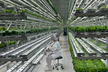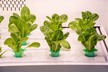


This study evaluated the qualitative and quantitative performance of lettuce (cv. Romana) grown using different cultivation systems under Mediterranean greenhouse conditions equipped with photoluminescent glass panels.
Five systems were compared: outdoor soil (PSO), indoor soil (PSI), aeroponic (A), hydroponic with inorganic nutrients (HSN), and hydroponic with organic nutrients (HSO). Morphological, physiological, and quality parameters were measured alongside solar irradiance and extended PAR. The results showed that aeroponics significantly outperformed other systems in fresh weight (52.7 g), photosynthetic pigments, and carotenoids, while HSO showed the lowest yield and quality. Although PSO had the highest antioxidant activity and phenolic content, it exhibited poor yield due to lower water use efficiency and light-induced stress. The PCA analysis highlighted distinct groupings among systems, with A linked to yield and pigment concentration, and PSO associated with antioxidant traits. Despite a 44.8% reduction in solar radiation inside the greenhouse, soilless systems—especially aeroponics—proved effective for maintaining high productivity and quality.
These findings support the integration of soilless systems and photoluminescent technologies as sustainable strategies for high-efficiency lettuce production in controlled environments.
Impallomeni, Gabriella & Lupini, Antonio & Sorgonà, Agostino & Gattuso, Antonio & Barreca, Francesco. (2025). The Qualitative and Quantitative Relationship of Lettuce Grown in Soilless Systems in a Mediterranean Greenhouse. International Journal of Plant Biology.
Source: Research Gate