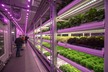

Climate change and population increase are becoming a threat to human feeding. New technologies and practices are under development, and a significant effort is being put into developing indoor farming, which allows for all-year-round production of high-quality food, regardless of the climate.
Moreover, indoor farming promises extreme water and chemical usage reduction, specifically when the system is autonomously regulated with an IoT architecture. Despite these attractive characteristics, indoor systems require considerable energy to provide adequate temperature and lighting for cultivated crops. This demand is often high enough to make the production system economically unsustainable. This work aims to develop a cultivation protocol for baby lettuce plants (up to three weeks old plants) that can increase overall productivity while mitigating the issue of high energy demand. To this aim, researchers performed a Design of Experiment to assess crop responses to different levels of nutrients, temperature, and light intensity with the productivity of the system and the quality of the harvested product. The collected data were used to design a dynamic cultivation protocol, which defines different growing conditions according to the plant development stage. Results demonstrate that the dynamic protocol can enhance system productivity by up to 25 % in biomass accumulation, compared with the productivity obtained with fixed growing conditions, while maintaining the same high quality.
Furthermore, the improvement is achieved without increasing the resource use, confirming the potential of this approach to enhance the economic sustainability of indoor soilless farming.
Grasso, N., Fasciolo, B., Bruno, G., & Chiabert, P. (2025). Development of a dynamic protocol for improving the productivity of soilless farming systems. Smart Agricultural Technology, 12, 101264. https://doi.org/10.1016/j.atech.2025.101264
Source: Science Direct