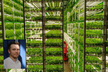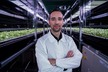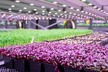


"Red light stimulates the plant's growth and ensures strong leaves. Blue light enhances the flavor," says Laura van de Kreeke of Growy, as she shows visitors around the vertical farm she founded with her father, Ard. We peer into a container-like structure where rows of small plants grow, stacked on top of each other, as far as the eye can see. A mixed lettuce, in this case, is bathed in red and blue light at a constant 24 degrees Celsius.
On the outskirts of Amsterdam, in a drab building that looks more like a parking garage than a farm, Growy grows vegetables in 48 of these "cells." "We now supply leafy greens and microgreens (flavorful leaves and flowers used by chefs as garnishes, ed.) to a few hundred restaurants," says Van de Kreeke. "And we're in about 25 supermarkets, at the same price as comparable produce from the fields or greenhouses."
Growy now has around forty employees and is a rare success story in a sector that has taken a severe hit. After a period in which low interest rates caused investment money to plummet, the market collapsed completely. Between 2022 and 2023, investments in vertical farms fell by 91 percent, and companies valued at millions went bankrupt.
Read more at Change.Inc