

Dill has long been a favorite herb in kitchens around the world, but it is also one of the most efficient crops to grow in a tower farm. Vertical farming with aeroponic towers allows growers to produce dill year-round, in high density, with minimal space and resources. With the right varieties and growing methods, dill can become one of the most profitable herbs for any vertical farming operation.
 © Agrotonomy
Choosing the right dill variety for aeroponic towers:
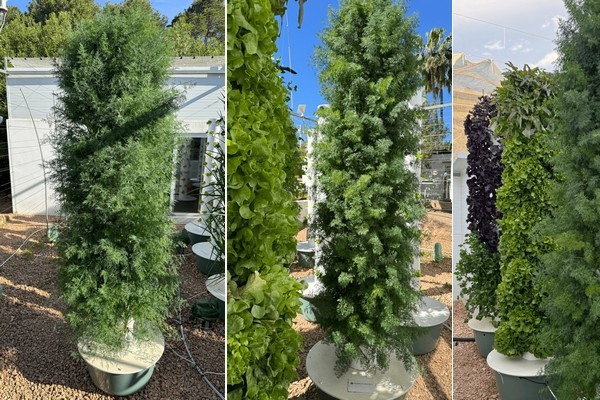
Not all dill cultivars are suited to vertical farming. Traditional dill varieties often reach 1 to 1.5 meters (3 to 5 feet) in height, making them impractical for tower farms. Tall plants create shading, reduce airflow, and complicate harvesting in a stacked, vertical system.
This is why compact and dwarf varieties are essential. Cultivars such as Teddy, Thalia, and certain dwarf strains remain short, ranging from 20 to 50 centimeters (8 to 20 inches). Their bushy, compact growth makes them ideal for aeroponic towers, where space efficiency and even light distribution are key. These varieties thrive in tower farms and ensure uniform production without the challenges of overgrowth.
Planting density in a tower farm:
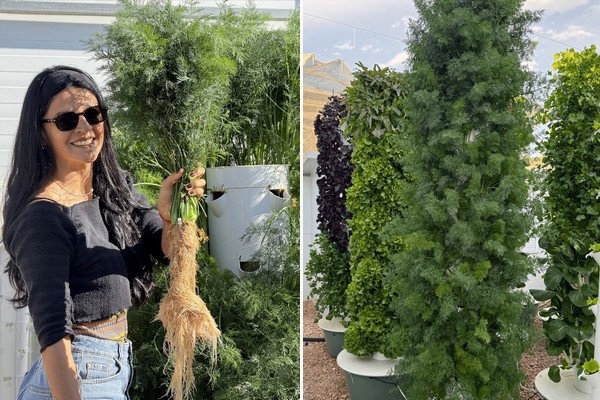
For aeroponic dill cultivation, sowing five seeds per port provides the best balance of plant density and airflow. Once transplanted into the tower, seedlings take about six weeks to reach maturity. In a well-managed tower farm, dill can be harvested continuously, either through cut-and-come-again harvesting or by collecting full bunches at once.
Because vertical farming with aeroponic towers provides constant access to nutrients and oxygenated water, dill grows steadily without seasonal interruptions. This consistency makes it a dependable crop for both commercial tower farms and smaller-scale vertical growers.
 © Agrotonomy
Fresh and dried dill from vertical farming with aeroponic towers:
Fresh dill has a high market demand but a short shelf life. One of the advantages of aeroponic production is that dill can be harvested on demand, ensuring buyers receive fresh bunches at peak quality.
Dill can also be dried, which concentrates its aroma and flavor while extending its shelf life. Dried dill is considered a premium product, often sold at higher value in the retail and food service sectors. Tower farms can capture this market by processing part of their harvest into dried herbs, creating a versatile product line. Freezing dill is another option for long-term storage, particularly for restaurants and distributors who require year-round availability.
Efficiency of aeroponic dill cultivation:
Each dill plant requires only a few cents' worth of nutrients, while the energy cost per tower is about six dollars per month. Because aeroponic towers recycle water, usage remains minimal. These low inputs make dill one of the most efficient crops for tower farms and highlight the sustainability of vertical farming with aeroponic towers.
Dill as a profitable crop in tower farms:
Compact growth, rapid cycles, low operating costs, and multiple market outlets make dill a standout herb for tower farms. When grown in aeroponic towers, dill is not only efficient but also highly adaptable, thriving in both small urban vertical farms and large-scale commercial operations.
Check here for a video on Instagram.
For more information:
Agrotonomy.com
https://agrotonomy.com