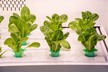


Hydroponic wheat seedlings—produced by cultivating wheat seeds in water for seven days—represent a sustainable feed resource for modern livestock farming. Rich in nutrients and bioactive compounds, this innovative fodder exhibits excellent palatability and digestibility, potentially enhancing livestock productivity.
This study evaluated the effects of replacing part of the basal diet with hydroponic wheat seedlings (HWS) on ruminal fermentation, bacterial diversity, slaughter performance, and meat quality in finishing Hu sheep. The experiment followed a completely randomized design with fifty healthy 4-month-old Hu ram lambs (27.93 ± 2.16 kg) randomly allocated to five dietary treatments: a control group (CON) fed a basal diet and four experimental groups in which 5%, 10%, 15%, and 20% of the basal diet (dry matter basis) was replaced with HWS (denoted as T5, T10, T15, and T20, respectively). The experiment lasted for 70 days. Days 1-10 were the adaptation period, days 11-70 were the test period. Rumen fluid analysis revealed increased ammonia nitrogen (NH3-N) concentrations in HWS groups, particularly at 10%, 15%, and 20% (P<0.01). Dominant bacterial phyla included Bacteroidetes and Firmicutes, with Prevotella and Succiniclasticum being the most abundant genera. HWS supplementation significantly increased live weight before slaughter and carcass weight (P<0.01), with T15 and T20 exhibiting larger eyes muscle area (P<0.01). Slaughter profits were higher in all HWS groups, peaking in T15. Meat quality analysis showed decreased water loss rate in T10 and T15 (P<0.05), while cooked meat percentage increased across all HWS groups (P<0.01). Inosine monophosphate content decreased in T20 (P<0.05).
Heptadecanoic acid (C17:0) content varied among HWS groups (P<0.05). In conclusion, a 15% HWS inclusion optimized ruminal fermentation, microbial composition, and longissimus dorsi quality, affording the highest cost effectiveness for Hu sheep.
Tuo, Y., Li, J., Amat, G., Cheng, Z., Hou, L., Zang, C., & Guo, T. (2025). Effects of dietary supplementation with hydroponic wheat seedlings on rumen fermentation, meat quality, amino acid and fatty acid contents, and rumen bacterial diversity in sheep. Frontiers in Microbiology, 16. https://doi.org/10.3389/fmicb.2025.1657777
Source: Frontiers In