
Climate change has accelerated the degradation of agricultural land, prompting innovation to develop and adapt current global production systems to accommodate more people with increased demand for resources.
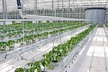
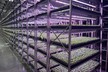
Novel technologies such as vertical farming offer an opportunity to secure climate-resilient food production. This study used Life Cycle Assessment to examine how the environmental impact of lettuce production in a commercial vertical farm compares with traditional field farming based on two contrasting UK farms and a Spanish farm. The vertical farm was found to have higher emissions in all impact categories except for water use; however, when using renewable energy sources, vertical farming was found to have higher, yet more comparable greenhouse gas emissions to field farming (0.93 kg CO2eq kg−1 lettuce (VF), 0.58 kg CO2eq kg−1 lettuce (UK 1 + 2)). Energy use (electricity or diesel), the choice of substrate, and soil emissions were the biggest hotspots for lettuce production in this study.
Yields per area in vertical farming systems, however, were much higher than the field farming scenarios (97.3 kg m−2 (VF), 3.3 kg m−2 (average of field farms)), and the land sparing potential of vertical farming systems offers an opportunity to use spared land to potentially reap other environmental benefits while securing food production.
Gargaro, M., Hastings, A., Murphy, R. J., & Harris, Z. M. (2025). A comparative LCA of field grown lettuce versus vertically farmed lettuce. Frontiers in Environmental Science, first published online August 21, 2025. https://doi.org/10.1002/fes3.70117
Source: Wiley Online Library