

"The United States is the world's No. 1 exporter of agriculture because of its large land. By the way, the Netherlands is the world's second-largest exporter of agriculture. How is it possible when it is only 1.4 times larger than the area of Gyeongsang-do in Korea?"
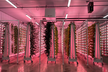
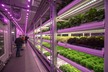
Park Dae-sung, CEO of SP Agri, recently met with a reporter and asked such a "sudden question." Then, a map of Google satellites was immediately posted to show the large-scale cultivated land in the Netherlands in real time. Crops that were growing over the smart farm that filled the huge area could be seen. On the other hand, people were rarely seen.
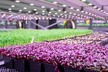
"It is possible as a result of autonomous control of the greenhouse environment based on advanced ICT technology and actively introducing AI (artificial intelligence) systems," CEO Park said. "Compared to the size of Korean farms of around 1,000 pyeong, the average area of 60,000 pyeong is enormous, but as a result of achieving both 'scale' and 'high-tech' at the same time, the Netherlands stands tall as the world's second-largest agricultural exporter."
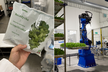
CEO Park, who believes that the "second Netherlands" can be built on tens of millions of pyeong of reclaimed land on the west coast of Korea, recently succeeded in producing premium strawberries that can be tasted throughout the four seasons. This is thanks to the cutting-edge and scale of agriculture, such as AI-based cultivation and robot farming. Through him, we have heard in detail about the cases of overcoming problems such as climate risks and labor shortages faced by Korean agriculture with technology.
Read more at Maeil Business Newspaper