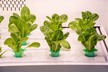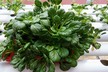


Radish microgreens contain (poly)phenols, whose fate after gastrointestinal digestion remains largely unknown. This study investigated the in vitro digestion and colonic fermentation of two radish microgreen (Raphanus sativus L.) cultivars, Daikon and Red Rambo, grown under different lights in vertical farming, exploring how cultivar and light influence (poly)phenol catabolism. After digestion, most (poly)phenols remained in the residual fraction, which was subjected to microbial fermentation, resulting in a large set of catabolites. Cultivar differences outweighed the effects of light treatments, as Red Rambo retained twice the (poly)phenols of Daikon, influencing fermentation outcomes. 4′-Hydroxy-3′,5′-dimethoxycinnamoyl malate and sinapoyl choline dominated both cultivars, while flavonoids and anthocyanins in Red Rambo contributed with further complexity.
Microbiota-derived catabolites included low molecular weight compounds such as 3-(3′,4′-dihydroxyphenyl)propanoic and 3-(4′-hydroxy-3′-methoxyphenyl)propanoic acids, along with 4′-hydroxy-3′,5′-dimethoxycinnamic, 4′-hydroxy-3′-methoxycinnamic, 4′-hydroxycinnamic, and 3-(4′-hydroxyphenyl)propanoic acids. Hypothesised catabolic pathways were outlined, with 4′-hydroxy-3′,5′-dimethoxycinnamoyl malate and sinapoyl choline microbial catabolism being outlined for the first time.
Silva, M., Rinaldi de Alvarenga, J. F., Sánchez-Martínez, L., Mena, P., Del Rio, D., Viegas, O., Faria, M. A., Bresciani, L., & Ferreira, I. M.P.L.V.O. (2025). Digestion and gut microbiota catabolism of (poly)phenols from radish microgreens grown under different lights. Food Chemistry. https://doi.org/10.1016/j.foodchem.2025.146521
Source: Science Direct