
In the Saramacca district, among green fields and sunlit greenhouses, Bhiesnoe Gopal and his wife Madhevi have been running the cultivation and export company Gopex since 1998. With about 80 acres of land, partly open-air, partly under plastic, they grow a wide range of fruits and vegetables. Their produce is in demand locally but also reaches Europe by air freight, where the Surinamese diaspora in particular appreciates the familiar flavors.
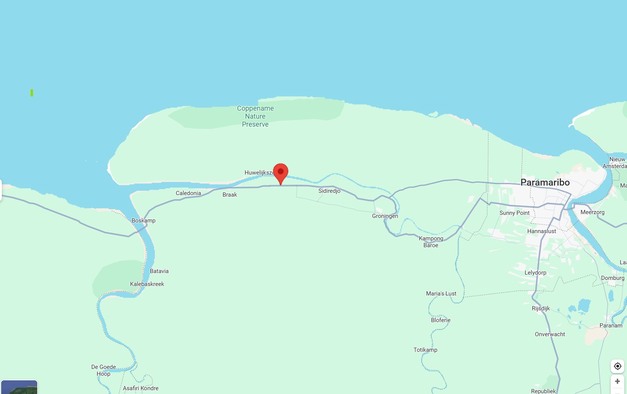 © Google mapsGopex is located 1 hour from Paramaribo
The crop list at Gopex reads like an exotic menu: Cobra tomatoes and sweet potatoes of all colors, cassava, anthroewa, okra, yardlong bean, papaya, and, of course, the spicy Madame Jeanette. "We try to grow a wide range," says Bhiesnoe. "Some crops, like okra or yardlong bean, we can harvest year-round. Others, like mango or knippa, are clearly seasonal."
 © Pieter Boekhout | VerticalFarmDaily.com
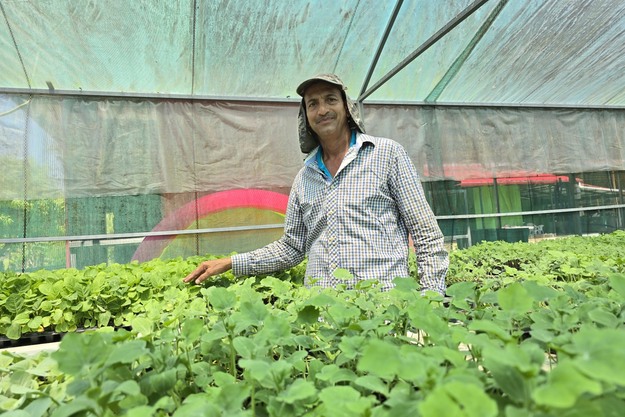
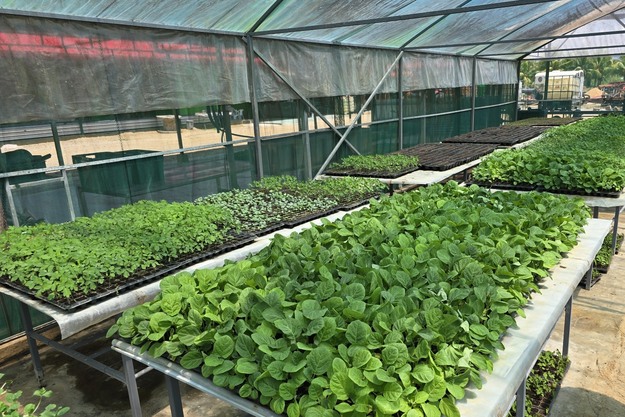
Bhiesnoe Gopal among the nursery plants
Some crops require special care. "If you shade the tayer leaf too much, you get mostly long stems and few leaves. So in the greenhouse, we have to be clever with the shade net. After many years, we now also know better how to build our greenhouses, because wind and rain can be quite a blast here."
 © Pieter Boekhout | VerticalFarmDaily.com
All plants are grown in-house
Plenty of water, but the economy is working against it
With an abundance of river water, irrigation is not a problem. Yet there are other concerns, such as the weak SRD. "Fifteen years ago, you could exchange 1 dollar for 2.70 SRD, three years ago for 25 SRD, and currently even for 38 SRD. Imports—and that is the bulk of inputs, from seeds to fertilizers—are becoming increasingly expensive. Then again, the positive flip side is that currency devaluation stimulates exports," says the grower and exporter. Workers' wages remain relatively stable. "A worker earns about SRD 1,000 a day, which is about USD 26. We can handle that; it's the input costs that are increasingly weighing on margins."
 © Pieter Boekhout | VerticalFarmDaily.com
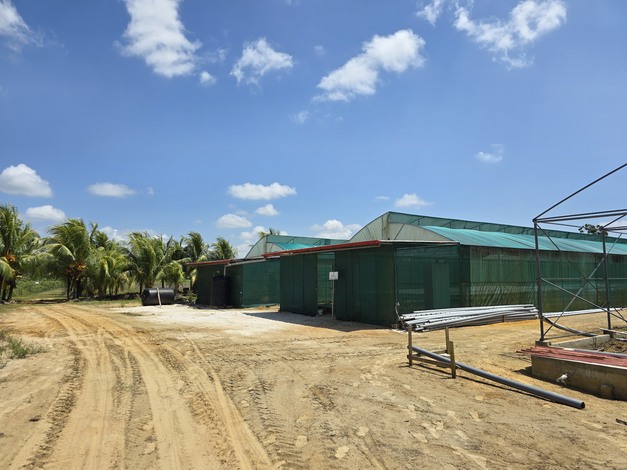
Lettuce greenhouses
From greenhouse to cargo: Fresh exports with hurdles
For now, fresh vegetable exports are only possible via air freight. "We ship mainly to the Netherlands," says Madhevi. "And from there, some of our produce also goes to Germany or the UK, wherever Surinamese people live." Daily flights leave with KLM and SLM, although there is stiff competition for cargo space. "Packages and fish are also exported by cargo," Bhiesnoe explains.
 © Pieter Boekhout | VerticalFarmDaily.com
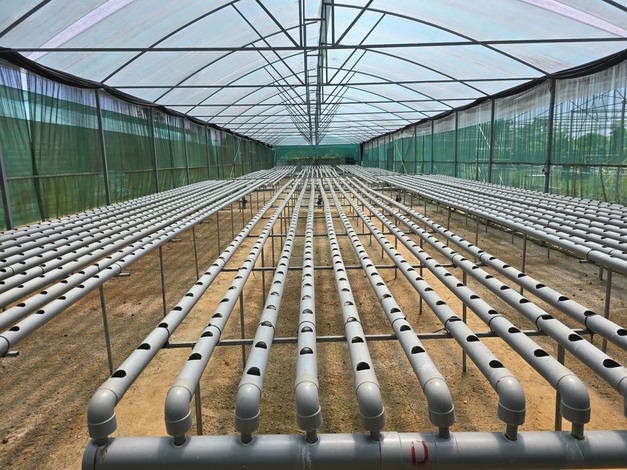
Currently empty. Gopex grows lettuce for a fast food chain and the catering industry
The costs are not low: "Around $2 per kilo FOB, excluding customs clearance and inspection." And then there is pest and disease control, as well as compliance with MRLs, the maximum residue limits of plant protection products.
 © Pieter Boekhout | VerticalFarmDaily.com
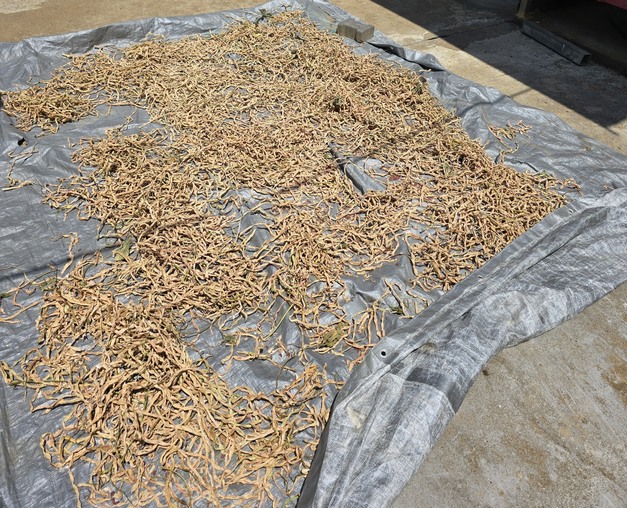
Long beans lie out to dry. Seeds are extracted from the dried vegetables for the next harvest.
Not every island is equally interested
Gopex used to supply Curaçao and Barbados as well. But those markets have fallen away. "They are very protective of their own growers there. And I understand that," says Bhiesnoe. "But if the demand is not consistent, I cannot plan my cultivation. And the ABC islands are not very fond of our typical Surinamese vegetables."
 © Pieter Boekhout | VerticalFarmDaily.com
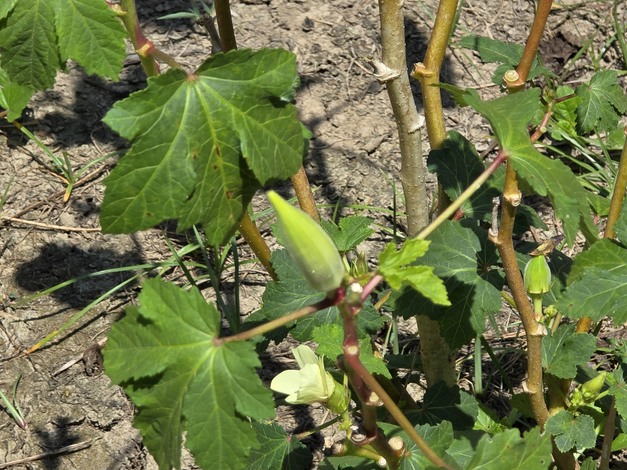
This is how okra grows on the bush
In the local market, fast-food chain KFC is a major buyer. "We deliver twice a week," says Madhevi. "They have high demands, just like the export market. Everything has to be to US standards. Just the other day, we had to take out additional and expensive liability insurance." Delivering to KFC also comes with a lot of paperwork, but Bhiesnoe sees it positively: "It is a reliable customer and their network is still growing in Suriname."
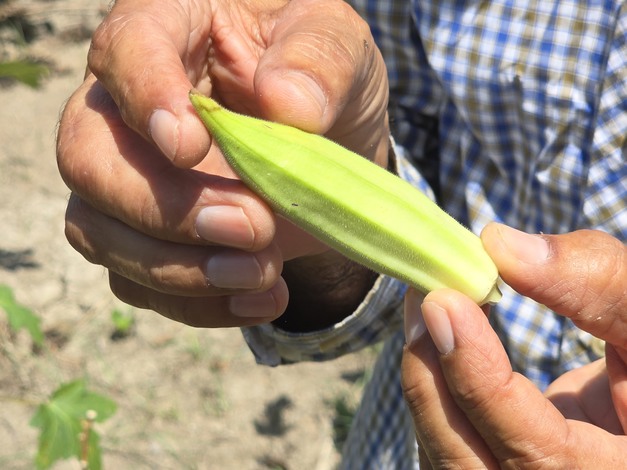 © Pieter Boekhout | VerticalFarmDaily.comFreshly harvested okra
Export potential remains underused
Of the 15 tons of fruits and vegetables that Gopex harvests every week, only 3 tons currently go to export. "That could be much more," Bhies argues. "But then there has to be more cooperation between Surinamese agencies and, for example, the NVWA in the Netherlands. The feeling is that the Netherlands is more generous with its efforts than our own institutions, while of the two economies, the Surinamese obviously benefits most from intensifying trade."
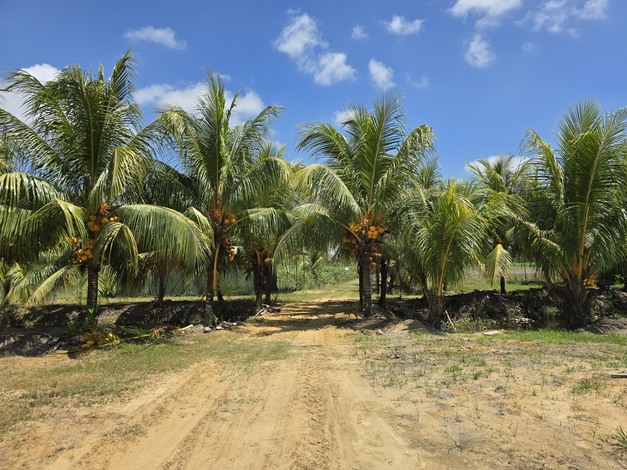 © Pieter Boekhout | VerticalFarmDaily.comPalms behind the greenhouses and office. Behind them is the large-scale cultivation of okra, among others.
Moreover, Gopex would like to share its knowledge with other growers, but notes that there is little structural support there either. "The government should play a role in this," Bhiesnoe believes. "We can achieve more through partnerships and training."
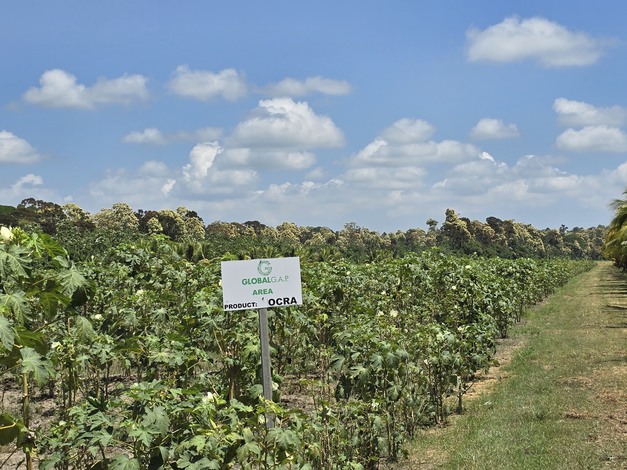 © Pieter Boekhout | VerticalFarmDaily.comOkra is grown according to GlobalGAP certification
Okra
One of the top export products is okra. "It is very popular in the Netherlands, Germany, and the UK," says Bhies. "Did you know that the brown crust on some fast-food burgers contains okra powder? We grow that vegetable on 20 hectares. That's quite a lot. To plant 10 hectares, eight of us spend a whole week. That's why we are now looking for ways to do it mechanically." The seeds come from Africa via the Netherlands, harvesting starts after just two months, and continues for up to nine months after planting.
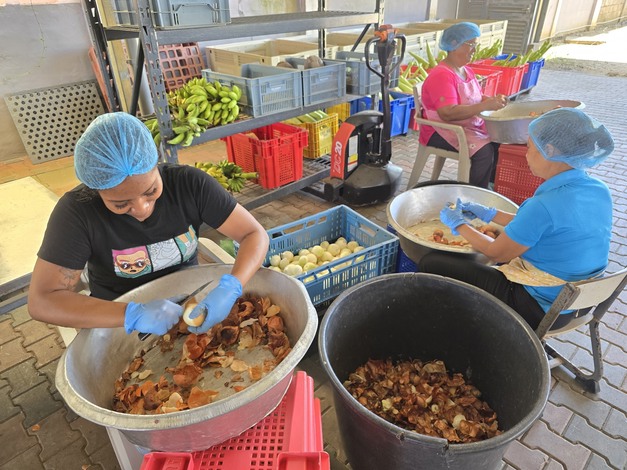 © Pieter Boekhout | VerticalFarmDaily.comGopex also supplies ready-made products. Women peel onions here
Currently, the lion's share of Gopex's exports ends up on the shelves of tokos in the Netherlands via three regular customers. To supply larger retailers as well, the company is currently working on a GlobalGAP certification process. "That opens a lot of doors," says Madhevi. "Supermarkets are asking for that."
 © Pieter Boekhout | VerticalFarmDaily.com
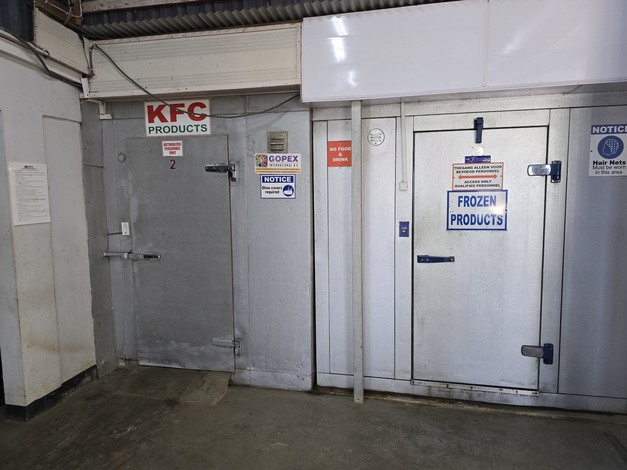
Own cold stores and freezers
Investing in innovation and processing
Not only are fresh exports on the agenda. Gopex is working on a freezing installation for IQF (Individually Quick Frozen). "With this, we can extend shelf life and reduce dependence on air freight," Madhevi explains. "But marketing will start locally, to get the teething problems out."
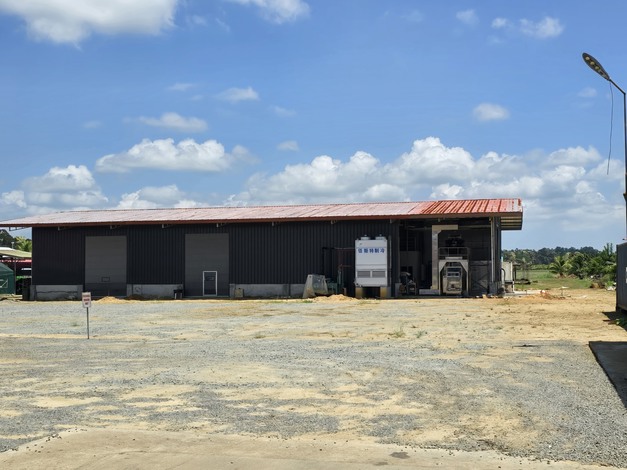 © Pieter Boekhout | VerticalFarmDaily.comA frozen vegetable factory is being built on the site. It will open in the not-too-distant future
Products such as pumpkin, yardlong bean, cassava, and sweet potatoes, available in five colors at Gopex, lend themselves well to IQF export. There will be freezer space with a capacity for four tons. "And solar panels, because the machines consume a lot of power," he says.
After all, fresh exports remain fragile. There is no refrigeration available at the airport. "If a flight is delayed, I pick up my produce and put it back in my own refrigerator," says Bhiesnoe.
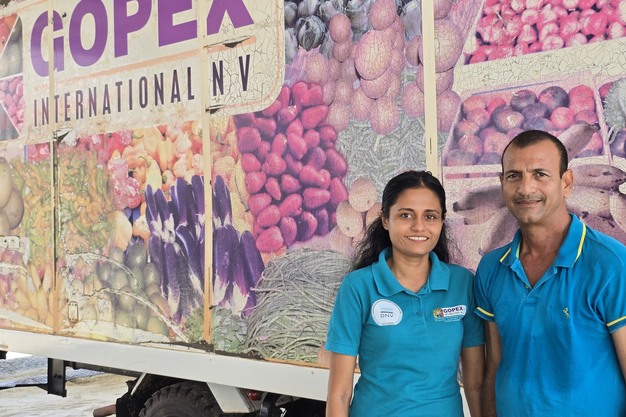 © Pieter Boekhout | VerticalFarmDaily.comOwners Madhevi and Bhiesnoe Gopal
Despite the challenges, demand for Surinamese vegetables continues to grow. "Sopropo has not been allowed to be exported since 2019, but there are bright spots. We now have the green light for Thai eggplant, forest cucumber, and sweet antroewa. From the Netherlands, there will always be demand for fresh Surinamese fruits and vegetables."
For more information:  © Pieter Boekhout | VerticalFarmDaily.com
Bhiesnoepersad Gopal
Gopex International NV
Catharina Sophia BR 550
Calcutta Saramacca km 58.5
Suriname
Tel: +597 873-6865/8717479
Email:[email protected]