

Dutch tomato grower Lans has embraced AI-driven smart pest monitoring with Trap-Eye™ to transform pest scouting across seven sites. Lans is supported in this by the Dutch cooperative Harvest House U.A. The automated system has replaced manual sticky trap monitoring, improved data accuracy, and enabled faster, more cost-effective pest control decisions across the company's 88-hectare estate.
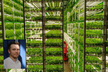
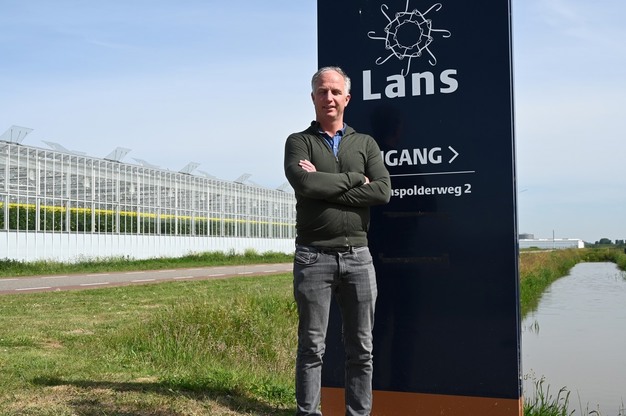
"Trap-Eye gives us fast, reliable insights into insect activity without the need for manual sticky trap counting. By showing clear trends in pest populations, it helps us to make quicker and more informed decisions – and stay ahead of potential outbreaks. This smart technology is now an essential part of how we manage crop protection across all our sites." - Vincent van der Lans, Director of Cultivation & Energy at Lans
Lans is a family-owned tomato grower in the Netherlands, operating 88 hectares across seven locations, including Westland, Dinteloord, and Rilland. With 60 hectares under LED (artificial) light, Lans cultivates a diverse range of premium tomato varieties. Founded in 1976, the company is known for its commitment to innovation and quality production, always seeking smarter and more sustainable solutions to maintain its market leadership.
The challenges: Fewer crop protection products and fewer workers
New regulations have reduced the availability of chemical crop protection products, and the approval process for new green products is lengthy, making it more important than ever for growers to detect and respond to pest problems quickly. This means crops must be monitored frequently, and the location and type of any pest outbreaks pinpointed with precision.
At the same time, there are fewer skilled workers available to carry out manual scouting tasks. The situation is particularly challenging for growers like Lans, which cultivate crops year-round across a large area.
There is a growing need for integrated pest management (IPM) solutions that use cost-effective, reliable and less labour-intensive monitoring systems.
 © BIOBEST
Introducing Trap-Eye as an automated IPM solution
Lans adopted Trap-Eye, Biobest's AI-powered scouting solution developed in collaboration with PATS, to improve its pest monitoring quality and efficiency and better safeguard its premium crops.
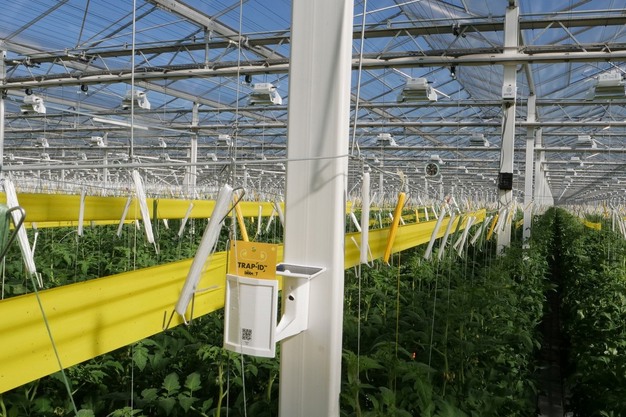
Trap-Eye uses small, fixed solar-powered cameras to automatically capture images of sticky traps placed throughout greenhouse crops, with at least 40 devices deployed per hectare. These images are analyzed by Trap-Eye's advanced AI technology to identify and count insects. Growers can access the results through a cloud-based dashboard on any device.
The data allows early identification of insect population trends, supporting timely interventions. For example, growers can track changes in whitefly populations—a major pest for tomato crops. Trap-Eye also monitors beneficial insects, such as Macrolophus pygmaeus, providing growers with comprehensive information about the insect population dynamic.
Lans initially trialed Trap-Eye on a single hectare to evaluate its effectiveness in tomato crops. As results proved consistent and reliable, it was decided to expand the use of the system greenhouse by greenhouse. Today, Trap-Eye is used across all seven locations, providing the grower with full visibility into pest and beneficial insect activity.
 © BIOBESTVincent van der Lans
Installation and daily use of Trap-Eye
Lans had the confidence to scale up use of Trap-Eye across its entire estate because of the system's reliability and (cost)-effectiveness.
The system was easy to install thanks to its magnetic plug-and-play set-up. It is also simple to use. Most IPM tools still require manual photography of traps, which demands time-consuming walks through crops. In contrast, Trap-Eye operates fully automatically. Its standardized photographs deliver, objective data. This automated process eliminates the need for manual counting of the sticky trap by the grower.
Transitioning from decades of manual trap counts to a digital system required a shift in mindset by the Lans team, but staff fully adapted to Trap-Eye within a year.
Today, Lans uses the dashboard once a week to review pest developments. Its team relies on trend data and intuitive heatmaps to detect problem areas early and make its pest control decisions.
Delivering results and continuous improvement
Trap-Eye has since delivered significant value to Lans by automating time-consuming manual tasks and enabling better-informed decision-making processes. Even with just one count per week, the system helps detect changes in insect populations early enough for the team to act quickly.
A key advantage is that Lans no longer depends on subjective interpretations of trap counts. With AI-powered analysis and digital images, pest pressure is tracked uniformly and objectively, making it easier to compare data across time and locations.
Another benefit is that Trap-Eye continues to evolve. Biobest is continuously enhancing the AI system and dashboard functionality, including expanding its ability to detect less common pest and beneficial species.
Lans has fully integrated Trap-Eye into its IPM program across all growing locations. The system has saved time, reduced labor needs, and improved pest monitoring consistency. Most importantly, it has enabled faster, more confident decisions based on clear, visual data. Trap-Eye has proven to be a scalable, user-friendly solution for Lans, resulting in a reduction in pest pressure and improved crop quality.