

Effective biosecurity ultimately makes production more resilient. This is ever more pressing in a world increasingly vulnerable to bio-threats due to environmental challenges, water scarcity, changing legislation on chemical use and effectiveness of chemicals in response to new pathogens, amongst other factors. These issues make secure growing environments critical for growers wanting to run a safe, profitable operation. After all, healthy plants are more resilient to pests and disease, and prevention is better than cure.
Vertical farming technology and closed-loop systems make it easier to implement coherent biosecurity measures. At IGS, we do this by combining automation, modular design principles, closed-loop technology, and enabling end-to-end traceability across the growing environment. These measures allow our customers to easily integrate our technology into their Hazard and Critical Control Point (HACCP) management processes. They can grow plants with control, predictability, and the confidence that they are not going to lose out on higher yields due to a pest or disease outbreak.
Design, processes, and an approach that prioritises preventative measures are all equally important factors here, combining coherent concepts with the best horticultural practices to put biosecurity front and centre.
Implementing good building hygiene through modular design
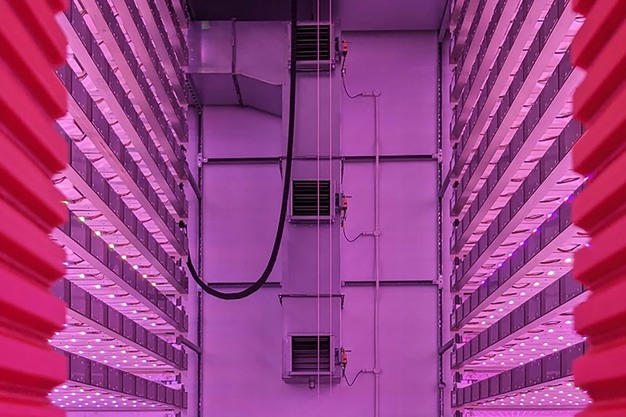
Modularity (the physical and operational segregation of growing zones) is one of the most important ways we can make growing environments more biosecure. Our vertical farming technology is made up of Growth Towers, which take fully removable Growth Trays with Lights (GTLs) in vertically stacked layers to grow crops. These make up individually separated growing zones which work to isolate crops, significantly reducing the scale of risk in the event of an outbreak of pests or disease.
Modularity offers two clear advantages, those being control (each Growth Tower and its individual environment can be independently managed and maintained) and containment ( the unlikely event of any contamination, it can be confined to one area without affecting the entire system).
Containing any outbreaks is obviously critical, but fully controlling a plant's environment also reduces the risk of an outbreak in the first place by limiting opportunity. By combining this approach with strategic sampling points, growers can detect and act on any potential outbreaks.
The ability to remove GTLs from the system means that operators can clean the main areas prone to contamination on every growth cycle. As the electronics and LEDs are hosted on the GTL, long term maintenance is simplified and human interaction in the production area is significantly reduced.
Modular technology is pivotal here, working to compartmentalise risk and make growers more resilient in the process.
Automatically controlling and monitoring the growing environment
There's a lot that our hardware does for biosecurity, and the same can be said for the software which helps to bring it to life. Our software can provide real-time updates on crop health through ML and AI-led features, giving operators a clear pulse on plant health and the peace of mind that the biosecurity measures in place are working properly. This is a practical demonstration of how software can underpin modular systems, providing accountability and transparency across everyday operations and removing humans from the production environment.
Built to integrate with Manufacturing Execution Systems (MES), our software provides traceability by recording a detailed log of events within each Growth Tower and ensuring each plant is given the best conditions for growth. This information is shared with the customer's systems, ensuring good plant health and regulatory compliance, but above all, consumer safety.
End-to-end traceability is particularly important when working across different stages of a plant's lifecycle (such as bringing in the initial seeds, or harvesting and packaging).
Closed-loop airflow and how it creates a cleaner, safer environment
A closed-loop system is a mainstay in creating a biosecure growing environment. An airlock entry system, combined with a positive pressure system with HEPA air filtration, maintains this capability for the production area, significantly reducing the interaction with external air and ensuring the air remains clean and pathogen-free. Each Growth Tower utilises its own independent closed-loop HVAC system, allowing the air to be recirculated and cleansed within one specific growing area. This works to enable high volume air conditioning for superior climate control, UV air treatment, to sterilise airborne pathogens on every pass, positive air pressure at every level throughout the Growth Towers to prevent contamination between GTLs, and no air movement between modules.
 © Intelligent Growth Solutions (IGS)
These factors combine to create clean and isolated airflows inhospitable to pests and diseases. Our hardware mirrors this approach across various facets to enhance biosecurity, most notably through nutrient delivery and fertigation.
Closed-loop nutrient delivery and streamlining variables
Just like the air in each growing zone is segregated, so too is the nutrient delivery. Each Growth Tower uses its own fertigation system (which also allows us to monitor and manage the process more effectively by knowing exactly what goes into every plant) to deliver nutrients and irrigation to crops. These systems have mechanical filtration to ensure the in-built UV treatment is effective, and all returning wastewater is treated before returning to the holding tanks and the holding tanks are continuously circulated to ensure the solution is treated effectively. Maintenance is quick and simple, with no humans required to access the growing area directly.
Protecting high-value propagation stock
When propagating plants, biosecurity is particularly crucial. Mother stock (plants kept for a longer period of time to generate future generations of crops) represents a significant investment, both in genetics and time spent cultivating.
This level of segregation is hard to achieve in a greenhouse environment when air and water are shared over a large area and equipment is centralised, so by putting in place simple quarantine and spacing procedures, growers can protect their most valuable assets. Clean mother stock means clean tray plants, reducing the need for chemical intervention for the end user.
Utilising crop science to make plants more resilient
Vertical farming can help to create a more biosecure environment, particularly if appropriate pre-growth procedures are in place, growing areas are sealed, and solid traceability measures are in place. These make pest prevention a proactive process, as opposed to a reactive one, allowing operators to save expenses on chemical controls, biological pest management inputs, and associated labour and cost.
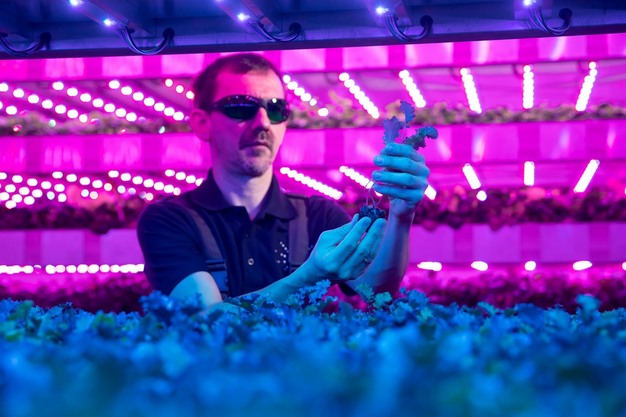
By controlling the environmental conditions and nutrient delivery, operators can also precondition the plants themselves with the compounds they need to grow more robustly once they are planted outside the Growth Tower. Trees, for example, can be preloaded with lignin (which works to form key structural materials in the support tissues of most plants) to strengthen their structure.
 © Intelligent Growth Solutions (IGS)
There is potential to further explore how growth conditions can influence plant compounds and flavour profiles, making crops less appealing to common pests in outdoor environments (you could utilise this approach with tree seedlings and deer, for instance). This would make for a more effective pest management strategy, using vertical farming technology to ensure survival rates are higher after crops have been transplanted.
Why nothing trumps procedures and people
As important a role as technology has, you can't overemphasise the importance of process and people. Our vertical farming technology is designed to encourage biosafe routines and minimise any risk of human-borne contamination, but even with closed-loop systems and airlocks in place, it's vital that users maintain vigilance and adopt suitable PPE and personal hygiene when dealing with crops.
The importance of biosecurity in vertical farming
Effective biosecurity will continue to define vertical farming's long-term success. If controlled environment growing is to continue on a trajectory for growth, we need to double down on the benefits it brings when producing healthy, pest- and disease-free produce.
Biosecurity builds integrity in food systems. By putting in place hardware and software which lend themselves to good practice, we can continue to make growing operations viable and – most importantly – safe.
This article was written by Douglas Elder, Head of Vertical Farming Solutions at IGS. Douglas brings a depth of industry knowledge and experience to ensure IGS' technology prioritises biosecurity.
For more information:
Intelligent Growth Solutions (IGS)
Tel.: +44 (0)131 202 1050
www.intelligentgrowthsolutions.com