

According to United Nations projections, the global population is expected to reach 9.7 billion by 2050, with 70% residing in urban areas, while arable land availability continues to decline. Vertical farming (VF) offers a promising pathway for sustainable urban food production by utilizing vertical space and controlled environments.
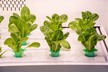
Among emerging approaches, the adaptive vertical farm (AVF) introduces movable shelving systems that adjust to plant growth stages, allowing a higher number of cultivation shelves to be accommodated within the same rack height. In this study, we developed a computational model to quantify and compare the energy consumption of AVF and conventional VF systems under industrial-scale conditions. The reference scenario considered 272 multilevel racks, each hosting 8 shelves in the VF and 15 shelves in the AVF, with Lactuca sativa as the test crop. Energy consumption for thermohygrometric control and lighting was estimated under different sowing schedules, with crop growth dynamics simulated using scheduling algorithms. Plant heat loads were calculated through the Penman–Monteith model, enabling a robust estimation of evapotranspiration and its impact on indoor climate control. Simulation results show that the AVF achieves an average 22% reduction in specific energy consumption for climate control compared to the VF, independently of sowing strategies. Moreover, the AVF nearly doubles the number of cultivation shelves within the same footprint, increasing the cultivable surface area by over 400% compared to traditional flat indoor systems.
This work provides the first quantitative assessment of AVF energy performance, demonstrating its potential to simultaneously improve land-use efficiency and reduce energy intensity, thereby supporting the sustainable integration of vertical farming in urban food systems.
De Donno, A.; Tagliafico, L.A.; Bagnerini, P. Innovation in Vertical Farming: A Model-Based Energy Assessment and Performance Comparison of Adaptive Versus Standard Systems. Sustainability 2025, 17, 8319. https://doi.org/10.3390/su17188319
Source: MDPI