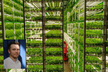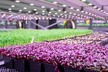


Last month, students at Arcadia British School in Dubai took a closer look at how food can be grown indoors. As part of the school's STEM Week, Greeneration, a Dubai-based vertical farm known for its premium edible flowers, microgreens, and specialty leaves, hosted an interactive session titled "Plants on Shelves: How and Why Vertical Farms Grow Food Indoors."
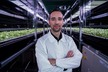
The workshop, led by Daria Shchurik, Head of Marketing and Product at Greeneration, introduced Year 3 to Year 5 students to the fundamentals of hydroponics, LED lighting, and controlled-environment agriculture. "We partnered with Arcadia because the school prioritises STEM and sustainability. This aligns with our aim to raise awareness about modern agriculture and show how controlled-environment systems support the UAE's long-term food security plans."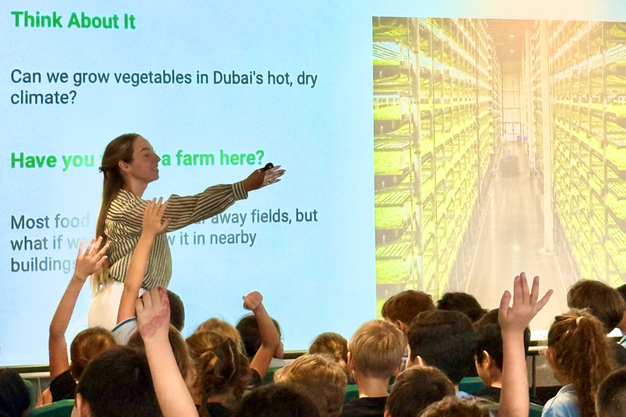 © Greeneration
Linking education to national goals
The session supported the UAE's broader sustainability and food-security agenda, which emphasizes local production and resource efficiency. By showing how vertical farms can save up to 95 percent of water compared to traditional agriculture, Greeneration connected national priorities with everyday classroom learning.
Using visuals, real plant samples, and short demonstrations, students learned how crops thrive indoors without soil and how technology enables farming in desert conditions. "Their curiosity reflected strong awareness of environmental issues and genuine interest in future food systems," says Shchurik.
Young minds and bright questions
Students asked whether plants can grow without sunlight, how much water vertical farms use, and whether they could feed big cities. "It was inspiring to see our students so engaged, asking thoughtful questions, making connections to their science lessons, and genuinely excited about how technology can help protect our planet," says Bryan Cahill, Head of Year 4 at Arcadia.
Many students also shared their own ambitions for the future, imagining careers in technology, science, and sustainability. "When students share what they learn at home, it builds familiarity and confidence in new technologies," Shchurik adds. "These partnerships help people see how local farms contribute to food safety, sustainability, and reduced imports."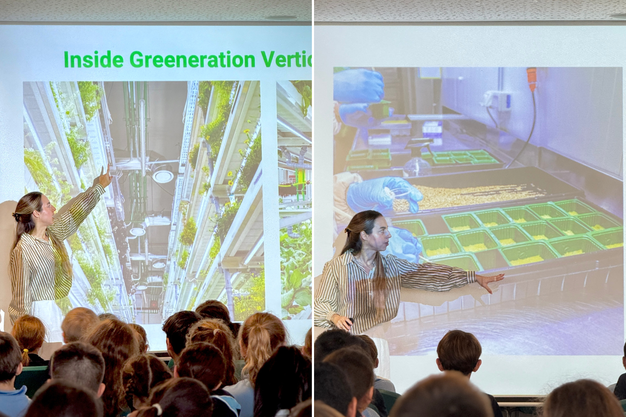 © Greeneration
Expanding the classroom
Following the success of the Arcadia visit, Greeneration plans to expand its educational outreach to more schools. The company is developing a toolkit with lesson prompts and simple hands-on activities, and plans to include a small vertical farming unit in future sessions so students can see the growing process in action.
This approach connects education with the company's daily operations. Greeneration supplies chefs and restaurants across the UAE with fresh, locally grown produce harvested and delivered the same day. "It helps students see the standards behind the produce chefs use, from freshness to safety and responsible sourcing," Shchurik explains. "We also think about the future and food security, and we believe this starts with giving students early awareness of modern farming."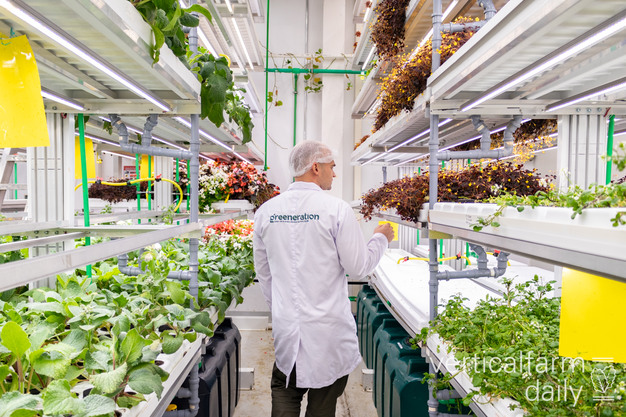 © Rebekka Boekhout | VerticalFarmDaily.com
Preparing future innovators
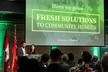
Beyond school visits, Greeneration participates in conferences, community events, chef workshops, and sustainability panels to promote sustainable sourcing and highlight how local production supports the hospitality sector.
Shchurik believes curiosity and problem-solving will be vital skills for the next generation of ag-tech leaders. "Students who engage with these topics now will become the future leaders shaping ag-tech innovation and food security."
For more information:
Greeneration
Daria Shchurik, Head of Marketing and Product
[email protected]
www.greeneration.ae