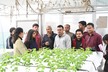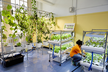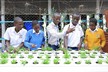


In 2025, nearly 1,250 students in 71 classrooms participated in the Growing Beyond Earth Student Launch Chat, celebrating ten years of partnership between Fairchild Tropical Botanic Garden and NASA. Students presented data from classroom crop experiments to NASA Kennedy Space Center experts, supporting NASA's work on selecting crops for future Moon and Mars missions.Growing Beyond Earth incorporates authentic NASA research into classrooms. Students use custom plant growth chambers to test various cultivars under conditions simulating those in spacecraft. The results are reported to NASA scientists for space crop selection and management research. Since starting, the program has involved over 120,000 students in more than 800 classrooms testing upwards of 250 plant cultivars. Five student-tested varieties have been validated for cultivation aboard the International Space Station.
The program highlights direct science engagement with NASA experts, giving students first-hand experience in STEM and agricultural research for space. Classroom experiments are structured to replicate the challenges faced in closed-environment food production off-Earth. Students explore plant viability, growth rates, nutritional value, and adaptability under stressful conditions found in space habitats.
NASA's Science Activation program, through Growing Beyond Earth, aims to build STEM skills and curiosity. Dr. Gioia Massa said, "When students see themselves as part of NASA's mission, they realize science isn't something distant, it's something they can do." Teacher Espy Rodriguez added, "It made their projects matter. I think it gave the kids a real sense of community. We are far, but we are one."
Read more at Space Daily