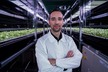

In the heart of America, a revolutionary concept in urban agriculture is taking shape. Vertical Harvest, led by co-founder and CEO Nona Yehia, is emerging as a groundbreaking force in the controlled environment agriculture sector. What began as a mission to connect sustainable food production with social responsibility has evolved into a transformative model for urban farming. It shows how technology and human-centric design can create lasting impact in local communities.
"In my career, I really found that food was the strongest connection to human and environmental health, and that's how I became a vertical farmer," Yehia reflects. Her words capture the purpose that drives Vertical Harvest. Their approach is not just about growing food. It is about nurturing communities, creating opportunities, and rethinking how cities can support sustainable food production.
 © Vertical Harvest
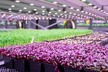
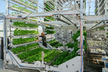
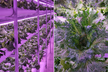
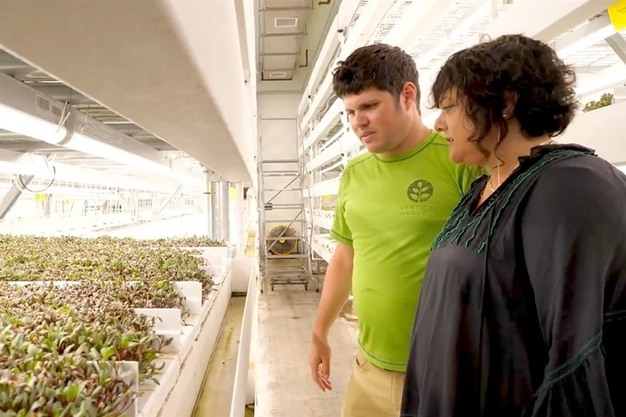
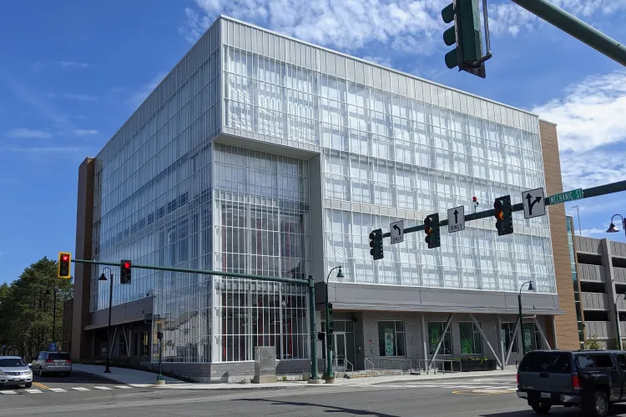
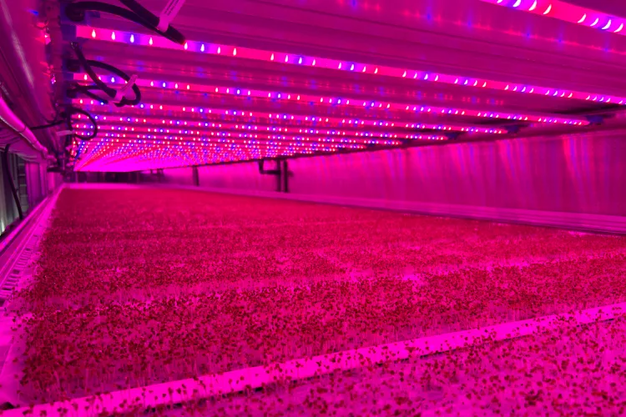
Vertical Harvest faced a key challenge in their growth journey. They needed to scale from their early success in Jackson Hole, where they produced 100,000 pounds of produce each year, to a far larger operation in Maine. The new facility spans 50,000 square feet and holds 200,000 square feet of growing area. This was more than an expansion. It was a leap in operational complexity.
Their original tools could not keep up. They relied on Excel sheets, paper logs, and manual tracking. These worked at a small scale but quickly became barriers. "With that kind of scale, we obviously can't use paper logs," Yehia says, pointing to the need for better systems. Managing a vertical farm of this size meant coordinating multiple growing zones, controlling precise environments, tracking resources, supporting a diverse workforce, and maintaining consistent quality. It also meant integrating all systems into one coherent whole.
Most importantly, Vertical Harvest needed a digital backbone that was adaptable and scalable. Yehia highlights this need clearly: "As a small business owner, we want something that's lightweight, that's scalable, and can be customized to us."
The search for a solution led them to Siemens Digital Industries Software and the Opcenter X platform. This partnership launched a full digital transformation. "Siemens has been the right partner for us to be able to customize to exactly the workflow that we need," Yehia says, underscoring the alignment between the two organizations.
Opcenter X became what Yehia calls "a digital brain for us, a digital floor manager that can work remotely." The platform unified their operations. Instead of scattered tools and manual processes, everything lived in a single digital environment. "Being able to have a single point where you can access information, understand what you're supposed to do that day, to have that coordinated in one place is really critical," she explains. This centralization eliminated the silos that once slowed the team down.
The system also changed how they used data. "What's really important to us as operators is really managing yield, but in order to be a successful business, we also have to manage margins." With Opcenter X, the team could track revenue per square foot, yield per square foot, energy use, water use, and overall efficiency. This level of clarity strengthened both their day-to-day operations and their long-term planning.
 © Vertical Harvest
Most significantly, the partnership helped Vertical Harvest move toward the industrialization of urban agriculture. Yehia describes it as an effort to define best practices, record them, and build a holistic system so the entire ecosystem runs smoothly. It set the stage for a new model of vertical farming that is both efficient and responsible.
What truly sets Vertical Harvest apart is their commitment to people. Their digital transformation is not only a tech story. It is a human story. "My co-founder, who was trying to solve the problem of employment, to connect a population that has a really high unemployment rate to businesses who needed consistent, reliable workforces to run their business, and that's where Vertical Harvest's mission became, not only to grow food, but to grow futures," Yehia explains.
 © Vertical Harvest
Forty percent of their workforce identifies with physical or intellectual disabilities. This meant the technology needed to be both robust and accessible. Opcenter X helped make that possible. The intuitive interface and customizable workflows allowed the team to create tailored work instructions, build adaptive training programs, support different learning styles, and give employees the tools to manage tasks independently.
"If you can really customize employment so that you are supporting people's abilities and utilizing technology to bring out those abilities, not only build a culture that is really strong, you've also created opportunities that weren't there before," Yehia says.
Vertical Harvest shows what happens when innovation meets purpose. Their story is proof that urban agriculture can feed communities, strengthen workforces, and shape a more inclusive future.
For more information:
Vertical Harvest
[email protected]
www,verticalharvestfarms.com