

Auja Bywater, a third-year doctoral candidate in the Department of Food Science in the College of Agricultural Sciences and member of the One Health Microbiome Center at Penn State, originally planned to major in music. A few pivots into epidemiology and public health later, she now researches the best ways to bring safe food to people all over the planet, using controlled environment agriculture techniques such as hydroponics. However, as a recipient of the 2025 Pennsylvania Space Grant Consortium Graduate Research Fellowship, her research will now reach beyond Earth — and into the cosmos.
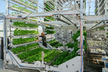
Bywater's doctoral work, supervised by Lester Earl and Veronica Casida Career Development Professor of Food Safety and Associate Professor of Food Science Jasna Kovac, focuses on developing novel ways to protect hydroponic systems from food-borne pathogens like Salmonella, E.coli and Listeria. Hydroponic farming is a way of growing plants using nutrients dissolved in water, instead of soil. As the global population increases, demand for healthy produce also rises — but challenges to traditional farming such as climate change and catastrophic weather events can make the traditional cultivation of some crops difficult, Bywater said. Hydroponics farming allows plants, especially leafy greens such as bok choy, lettuce or spinach, to grow indoor and year-round with less space, which also makes it ideal for urban areas or places without a large amount of farmland — such as the International Space Station, for example.
However, Bywater said, despite the advances of hydroponics farming techniques and system design in recent years, less of a focus has been placed on the safety of such systems and potential risks to human health. Hydroponic systems typically recirculate water and nutrient solutions, so if a contaminant is introduced and is not addressed, the infection can persist. Some pathogens can also create biofilms, which are encased communities of microbes that can adhere to a surface and be challenging to remove. According to Bywater, biofilms are a major problem in the food industry, responsible for food spoilage, outbreaks and damage to equipment. Current approaches to ensuring safe hydroponics farming, such as sanitization using disinfectants, require significant resources and still can carry a risk of harm to plants and equipment.
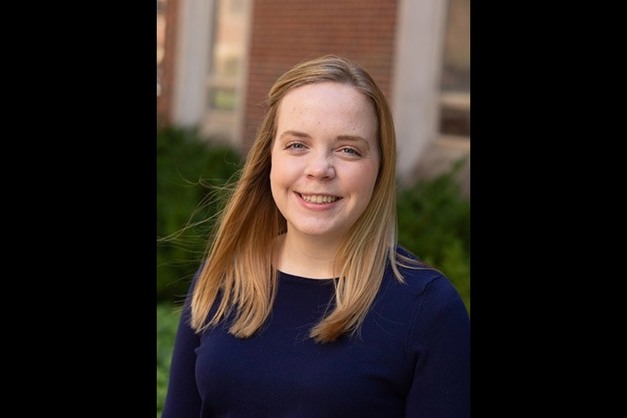 © Auja Bywater / Penn State UniversityFood science doctoral candidate Auja Bywater was selected as a recipient of the 2025 Pennsylvania Space Grant Graduate Research Fellowship
"You can't just bring gallons of bleach into space to sanitize your food systems," said Bywater, who is also working on a dual-title doctorate in international agriculture and development. "So, how do you create sustainable systems that don't compromise food safety?"
Bywater's research aims to address exactly these concerns through a method known as biocontrol. Biocontrol takes a competitive approach to food safety by introducing microorganisms that can outcompete the pathogens by restricting their growth, ultimately resulting in safer food systems. By looking at the naturally occurring microorganisms in hydroponics systems, especially from the seeds and nutrient substrates, Bywater said she hopes to identify already-present probiotic bacteria that could potentially be used as biocontrol agents.
While Bywater was selected as a Pennsylvania Space Grant Fellow for the potential application of her work in extraterrestrial systems, her current scope remains in researching how to improve food safety here on Earth. Bywater co-leads the Penn State delegation to the United Nations Food and Agriculture Organization (FAO), and is also involved with the Youth Food Lab for North America, which Penn State was selected to host. She also traveled to Rome, Italy, in June and October to represent Penn State at the FAO Global Agrifood Biotechnologies Conference and flagship conference for the organization, respectively. Bywater is also a 2025-26 recipient of the OHMC's Interdisciplinary Innovation Fellowship award.
"Everyone has a right to safe and sustainable food systems," Bywater said.
Source: Penn State University