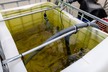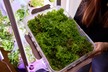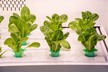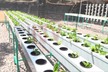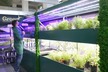

Climate change or even the natural occurrence of periods of low suitability for the production of forage species are obstacles to maintaining adequate animal nutrition. Indoor green fodder production is an alternative to this problem; however, advances in technologies capable of improving this system still need to be studied in depth.
The objective of this study was to evaluate the qualitative and quantitative characteristics of hydroponic green fodder production of millet and sorghum under varying monochromatic light supplementation and nicotinamide application. Eight treatments were defined by lighting (LS—Led Full Spectrum; LS + Ultraviolet LED; LS + Red LED; LS + Blue LED), and combined with the application of nicotinamide (with and without) at a concentration of 200 mg L−1. Cultivation under conditions of light supplementation with UV radiation or monochromatic lights results in increased light intensity by modifying the wavelength spectrum received by the plant, modification of the quality of photons received in relation to the energy level that leads to luminous stress and, consequently, lower green fodder development concerning height and fresh mass. Nicotinamide acts as a bioprotectant, attenuating the stressful effects and enabling greater productive efficiency in the production of hydroponic green fodder, particularly in vertical cultivation, which provides increased height and fresh mass for millet and sorghum green fodder.
In contrast, the stress resulting from light supplementation can be used as a tool to increase carotenoid levels in plants and may be indicated for production systems that have this objective for biofortification of forages with bioactives with antioxidant effects.
Sant'Ana, G.R.; Binotti, F.F.d.S.; Binotti, E.D.C.; Carrasco, G.; Bortolheiro, F.P.d.A.P.; de Lima, S.F.; Oliveira, C.E.d.S.; Costa, E.; Teixeira Filho, M.C.M.; Vendruscolo, E.P. Light Supplementation and Nicotinamide Influence the Growth and Pigment Production of Tropical Hydroponic Green Fodder. Agronomy 2025, 15, 2797. https://doi.org/10.3390/agronomy15122797
Source: MDPI