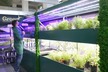

Researchers at the National University of Singapore (NUS) have developed dissolving microneedle patches that deliver living "biofertiliser" straight into plant tissue. In greenhouse tests, Choy Sum and Kale grew faster - by shoot biomass, leaf area and height - while using over 15 per cent less biofertiliser than standard soil inoculation.
The approach points to more precise fertiliser delivery, less waste and potentially lower off-target environmental impact, with near-term fit for urban and vertical farms and for high-value crops that benefit from controlled dosing.
Biofertiliser, which contain beneficial bacteria and fungi that help crops absorb nutrients and tolerate stress, are usually added to soil. There, they must compete with native microbes and can be hindered by acidity and various other conditions. Much of the input never reaches the roots. By placing beneficial bacteria or fungi directly into leaves or stems, the new method developed by the NUS team bypasses those hurdles and accelerates early gains.
"Inspired by how microbes can migrate within the human body, we hypothesised that by delivering beneficial microbes directly into the plant's tissues, like a leaf or stem, they could travel to the roots and still perform their function, but much more effectively and be less vulnerable to soil conditions," said Assistant Professor Andy Tay from Department of Biomedical Engineering at the College of Design and Engineering at NUS, and Principal Investigator at the Institute for Health Innovation & Technology (iHealthtech), who led the work.
Read more at Mirage News