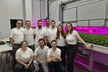

Growcer is taking a prudent approach to growth and capital, as the Canadian indoor ag company scales up with the help of Mars Discovery District. Unit economics can make or break a controlled-environment agriculture company. One Ottawa-based indoor ag is finding success — and good unit economics — by focusing on the needs of specific communities and use cases where the technology boost food security and lower costs.
Launched in 2016, Growcer manufactures Osiris, a containerized farm that is equipped with air filtration, climate controls, and other technologies to produce its food, leveraging a type of hydroponics called shallow water culture, Corey Ellis, CEO of Growcer, explained. Growcer is continuously improving its technology stack, whether that is new inoculants to boost nutrient intake or automation, he noted.
By focusing on regions where growing food indoors would be more cost advantageous than producing outdoors or importing, Growcer was able to develop favourable unit economics, the calculation of profit based on a single product. A lot of leafy greens in North America are produced in California, so importing to Alaska or Canada can be costly, he noted.
Additionally, Growcer found success by expanding beyond traditional agriculture channels to serve frontline communities, whether they are in universities, food banks, charities, or indigenous communities, Ellis said. The modular farms can also help educate people on careers in agriculture, with Canada facing many of the same labour challenges as the U.S., he added.
Read more at AgTech Navigator