


Indoor farming has largely focused on fast-cycle leafy crops, but interest is growing in whether controlled environments can support plants where biochemical consistency and traceability are central to commercial value. Panama Corporation is exploring that question through controlled-environment cultivation of saffron and select medicinal botanicals across operations in the United States and India.
The company was recently recognised in the Forbes India DGEMS 2025 Select 200, a listing focused on technology-led enterprises. For Panama Corporation, the recognition reflects a longer-term effort to apply engineering discipline to crops that have historically been difficult to standardise. "The recognition reflects the depth and discipline behind how we approach controlled environment agriculture," says Vivek Raj, Chairman and CEO of Panama Corporation. "Our work is centred on building integrated systems where biology, engineering, and data function as one operating layer."
Designing for repeatability
Rather than pushing for maximum output per cycle, Panama Corporation structures its production model around consistency. The company operates what it describes as an AI-enabled controlled-environment footprint of approximately 4,180 square metres, combining climate-controlled chambers, hydroponic systems, and sensor-guided cultivation.
"Operationally, this shows up in facilities that are designed for repeatability," Raj says. "Output quality remains stable across cycles rather than fluctuating with external conditions." Each production unit functions as an independent biological system. "A typical production unit is a self-contained cultivation module with its own climate envelope, lighting architecture, nutrient delivery system, and integrated sensor grid," he explains. "Each unit is designed to operate as a predictable biological environment rather than part of a loosely managed growing hall."
According to Raj, consistency depends on locking key variables into system design. "Environmental isolation, calibrated nutrient flow, uniform spectral light distribution, and tightly standardised operating protocols are what allow us to replicate performance across locations and cycles." This approach is particularly relevant for saffron, where relatively small shifts in climate or handling can lead to significant variations in both yield and biochemical composition.
Data-guided cultivation
Continuous monitoring underpins day-to-day cultivation decisions. "Sensing provides continuous feedback on plant behaviour and early stress signals," Raj says. "That data allows us to identify pathological patterns often before visual symptoms emerge." These insights support earlier intervention. "The system recommends or executes real-time adjustments to lighting intensity and spectrum, nutrient ratios, airflow, and humidity. Intervention happens at a preventive stage rather than after visible decline."
Despite the level of automation, Raj emphasises that human expertise remains central. "In practice, AI manages repeatability and early detection, while human expertise governs intent, execution, and accountability across the full cultivation and delivery cycle." Planting, harvesting, grading, and post-harvest handling continue to rely on skilled operators. "Decisions around harvest timing and handling directly influence biochemical quality and cannot be fully automated without losing nuance."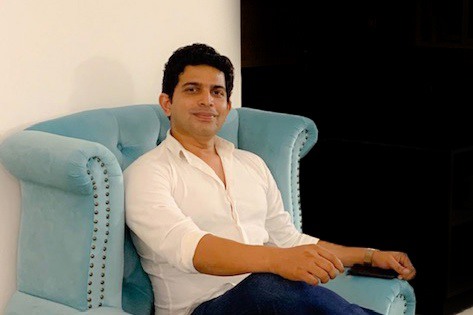 © Panama Corporation
Energy and longer growth cycles
Energy remains a defining constraint for indoor farming, particularly for crops with longer or more complex growth cycles. Raj argues that commercial viability depends on precision rather than intensity.
"Viability depends on precision over intensity. Lighting is tuned spectrally and temporally to align with specific growth phases rather than maximised for speed. Climate control prioritises stability and stress minimisation instead of acceleration." By synchronising plant demand with system response, energy inputs are applied where they influence biochemical development rather than compressing growth cycles.
Lessons for diversification
Alongside indoor production, Panama Corporation works with partner growers in traditional saffron regions, including Kashmir, to improve post-harvest handling, traceability, and quality alignment. "The goal is not to replace traditional growers," Raj says. "It is to integrate controlled environments where they add the most value."
For Raj, the broader lesson for indoor farming is clear. "Predictability matters more than volume. High-value crops require environments that minimise biological uncertainty."
In the future, Raj sees controlled environment agriculture moving toward greater structural maturity. "Controlled-environment agriculture will only scale meaningfully when it is treated as infrastructure rather than experimentation. The future belongs to systems that are auditable, replicable, and aligned with real market and regulatory requirements."
For more information:
Panama Corporation 
Vivek Raj, CEO
[email protected]
www.panamacorporationltd.com