

Selenium is a significant nutrient source for humans and plants. Currently, inorganic selenium, including selenate and selenite, is used to cultivate selenium-rich crops to manage people's selenium deficiency problems.
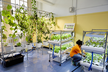
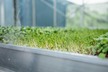
Garlic, being a major accumulative plant in the Allium genus, can absorb selenium concentrations beyond 1000 mg/kg when grown in soils rich in selenium. In this study, garlic samples were germinated in a soilless medium and transfered to hydroponic cultivation medium containing three different levels of sodium selenite (Na2SeO3). The total amount of selenium in the roots and leaves of lyophilized 150 μM garlic extracts was 43.8 ± 33.2 and 62.7 ± 16.4 mg/kg (n = 4), while the total amount of selenium in the enzyme-extracted leaves and roots was 10.3 ± 2.0 and 10.6 ± 5.9 mg/kg (n = 4).
Furthermore, selenium speciation analysis revealed that MeSeCys and SeMet as the main organoselenium compounds in garlic. Additionally, unknown selenium species were detected, indicating the need for further research to identify them.
Korkunç, Ü.P., Engin, B.A., Zaman, B.T. et al. Selenium speciation analysis for the investigation of selenium uptake for the hydroponically cultivated garlic samples. Sci Rep 15, 43905 (2025). https://doi.org/10.1038/s41598-025-27774-4
Source: Nature Magazine