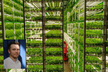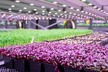


When Muhammad Waleej Arslan first took control of an agricultural drone in southern China, it was not the machinery that struck him most, but what it represented. For the Punjab-based agriculture officer, three months spent training among orchards, laboratories and vertical farms in China's tropical south became a window into how technology and research might offer new answers to some of Pakistan's most persistent farming challenges.
Arslan, an officer with the Punjab Extension Agriculture Department, recently completed a three-month training program in Sanya, Hainan Province, home to China's national seed breeding base, as part of Pakistan's Capacity Building of 1,000 Agricultural Graduates in China initiative. The program combined classroom instruction with extensive field visits, focusing on fruit and vegetable processing as well as modern farm mechanization.
In an interview with China Economic Net, Arslan told reporter that the first half of the training concentrated on post-harvest processing of fruits and vegetables. Participants studied the processing of mangoes, black pepper, watermelon, jujube, root crops, and other agricultural products. Visits to mango orchards and mango processing facilities in Sanya provided insights into value addition, quality control, and export-oriented production. Arslan also visited soybean-processing factories producing tofu, soybean milk, and other products - an experience given Pakistan's limited industrial-scale soybean processing.
The second phase shifted toward modern agriculture and mechanization. From advanced tractors and agricultural drones to radar-based monitoring systems, the training introduced participants to technologies that are transforming Chinese farming.
Read more at China Economic Net