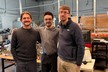


White Tiger Group (WTG), led by CEO and founder Greg O'Neill, is advancing a regenerative agriculture initiative centered on converting ranchland in Southern Oregon into highly biodiverse food forest systems. The project integrates permaculture, greenhouse-based controlled-environment agriculture, renewable energy, and water generation to demonstrate closed-loop agricultural production at landscape scale.
"Work is underway near Ashland, Oregon, where we, in collaboration with the Earth Stewards Trust, are acquiring multi-thousand-acre ranch properties and transitioning them into perennial, polycultural farming systems designed for long-term ecological stability and commercial viability," Greg shares.
 © Moleaer
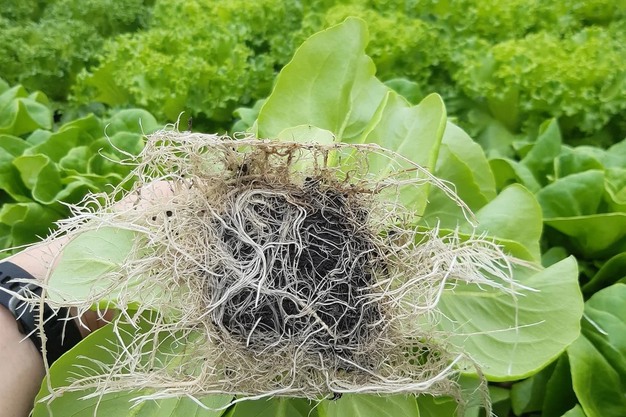
Moleaer nanobubble technology will be used in their aquaponic tanks for hyperaeration
Biodiversity-driven production models
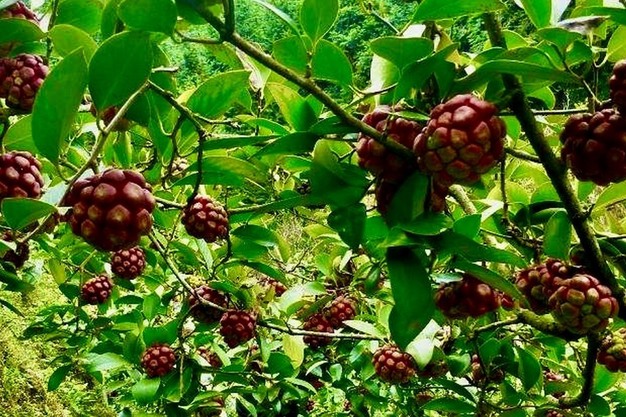
WTG's production strategy is based on deep biodiversity. Each site is designed to support hundreds of plant species and food cultivars, with continued additions sourced globally, including species at risk from climate change and habitat loss. "We focus on polycrops and square-foot optimization to maximize both biodiversity and yield," he explains. Digital planning tools are used to track crop placement across outdoor food forests, greenhouse biodomes, and annual production beds.
Market orientation remains central to the design. The farms target local and international specialty and gourmet food markets, while also producing fiber crops, hardwoods, and other non-food biomass. Greg elaborates that residual plant material is converted into biochar to return carbon to the soil and into syngas for energy generation, supporting on-site power and water systems.
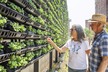
 © Varden Vertical Gardens
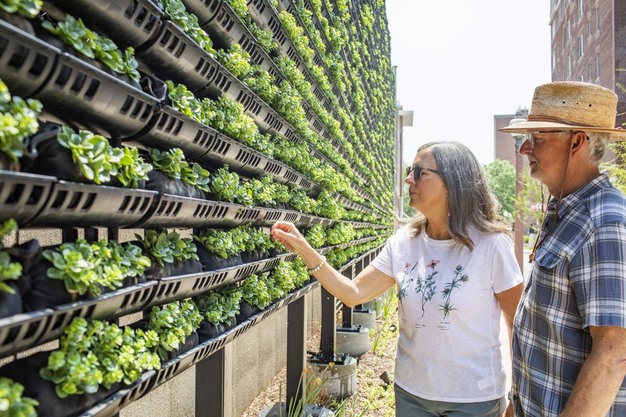
A-Frames from Varden Vertical Gardens will be used in projects
Greenhouse domes and vertical cultivation
Greenhouse infrastructure is a defining feature of the project. WTG is deploying large geodesic domes with some reaching 100 meters in diameter to house enclosed tropical food forests and high-density vertical farming systems. "The domes allow us to grow tropical and subtropical crops year-round while maintaining stable climate conditions."
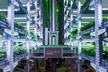
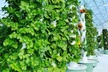
Smaller domes are dedicated to multi-level vertical cultivation. These systems incorporate A-frame growing racks and aquaponic and sandponic production. Aquaculture species, including fish, crayfish, and snails, are raised for specialty markets. High-oxygen environments are maintained using nanobubble aeration, and large-format modular tanks support scalable aquaculture and integrated plant production.
"We also evaluate emerging technologies, including plasma-based natural lighting systems intended to supplement or replace conventional greenhouse lighting in enclosed environments." The team is looking into using a new plasma natural lighting system from The Sun On-Demand™.
Examples of domes to be used by Pacific Domes
Water and energy integration
Water security is addressed through atmospheric water generation systems capable of producing hundreds of thousands of gallons per day at select sites. According to Greg, these systems, combined with on-site power generation, provide sufficient water for irrigation, processing, and aquaculture.
"Our objective is to demonstrate that food, water, and energy can be produced reliably and entirely off-grid," he notes. Biomass-derived syngas contributes to power generation, while biochar production enhances soil structure and nutrient retention.
Regenerative crop management
Crop management emphasizes biological and mineral-based inputs. WTG promotes the use of volcanic mineral amendments to supply trace elements, alongside fermented plant juices, compost teas, and vermiculture-derived castings. These inputs support soil microbial activity and align with broader regenerative agriculture practices gaining traction across the U.S. market.
"The health of the soil determines the health of the crop," he says. "Chemical-intensive systems undermine long-term productivity."
 © WTG
© WTG
Education, access, and cooperative models
WTG works closely with Food Forest Abundance and its Freedom Farm Academy to support education and skills development for growers transitioning to food forest systems. The project also addresses land access challenges through cooperative ownership models. Ranches are being developed to include off-grid eco-villages, where cooperative members can own homes while land is held in trust for long-term ecological protection.
During the winter planning cycle, WTG continues land acquisition efforts in southern Oregon and northern New Mexico while tracking market demand for organic and specialty crops. "Planning, market awareness, and trend analysis are critical during this season," Greg notes.
As systems become operational this year, WTG is positioning its sites as demonstration hubs. "We already have the technologies needed to address food security, water scarcity, and energy access. The task now is to show how these systems work together at scale."
For more information:
White Tiger Group
Greg O'Neill, CEO & Founder
https://about.me/goneill
[email protected]