
Imagine a greenhouse where artificial intelligence helps guide daily decisions, from climate control to crop care. Growers use environmental sensors, data-driven analytics and precision modeling to create an environment that keeps plants thriving.
This is what Grace Algeo envisions for the future of controlled environment agriculture, or CEA. CEA encapsulates using technology to grow crops indoors, be it greenhouses, vertical farms, warehouses or any space that allows for year-round growth.
 © Mario Rodriguez/UC Davis
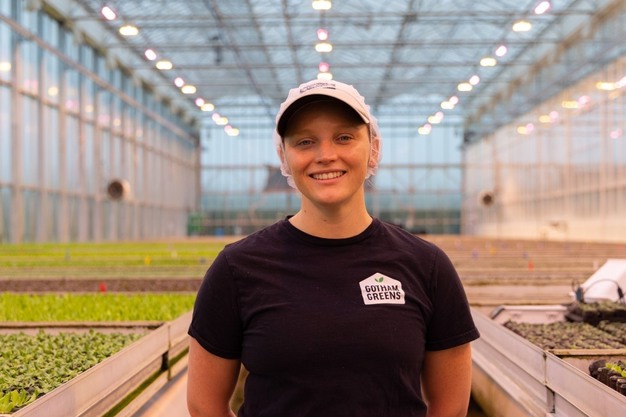
As a master's student in biological systems engineering at the University of California, Davis, Algeo conducts research focused on forecasting greenhouse behavior using Long Short-Term Memory, or LSTM, models, a type of machine learning model designed to spot patterns and make predictions over time.
In the Controlled Environment Engineering Lab, led by Assistant Professor of Biological and Agricultural Engineering Shamim Ahamed, Algeo trains LSTM models on multivariate climate and crop data. She then uses them to create predictive tools that can anticipate plant water demand, climate patterns and yield forecasts in highly dynamic greenhouse systems.
Algeo aims to integrate these tools into CEA to help growers make clearer, more consistent decisions based on future environmental conditions.
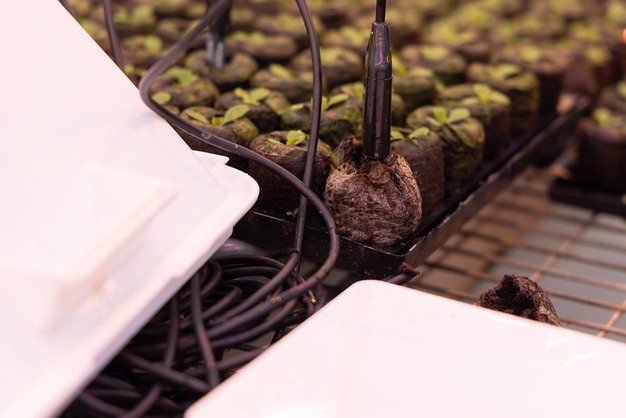 © Mario Rodriguez/UC DavisA sensor measures the moisture content in a soil plug planted with a lettuce seedling
"Sensors and control systems work together to regulate temperature, humidity, light and carbon dioxide," she said. "The goal is to give growers smarter tools; tools that make operations more efficient and more sustainable."
As the assistant grower at indoor farming company Gotham Greens, Algeo also has a large-scale greenhouse as a living lab and an insider's view into what is working today and what is needed for the greenhouses of tomorrow.
A living lab at Gotham Greens
Much of Algeo's research originates from what she observes in her day-to-day work as the assistant grower at Gotham Greens, a fresh-food company known for growing its leafy greens, herbs and salad products in hydroponic greenhouses.
At the California location in Davis, Algeo manages nursery crop development, monitors environmental conditions, evaluates sensor data and programs automated irrigation cycles for Gotham Greens' crops.
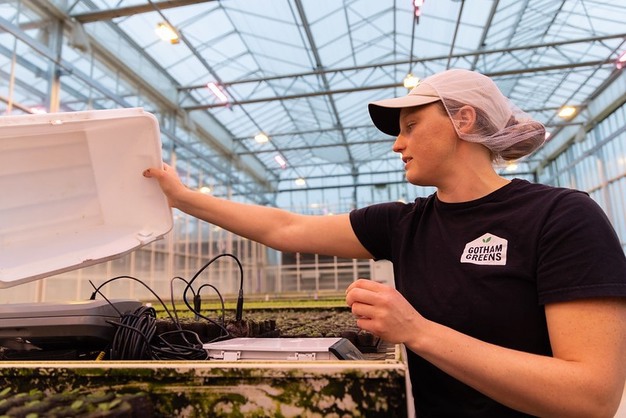 © Mario Rodriguez/UC DavisAlgeo works with a soil sensor, using a sensor hooked up to an Arduino, to determine the water content in the growing lettuce at Gotham Greens
"A typical day involves system checks, crop assessments, and gathering and analyzing data," she said. "I also program our autonomous watering system, so the seedlings get the water and nutrients they need at the right time and in the right amount."
Algeo's hands-on responsibilities give her continuous exposure to real-world greenhouse problems, allowing her to apply engineering principles in a commercial setting while gaining key insights into how data and automation can improve day-to-day operations.
For her, Gotham Greens isn't just a workplace.
"It's a living lab," she said.
Cultivating what's next
Today, Algeo's research blends environmental sensing, data analytics and forecasting to contribute to the development of tools that are aligned with the current and forecasted needs of greenhouse growing. For her, the future of CEA is exciting rather than intimidating, and the work keeps her engaged and excited, particularly as the field is quickly advancing.
Algeo's decision to pursue a Master of Science degree in biological systems engineering at UC Davis is a significant part of her effort to stay on top of the rapidly progressing field. Her work at Gotham Greens informs what is needed from her research at UC Davis, and her research and connections in the Department of Biological and Agricultural Engineering provide the education and resources to advance her work as a champion of CEA.
"New tools are constantly emerging, and the new generation of growers will be using them to their advantage," she said. "It's so fast-paced that you have to constantly evolve and educate yourself."
Source: UC Davis