


Women leaders won 44 local council seats, launched 62 climate-smart initiatives and used hydroponics and other innovations to strengthen interethnic cooperation and community resilience across border regions.
Sumbula, a small municipality in Kyrgyzstan's Batken region near the Tajik border, is home to Kyrgyz, Tajik and Uzbek families whose lives are closely intertwined. When armed border clashes erupted in September 2022, these multiethnic communities were deeply shaken. Trust suffered, relationships strained and families who once relied on one another suddenly faced uncertainty.
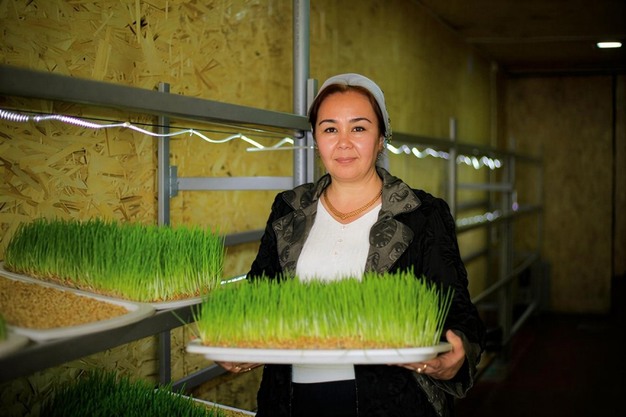 © UN PBFAcross Batken, women are emerging as peacebuilders, innovators and elected leaders, reshaping their communities and demonstrating that sustainable peace begins close to home
Women, already facing limited economic opportunities and traditional roles that constrained public participation, carried much of the burden of keeping their communities together.
Against this backdrop, Feiruza, an ethnic Tajik and former kindergarten staff member, stepped into leadership. Encouraged by her community, she agreed, hesitantly at first, to serve as a local councillor. Through gender equality, design thinking and climate resilience trainings under the "Blossoming Aigul – Capacitated Women Civil Society Organizations sustaining peace project," she found her footing. The project, funded by the UN Secretary-General's Peacebuilding Fund (PBF) and implemented by UN Women, the Food and Agriculture Organization (FAO), the Roza Otunbayeva Initiative and local government partners, equips women across Batken with the skills, networks and confidence to lead.
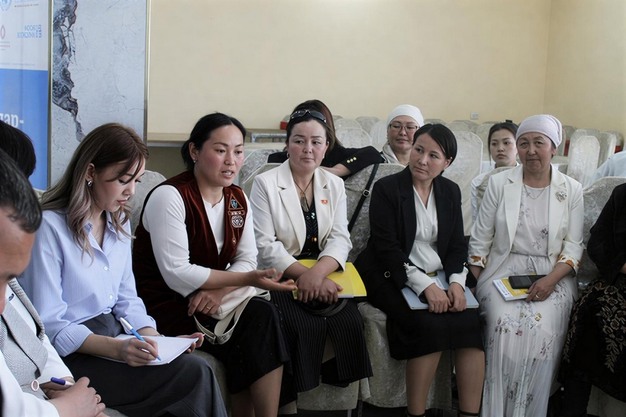 © UN PBFUntil recently, women's activism in Batken was informal and largely unseen
Hydroponics: A climate-smart solution with peacebuilding impact
Feiruza said, "When I first became a local councillor, I didn't fully understand the purpose of this mission… Step by step, through seminars and continuous learning, I began to see the bigger picture. One of the practical solutions that emerged was the introduction of hydroponics… Economic cooperation strengthens not only livelihoods, but also relationships within families. My understanding of social cohesion also changed significantly… I am Tajik myself, and I try to lead by example through my active engagement and openness."
After her trainings, Feiruza began organizing community seminars to discuss shared challenges openly. With livestock rearing central to household income but natural pastures increasingly scarce, many families were struggling. During these dialogues, hydroponics, a soil-less, water-efficient farming method, emerged as a promising solution.
Feiruza and 15 women applied for and received a small grant through the project to establish a hydroponic unit. The system produces up to 700 grams of green fodder per tray, strengthening livestock health and generating new income. Women involved now grow and sell four trays daily, gaining financial independence and stability. One cow, fed entirely through hydroponic fodder, was later sold for 150,000 Kyrgyz soms (roughly $1,700), underscoring the method's potential.
But the initiative's impact went far beyond earnings.
"This initiative didn't just teach us new techniques; it brought us together," says Kyimat, one of the participants. "Women from all ethnic backgrounds now work side by side, respect one another more and have built real friendships."
Women also began hosting family dialogue sessions at schools and kindergartens, bridging divides in spaces where families once sat separately by ethnicity. Today, they celebrate holidays together and have even formed a women's volleyball team, strengthening bonds across community lines.
As interest grew, women from neighbouring areas visited Sumbula to learn from the model. More than 50 women have since replicated hydroponic farming in their own communities, demonstrating how cooperation and collective learning can drive peacebuilding in border regions facing both climate and social pressures.
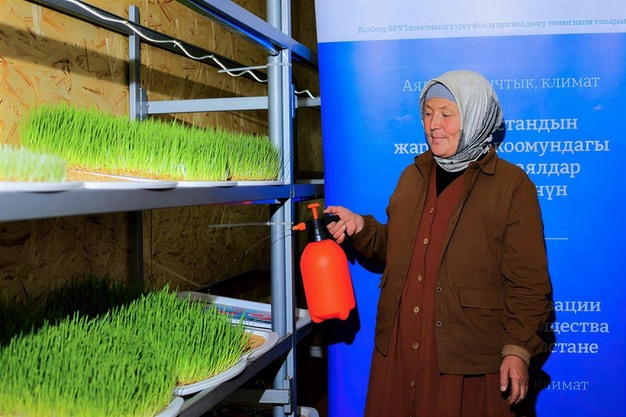 © UN PBFDuring community dialogues, hydroponics emerged as a promising solution to the region's increasingly scarce natural pastures
Women leaders transforming local governance
Sumbula's story is part of a broader shift across Batken. Historically, cultural norms, early marriage and gender stereotypes limited women's public roles, while interethnic tensions made collaboration more difficult. Until recently, women's activism in the region was informal and largely unseen.
The picture is now changing. In February 2023, women held 28.5 per cent of local council seats in Sumbula. By 2024, this rose to 38 per cent, almost a 10 per cent increase. Across seven municipalities (ayil okmotu), 44 women activists engaged in the project were elected, marking a 5 per cent increase in representation in historically male-dominated decision-making structures.
This progress was made possible through targeted capacity building, supportive policies—including a 30 per cent quota for women in local councils—and small-grant initiatives that allowed women to apply their learning in real community projects.
Women leaders are not only gaining seats, they are reshaping governance, addressing sources of conflict, strengthening interethnic cooperation and rebuilding trust.
Strengthening resilience through climate-smart, women-led solutions
Across Batken, 62 small-grant initiatives have piloted climate-smart agriculture and social cohesion solutions: hydroponic greenhouses, artificial glaciers, drip irrigation systems, water reservoirs and drought-resilient crops such as almond and rosehip.
These women-led efforts, implemented alongside local authorities, private sector partners and academic institutions, address shared resource pressures, climate impacts and post-conflict recovery. They reduce local tensions by showing that practical cooperation is possible and beneficial.
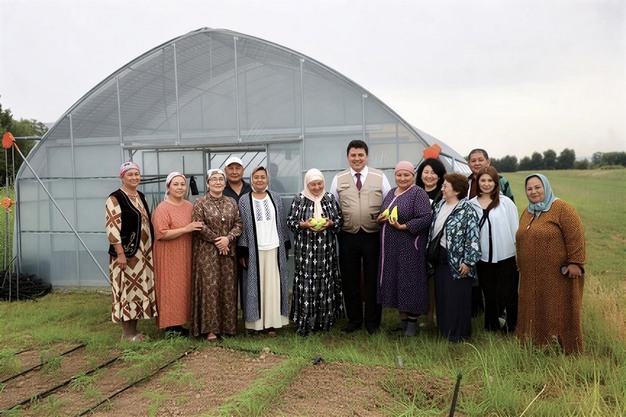 © UN PBFWith support from the UN and partners, women leaders have won 44 local council seats, launched 62 climate-smart initiatives and used hydroponics and other innovations to strengthen interethnic cooperation
Women's leadership as a driver of peace
UN Women's Sadiq highlights why these shifts matter for the region: "Women remain severely underrepresented in peace processes… This must change, and it can change. Here in the Kyrgyz Republic, we see encouraging signs of leadership and political will… When women lead, peace, equality and progress follow."
Local authorities see the same transformation. As Kydyrova Kishimzhan, Deputy Head of Batken District, explains, "The grants and knowledge shared through the project are making a real difference… In rural areas, this project is giving women the tools and confidence to participate in both local and national processes… This is a significant step forward in ensuring that women's perspectives are included in shaping our community's future."
A model for social cohesion and climate resilience
Sumbula's experience shows how climate-smart agriculture, women's leadership and interethnic cooperation can reinforce each other. By strengthening livelihoods, creating shared spaces for dialogue and supporting women to lead, the project has helped rebuild trust in a region deeply affected by conflict and climate stress.
This is one story among many. Across Batken, women are emerging as peacebuilders, innovators and elected leaders, reshaping their communities and demonstrating that sustainable peace begins close to home.