

Sydney, like many other Australian cities, has a long history of urban farming. Market gardens, oyster fisheries and wineries on urban fringe once supplied fresh food to city markets. As suburbs expanded, many farms in and around cities were converted to houses, roads and parks. The process is continuing. But this isn't the whole story. Urban farming is making a comeback in a different guise.
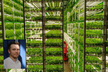
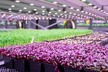
Underneath the Barangaroo towers in Sydney's CBD, a basement carpark has been transformed into a farm. Trays of more than 40 different varieties of sprouts and microgreens grow under LED lights, often maturing within two weeks. Within hours of harvest, they're in the kitchens of nearby restaurants.
The urban farmers use sensors, ventilation systems and smartphone apps to ensure growing conditions are ideal. From around 150 square metres, farmers produce about 5,000 punnets a week. Farms such as this one at Urban Green Sydney are part of a broader shift towards high-tech urban farming.
Greenhouses are a way of controlling the growing conditions for plants. The technology has deep historical roots, from early greenhouse experiments during the Roman Empire to progress in 15th century Korea and advances during the Victorian era such as the Wardian Case, which allowed live plants to survive long sea voyages.
Read more at Architecture, AU