

"We knew from the beginning that in order to become profitable, we needed to increase our lettuce volumes. Yet, what we were producing at our facility in Tibro was simply not enough," says Andreas Wilhelmsson, Co-founder and CEO of Ljusgarda. Earlier this week, Swedish vertical farm Ljusgarda announced it would shift its lettuce production to nutraceuticals, pharmaceuticals, and plant-based ingredients to achieve profitability.
Andreas explains that an additional 16,000 m2 facility would have allowed them to be profitable in Tibro, where the first farm is also located. Unfortunately, the investment landscape, which has seen a severe decline over the past few years due to bankruptcies, uncertainty, and rising OpEx, was a losing case. Investors clearly wouldn't take the bait as they would five years ago. "You need strong off-take agreements with clear commitments and long durations." Salad bags were sold at 75 grams for ~€2,20, which wasn't efficient enough for the company to proceed.
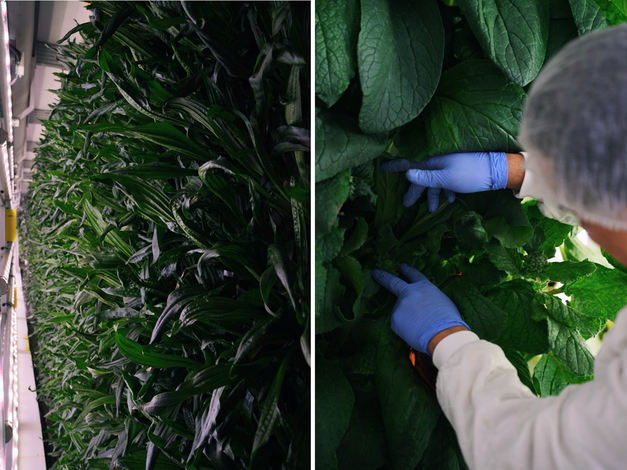
To operate at that scale, Ljusgårda would have needed a significant share of the Swedish market, including retailers such as Coop, Axfood, and ICA. The relationships were there, they were leaning forward, and they even did a private-label with Axfood last year. Still, retailers were not ready to commit to the volumes required, several thousand tons per year, especially for crops like rocket salad. "Small-volume commitments were the closest we could get, but they weren't going to fund a second factory. We concluded that such an agreement was not going to happen in the near future."
 © Ljusgarda
A different path
"At the same time, we have already been working on nutraceutical and pharmaceutical crops from the beginning. With lettuce, of course, you have vitamin C, flavonoids, and coloring compounds, but they also affect taste and color, especially with rocket salad. We later applied that thinking to other plants, targeting the nutraceutical, cosmetic and pharmaceutical markets."
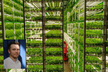
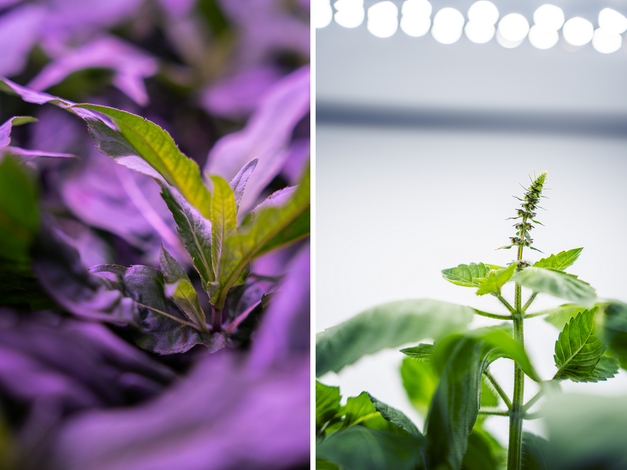
The Tibro facility is divided into three climate zones and consists of 15 rooms in total. In each room, light and water can be controlled independently, while air is managed zone-by-zone. "This setup allows us to use existing hardware and technology to grow plants under very precise conditions, whilst maintaining a uniform ecosystem. That uniformity supports precise control and specific stress treatments at a very large scale. This setup allows plants to be stressed not only at the R&D level but also at the ton-scale of a 7000 m2 facility, with precision. Consistent potency remains a major challenge in the pharmaceutical industry, as raw materials vary, but, as Andreas explains, "we're very good at precision stressing plants through light, air, and water. Opportunities are endless in this market."
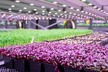
Leave it to co-founder Erik Lundgren to play around with the opportunities of stressing plants. "With Artemisia, he managed to increase compound levels ninefold." For product formulators seeking consistent bioavailability and high compound levels, this shifts the business case away from fresh lettuce with a short shelf life toward dried botanical extracts with a long shelf life.
 © Ljusgarda
Changing KPIs of vertical farming
Andreas explains that product formulators are looking for specific bioavailability and consistently high compound levels. By increasing the compound concentration in the plant, the kilo price will increase when sold as an extract. Fresh lettuce, on the contrary, has a shelf life of just 14 days and a pallet value of around €400, making long-distance logistics unappealing. Once dried and processed into a botanical extract, shelf life extends to one to two years and daily volume requirements drop significantly.
"Vertical farms are the perfect cultivation method to produce what we're producing now. Precise control of light, climate, and monitoring isn't possible at the greenhouse level, which we also considered at some point. With vertical farming, traceability and pesticide-free production, we can deliver clean, traceable and high-quality materials. Now we can grow in Sweden and sell internationally."
But wouldn't the entire front-to-end process eventually result in high costs, too? Despite electricity prices of €0.07 per kWh, including transmission costs and fees, which was a competitive advantage for Ljusgarda, pharmaceutical, nutraceutical and cosmetic crops have much higher profitability.
Starting with a more potent plant opens up different processing routes. Existing extraction processes can be used to produce more extract from the same amount of plants, or in some cases, the plants can be milled directly into powder. "Normally, you extract the compound, but if the plant is potent enough, you can sometimes skip this step," Andreas explains.
Moving away from lettuce production also reduced labor intensity, as packing 75g bags was one of the most labor-intensive parts of the company's operations. "With that step removed, automation can now be used more intensively."
Growing on demand
While explaining how the plant-based ingredients world operates, Andreas notes that the company does not rely on off-take agreements at this stage, as the existing facility is large enough to generate a positive cash flow. There is fierce competition from Asia, but as he puts it, "we don't need a bigger facility right now. "Everything we have learned over the years can now be applied in the pharma industry. The super-normal optimizing of plants is now our business case, in powder form. Though we're still anything but normal," Andreas says, laughing.

For more information:
Ljusgårda AB
Andreas Wilhemsson
[email protected]
www.ljusgarda.se