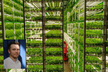


Nature-based Solutions (NbS) are increasingly recognised as powerful and holistic approaches to addressing some of today's pressing urban challenges. By working with natural systems rather than against them, NbS offer unique pathways to mitigate climate change, restore biodiversity, and enhance human well-being. Beyond their environmental value, these solutions play a crucial role in reconnecting communities with nature—especially in cities where this relationship needs to be strengthened.
Understand Nature-based Solutions
Nature-based Solutions refer to as "actions inspired by, supported by, or copied from nature that provide benefits for both people and ecosystems". These include interventions such as green roofs, regenerative landscapes, and nature-inclusive infrastructure. When integrated into cities, NbS intend to improve air and water quality, enhance biodiversity, reduce urban heat and flood risks, and strengthened social cohesion.
 © CARDIMED
Vertical gardens as a Nature-based initiative
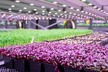
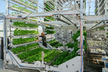
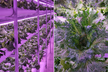
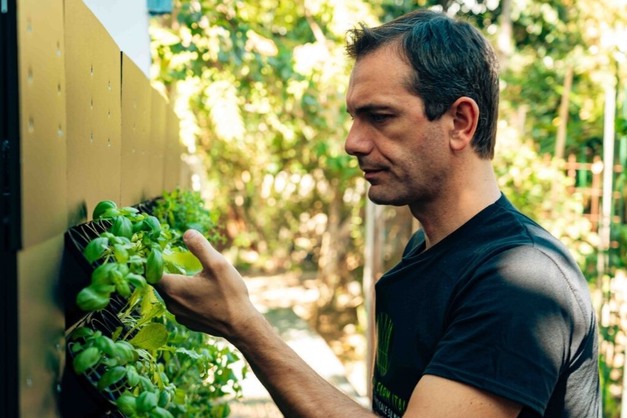
Vertical gardens represent a future oriented form of NbSs adapted to dense urban environments, introducing vegetation onto building façades or modular structures through soil-based or soilless, hydroponic, or aquaponic systems; however, their effectiveness depends on thoughtful design, appropriate technology, and long-term maintenance, without which they risk remaining symbolic "green gestures" rather than regenerative interventions. While they can enhance urban aesthetics, contribute to improved air quality, support microclimate regulation, and, in some cases, strengthen local low-impact food systems, these benefits are often localised and accompanied by challenges such as high energy demands, technical complexity, and significant costs. For this reason, vertical gardens should be understood not as standalone solutions, but as complementary elements within broader, integrated nature-based strategies that balance ecological, social, and economic realities while meaningfully reconnecting people with nature.
 © CARDIMED
Case study: The vertical aquaponic garden
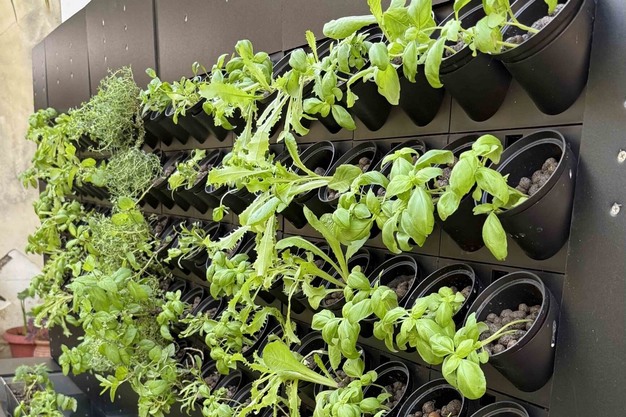
The Vertical Aquaponic Garden is a strong example of how sustainable food production can converge in practice. Developed through a partnership between Gardens of the Future, Vertical Farm Italia, ebos and IRIDRA, with the support of the National Technical University of Athens and Nicosia Municipality, the project demonstrates a forward-thinking approach to an innovative technological solution for modern agriculture as well as informing systems for urban gardening, vertical farming, and sustainable architecture.
By integrating aquaponic principles—where plants and aquatic organisms coexist in a closed-loop system—the garden efficiently uses water and nutrients while mimicking nature's circularity. The project has raised public awareness and it has been featured on national television as "Cyprus' first convertible hydroponic and aquaponic cultivation system — a milestone made possible through the CardiMed Project", a European Union's Horizon European Funded Programme.
Connecting communities with nature
Vertical farming technologies—such as hydroponics, aeroponics, and aquaponics—can be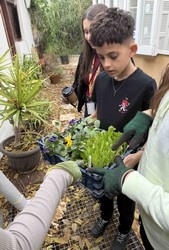 considered true nature-based solutions when they are designed to replicate natural cycles and prioritise ecological relationships. Despite challenges related to energy use, initial investment costs, and technical expertise, these systems strengthen food security and urban resilience by decentralising production and reconnecting people with fresh food, seasonality, and well-being.
One of the most significant values of the above case study lies in the active engagement of the local community. When individuals—regardless of age, gender, or background—come together with curiosity and a shared sense of responsibility to co-create, use, and maintain such interventions, the process becomes inherently inclusive and empowering. In this way, the Vertical Aquaponic Garden evolves into a community-led initiative, offering opportunities for learning, education, and collaborative stewardship, and transforming the project from a piece of technical infrastructure into a living social space, strengthen the relationship between people and nature.
Therefore, one may argue that such Nature-based solutions require a collaborative approach to their planning and implementation, as they sit at the intersection of ecological systems, social needs, and the built environment. Their success depends on the active involvement of diverse stakeholders—including local communities, policymakers, designers, scientists, and private-sector actors—who bring complementary knowledge, values, and responsibilities. Co-creation and participatory processes ensure that solutions are context-specific, socially inclusive, and ecologically sound, fostering long-term stewardship and shared ownership.
For more information:
CARDIMED
cardimed-project.eu/