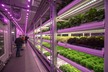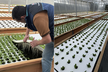


In December, Abigeal Cronan, Michael Akinsuyi, and Abdul-lateef Usman coordinated visits to the vertical farm at the SRUC King's Building Campus with the support of their programme director, Montserrat Costa-Font. The MSc Food Security cohort was able to don PPE and observe firsthand how vertical farming research is conducted at Scotland's Rural College.
A key takeaway from the visit was both the promise and the limitations of technical innovation in agriculture. The vertical farming model allows for high levels of production on a very small land footprint, with low water requirements due to recycling systems. Relatively few people are needed to maintain a vertical farm, and growing conditions can be tightly controlled.
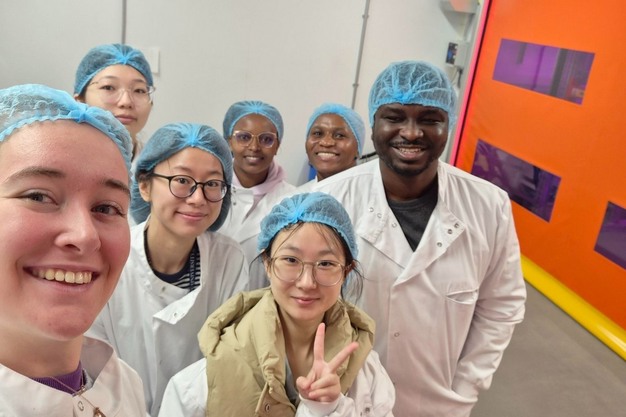 © Abigeal Cronin
However, the energy demands of vertical farming systems are very high. When powered by solar energy, these costs can be eliminated or significantly reduced. In Scotland, vertical farming is not currently considered commercially viable due to limited sunlight. In other parts of the world, particularly hot and dry regions, vertical farming offers significant potential by making use of renewable energy sources without placing additional stress on water systems.
The experience also highlighted a broader challenge of agricultural innovation: applying new technologies in ways that are specific to local contexts. Rather than replacing traditional knowledge, innovations must work alongside it to sustainably improve production methods. This is a difficult but necessary task.
Source: Abigeal Cronan