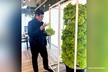


On a cold, gray morning, Patrick Gruninger heads to his farm to tend his crops. Unlike many farmers, the weather doesn't concern him a bit. His farm is not a wide, tilled field, but a narrow cargo crate. Gruninger's farm, Alachua Greens, sits nestled in the back of San Felasco Tech City, a sprawling corporate park about a 20-minute drive north of Gainesville. The cargo crate is marked with an "F" on its side. An air conditioner and antenna poke out from one end.
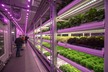
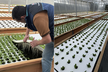
Gruninger's farm is hydroponic. Instead of soil, he grows his plants exclusively with water-nutrient solutions, alongside various substrates or cultures. The cargo crate-farm is a bustling workspace, clean yet alive.
Inside, it's always temperate, with a consistently moderate temperature and neutral white lighting flowing from the edges of the ceiling. It's a pleasant climate, cool but not cold, and the ambient lighting never gets too bright.
The floor is a series of ridged metal strips covered with a dry layer of algae that must occasionally be washed away; it accumulates in the ideal growing conditions. While the shipping container doesn't have a lot of space, what's there gets used efficiently. Just inside the container, a metal shelf holds various tools to the right, opposite a work counter on the left. Underneath, saplings sprout from shelves – what Gruninger calls the nursery.
Read more at WUFT