

On the rooftop of Kenilworth Centre in Cape Town, South Africa, the five tunnels of HandPicked City Farm are exposed to wind, heat, and sharp seasonal contrasts. Two tunnels stretch 20 meters in length, three are shorter at six meters, and together they hold roughly 340 vertical growing towers when fully planted. "It is laid out that way, but we don't treat it as one long tunnel," Zubayr Sydow, the farm's Operational Manager, says. "Each zone is about two by three meters, and we watch how each one performs. The footprint may look compact, but the work inside is constant."
"In summer it can reach up to 38 degrees Celsius inside the tunnel," Sydow says. "You feel it as soon as you walk in." Wind movement across the rooftop also requires constant checking of structures and coverings. "When the wind picks up, you have to make sure everything is secure." The layout, however, is dictated by the building rather than ideal farm design, so management becomes adaptation rather than optimization. "If I could, I would probably combine the smaller tunnels, because it's easier to manage one larger growing area, especially with issues like pests, but we work with what the space allows."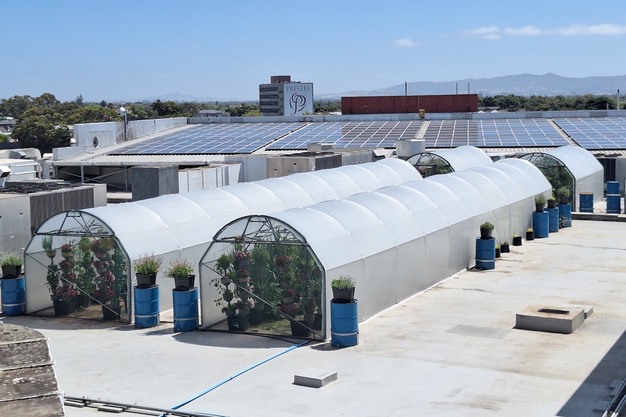 © HandPicked City Farm
A simple system
The growing system itself is deliberately uncomplicated. Each tower is filled with cocopeat and irrigated through drip lines. Water drains downward rather than being fully recirculated. "In summer, we use about two liters per tower per day," Sydow says. "In winter, it's closer to one liter." Electricity demand is minimal, largely to power pumps supported by rooftop solar panels.
There is little instrumentation. "We don't measure everything," he says. "You look at the leaves. You look at how they respond." Coriander, for instance, has performed better in cooler months than during peak summer heat. "You think it should do well in warm conditions," Sydow says. "But here it bolts very quickly in summer. In a single tunnel, some zones behave differently from others. Light, airflow, and positioning can influence performance in subtle ways."
In earlier cucumber trials, certain zones consistently outperformed others. "You start noticing that maybe this section gets better airflow or slightly different light," Sydow says. "Then you adjust where you plant next season." The learning becomes spatial, tied to specific sections of the tunnel rather than general theory.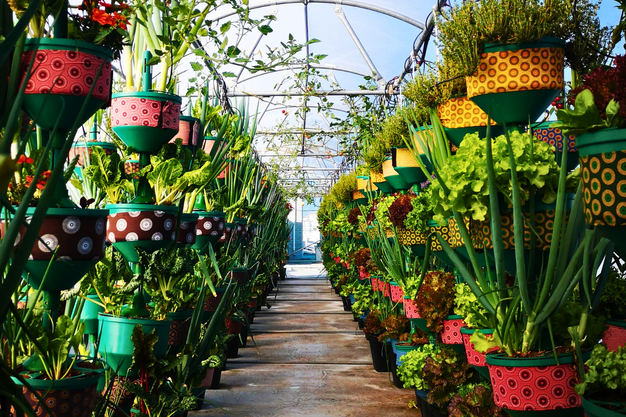 © HandPicked City Farm
Crop behaviour and incremental adjustment
Companion planting has required ongoing refinement. Combinations that appeared compatible sometimes competed at root level or behaved unpredictably. "Something that looks good on paper doesn't always work when you actually plant it," Sydow says. "The learning is incremental and spatial, based on what each zone of the tunnel reveals over time."
Seasonal rotation also plays a role. "When a crop struggles, it may be paused rather than forced. Pest pressure, temperature, and airflow are all factored into the next planting cycle, and each adjustment builds on what the previous season exposed."
Lettuce, for example, was paused after repeated pest pressure. "We stopped it for a while and rotated crops. After that, the infestation dropped significantly." During colder periods, certain crops show visible stress responses. "You'll see yellowing on the lower leaves," he explains. "They almost go into a resting phase before they pick up again."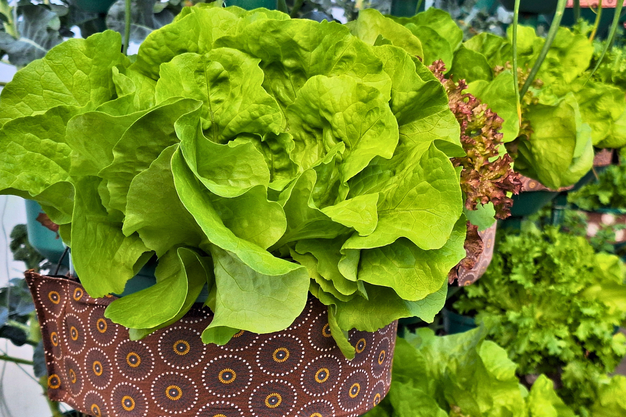 © HandPicked City Farm
Harvest days and quality thresholds
Harvest days reshape the week. Basil, one of the main crops, demands careful cutting to preserve regrowth. "People don't realize how long harvesting takes," Sydow says. Cutting, trimming, weighing, and packing can occupy most of a day. "It's not just harvesting and sending it out. You have to make sure the size and quality are right." One client currently takes around 10 kilograms of basil every two weeks, delivered in two five-kilogram batches. Surplus tomatoes are taken by another client to be processed into sauce.
Quality thresholds limit output more than planting density does. Coriander left too long becomes coarse. Spring onions harvested late lose texture. Tomatoes require ongoing pruning and attention to flower drop. "Tomatoes need a lot of work," he says. "We're still working on getting the sweetness and size consistent." Bell peppers and cayenne chillies are sometimes cut back and overwintered instead of being removed entirely. "If the plant is healthy, you keep the root system. It saves time and inputs."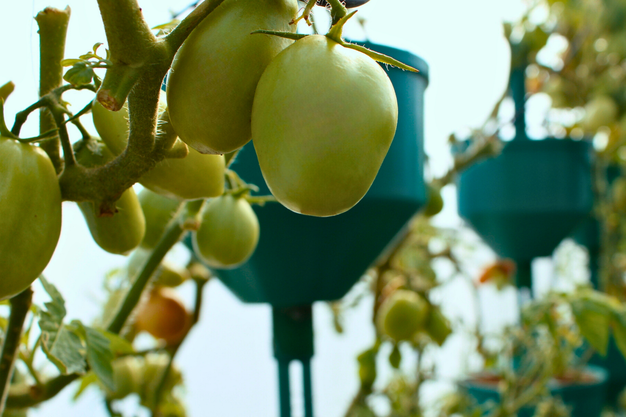 © HandPicked City Farm
Exposure requires constant attention
Exposure adds another layer of vigilance. Butterflies can enter through open flaps and lay eggs inside the tunnels. Aphids thrive when humidity rises. "Two or three years ago, infestations were more severe," he says. "Now monitoring is constant. You can't ignore small signs."
At one stage, brassicas were hit by caterpillars that began moving into adjacent leafy greens. "That one was quite bad," Sydow recalls. A targeted treatment was applied to affected outer leaves to prevent spread, and inspection routines were tightened afterward. Birds have also posed challenges. "When we had strawberries, if the flaps were left open over the weekend, birds would come in and pick at every single one."
Each season brings adjustment rather than reinvention. Crops are rotated, sections are replanted, and lessons from previous cycles inform the next. "The farm is only three years old, and every season teaches us something."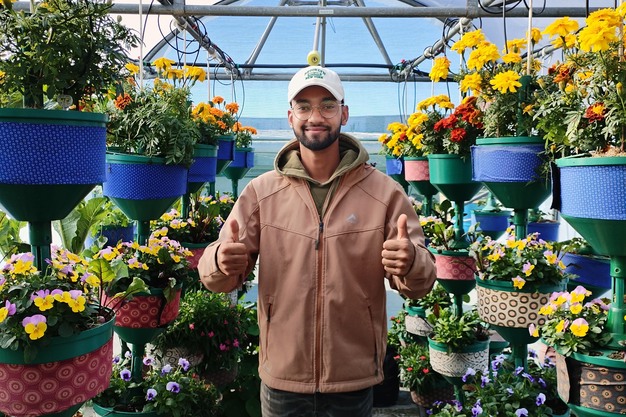 © HandPicked City Farm
For more information: © HandPicked City Farm
HandPicked City Farm
Zubayr Sydow, Operations Manager
[email protected]
www.freshlifeproduce.com