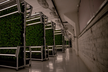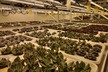


CW Group has transformed vacant space inside its New Britain, Connecticut facility into a 4,500 square foot indoor vertical farm, developed in partnership with Canadian indoor farming company Just Vertical. The facility, which became fully operational in November 2025, is designed to address a longstanding structural challenge: employment access for adults with disabilities.
"We started as a very small organization with a single mission: providing employment and training opportunities for people with disabilities," says Bill Green, President and CEO of CW Group. "Part of my role is to set the vision. How does an organization like CW grow, and how do we fund it so we can fully deliver on that mission?"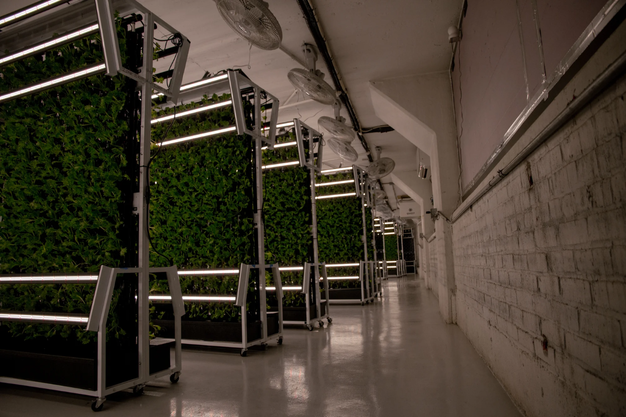 © Just Vertical
From containers to 80,000 plant sites
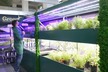
The completed facility now includes 400 racks, representing close to 80,000 plant sites producing quick-turn leafy greens. CW Group is working to ramp up production to 176,000 pounds of leafy greens per year. "A 30-by-90 greenhouse might hold around 4,500 plants," David Evens, Indoor Farm Manager, explains. "That gives you an idea of the scale we're growing at here."
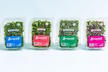
The growers are focusing on a Finstar variety of crisp lettuce provided by BASF Nunhems. The majority of the produce is purchased locally by Sysco at market rates in New Britain, Connecticut, with any excess diverted back into CW's community benefit programs, including its Meals on Wheels operations. "It makes sense to grow things like lettuce within 50 to 100 miles of where it's going," Evens says. "The quicker you can get it to market, the healthier it is, the better it looks, and the longer it lasts once the consumer buys it."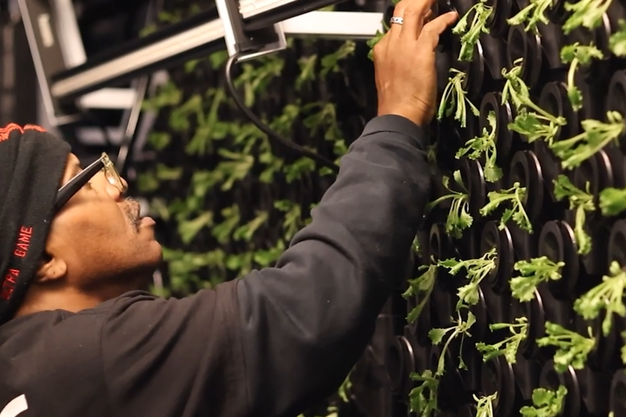 © Just Vertical
Expanding employment pathways
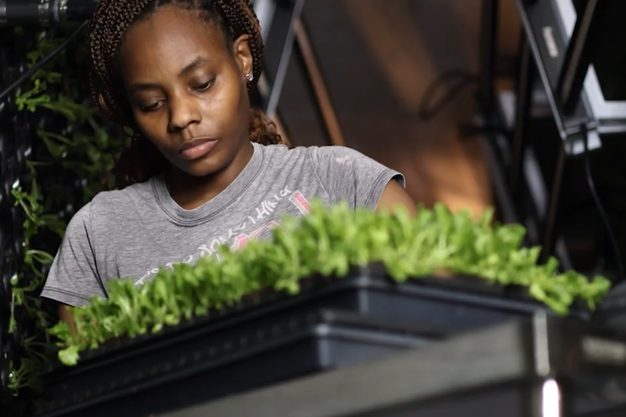
Around 15 individuals with disabilities are currently employed at the farm, serving in both operator and management roles, with some rotating schedules and others regularly assigned. Historically, CW Group's employment programs focused largely on janitorial and custodial government contracts. The indoor farm introduces a different type of work environment, one that offers technical skills, assembly experience, crop management, and post-harvest handling.
Green sees the broader societal context clearly. "Unemployment among adults with disabilities is over 60%," he says. "People ask when my job will be done. I tell them it will be done when their unemployment rate matches everyone else's, when they have the same opportunities."
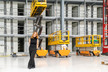
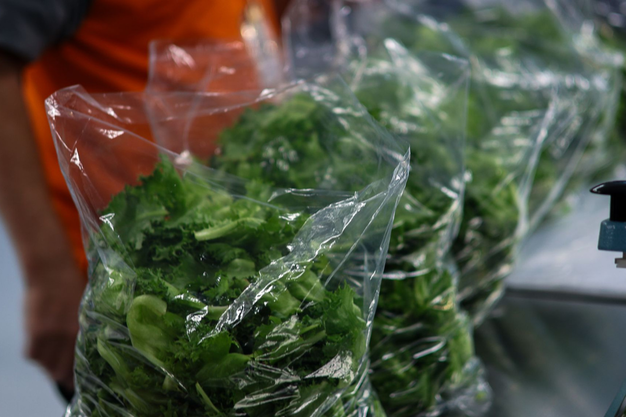
Inside the facility, leadership development has emerged organically. "I came down one day and saw that Neil, who is now our head assembler, was teaching others," Green says. "Not just other people with disabilities, but people without disabilities as well." The farm floor reflects that shift in expectations. Workers handle tasks from rack assembly and plumbing installation to harvesting, trimming roots, and packaging leafy greens. According to CW Group leadership, pride in workmanship has become one of the most visible outcomes of the project.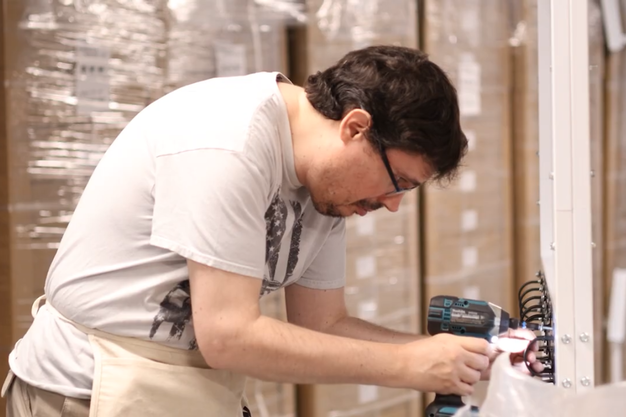 © Just Vertical
 © Just Vertical
Scaling beyond phase one
CW Group views the current operation as the first stage of a larger expansion strategy. Phase two will involve building out the remaining half of the same floor, expanding the operation from 4,500 sq ft to 9,500 sq ft, and adding approximately 80,000 additional plant sites. "We're on track to start phase two next April," says Michael Carnright, Director of Commercial Operations at CW Group. "And I'm already thinking about phase three, even phase four. It's all about expanding the opportunities we can create."
From Just Vertical's perspective, the project also represents validation of its vendor-led approach to controlled environment agriculture. "This project was strategically important for Just Vertical for two reasons: it proved we can deliver at scale, and it validated our core business model," says Christopher Di Grazia, Head of Marketing at Just Vertical. "Our approach is different from most companies in this space. Rather than building and operating our own farms, we build the technology and put it in the hands of independent growers," he says. "This project showed that a vendor-led indoor farming model can succeed at meaningful scale."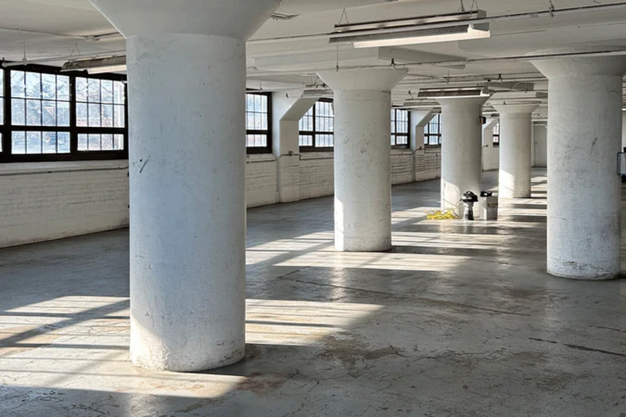 © Just Vertical
Designing for an inclusive workforce
Interestingly, few system design changes were required to support the inclusive workforce environment. "Our technology was already built to be intuitive and user-friendly," Di Grazia explains. "Where we did make adjustments was in the selection of pre- and post-growing tools. For example, we avoided high-touch automation, sharp tools, and loud equipment, opting instead for more inclusive alternatives, such as a drop seeder in place of a vacuum seeder."
"We're providing a product and a service that people need," Green says. "At the same time, it benefits individuals, and the proceeds support our broader charitable mission."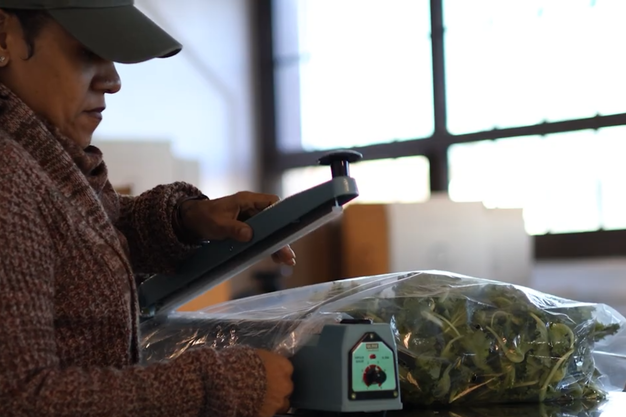 © Just Vertical
  © Just Vertical
For more information:
Just Vertical
Christopher Di Grazia, Head of Marketing 
[email protected]
www.justvertical.com
CW Group
Bill Green, President and CEO
+1 860 229 7700
www.cwresources.org