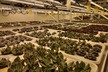

Growy grows fresh herbs in a high-tech vertical farm in Amsterdam and is a partner in the Fieldlab Vertical Farming, an initiative of Greenport West Holland. In the Fieldlab, companies, knowledge institutions, and government agencies collaborate on knowledge sharing and innovation around vertical farming. Laura van de Kreeke of Growy: "The Netherlands has enormous credibility when it comes to food production and horticulture. We can capitalize on that reputation with vertical farming."
Laura, how is Growy doing?
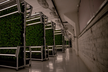
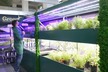
Things are going very well. We're in a strong commercial phase with new customers and more and more supermarkets stocking our herbs. That's why we're gradually scaling up production from our production site in Amsterdam. This production site now covers 7,500 square meters, divided into 48 cells, each with its own climate. In total, we grow more than 60 different crops.
How do supermarkets and consumers view vertical farming?
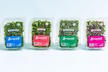
Supermarkets still focus primarily on price and security of supply. We primarily communicate to consumers the benefits of our products: locally grown, super fresh, and completely pesticide-free. We don't mention vertical farming on our product labels: it's a topic many people are still unfamiliar with and can even generate distrust. The same applies to the government, by the way: we're also seeing a lot of unfamiliarity there. This has consequences for subsidies and legislation, for example.
Why did you join the Fieldlab Vertical Farming?
To raise the profile and image of vertical farming. But especially to share knowledge. That's essential for further development. Within vertical farming, parties like to keep their knowledge to themselves. Everyone—both in the Netherlands and abroad—thinks: I've found the solution and I'm keeping it to myself. But that doesn't get us anywhere. Together, we can learn faster and strengthen each other.
What kind of knowledge are we talking about?
It's primarily about improving efficiency and profitability. Think of smarter energy management, optimizing cultivation systems, and sharing knowledge about climate control, lighting, sowing, and harvesting. Many parties have already found solutions for some of the problems, but that knowledge is dispersed. By pooling experiences, companies don't have to reinvent the wheel every time.
Can that also contribute to the position of the Netherlands?
Definitely. The Netherlands isn't a major player in vertical farming. But it does have a good reputation in the agricultural sector. If I say abroad that I'm a Dutch farmer, everyone believes everything I say, so to speak. Our country has enormous credibility when it comes to food production and horticulture. We can capitalize on that reputation when it comes to vertical farming.
Do you have plans outside the Netherlands?
Yes, those plans are definitely in place. Besides our activities in the Netherlands, we have projects underway in other European countries and North America. We're exploring collaborations with retailers, partners, and sometimes even governments interested in local vertical farms. Our ambition is to grow internationally gradually, primarily through collaboration and the scalable application of knowledge and concepts.
Is there external capital available for growth?
"Fortunately, they know where to find us. But in general, you see that investors have become more cautious about investing in vertical farming. This is mainly due to previous failures in the sector, which have cost investors a lot of money. But if we can demonstrate together that it works technically and economically, and that consumers are willing to buy the product, confidence will return."
How do you see the future of vertical farming?
The future is promising, but collaboration remains key. Vertical farming won't replace existing cultivation methods, but rather become a valuable addition, for example, with hybrids. I absolutely believe that vertical farming is a profitable and efficient way to grow a number of crops, such as leafy greens, and even more 'vulnerable' crops in the future. I just think that even more opportunities can be found with a hybrid approach.
By sharing knowledge, creating realistic expectations and working together towards the market and policy, vertical farming can develop into a mature part of the agricultural sector."
Source: Greenport West Holland (link in Dutch)