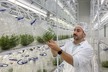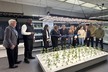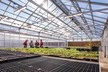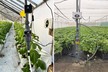


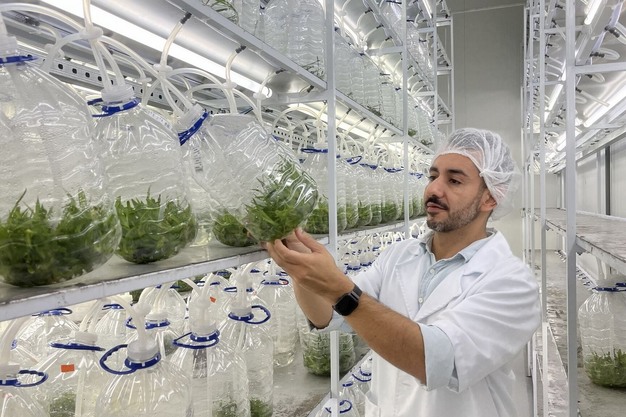
Automation and advanced tissue culture technologies are increasingly transforming large-scale plant propagation. A recent development is the MCP Temporary Immersion Bioreactor (TIB) system, designed to increase efficiency, improve plant quality, and reduce labor requirements compared with conventional agar-based tissue culture.
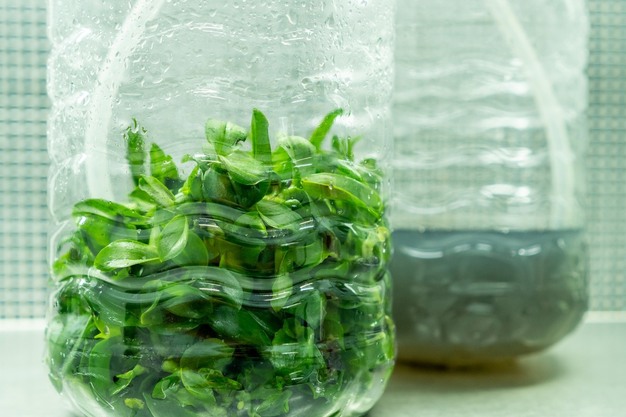
The TIB system periodically immerses plant material in a nutrient solution under controlled conditions. This "high tide/low tide" approach allows efficient nutrient uptake while ensuring adequate oxygen supply during the drainage phase. According to Alewijn Broere, Director at SBW do Brasil, the technology offers a significant step toward industrializing plant propagation.
 © SBW
© SBW
"The system operates in cycles where plant material is temporarily immersed in nutrient solution and then drained," he explains. "This creates optimal growth conditions while maintaining gas exchange and minimizing contamination risks."
 © SBW
© SBW
Automation and production efficiency
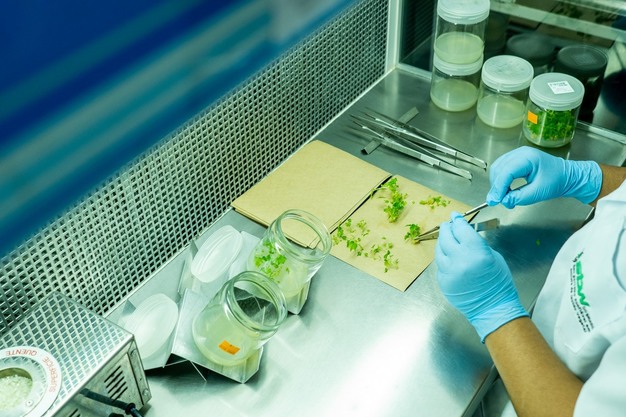
Traditional tissue culture systems typically rely on solid media and involve intensive manual handling, frequent transfers, and significant labor input. By contrast, TIB systems automate many of these processes and reduce the need for manual intervention.
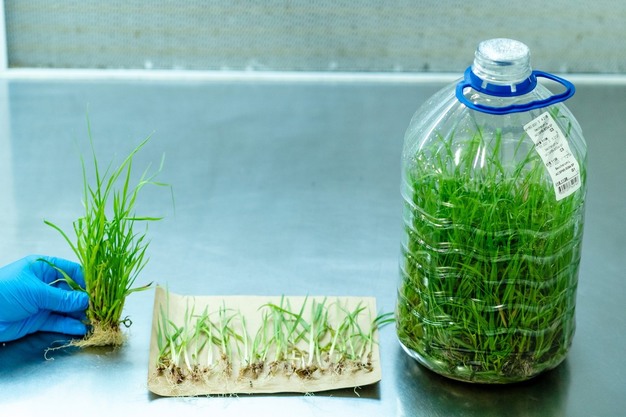
"The key advantage is automation," Alewijn says. "Processes such as elongation and rooting can be carried out in the same system, which dramatically reduces handling steps."
The reduction in labor can be substantial. In controlled environments, labor time in inoculation chambers may be reduced by up to 60–90%. At the same time, the elimination of agar lowers media consumption and simplifies preparation procedures.
"With automated monitoring and sensors controlling the environment, one operator can manage a large number of bioreactors. That level of scalability is difficult to achieve with classical propagation methods."
Economic modelling also suggests significant operational savings. While the initial investment in equipment is higher than traditional systems, lower operating costs and higher production output can shorten the return-on-investment period.
"Depending on crop and production scale, the payback period can range from a few months to two years. Once the system is running, the cost per plant decreases significantly."
 © SBW
© SBW
Quality, uniformity and contamination control
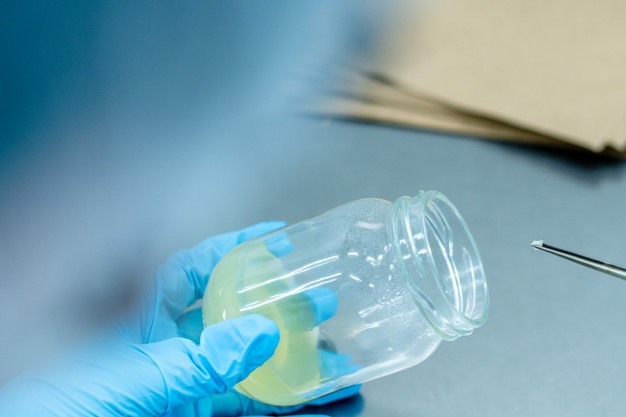
Another advantage of TIB systems is the controlled and closed production environment. In conventional tissue culture, frequent opening of containers increases the risk of contamination. Bioreactor systems remain sealed throughout the growth cycle.
"Because the system remains closed, contamination from external sources is greatly reduced," he explains. "The challenge shifts to managing internal plant bacteria, which can be addressed through optimized media formulations."
Uniformity is also improved because plants grow under identical and tightly regulated conditions. This consistency is particularly important for commercial nurseries and large-scale agricultural operations.
 © SBW
© SBW
Supporting large-scale crop production
For crops such as sugarcane, clean starting material is critical to ensure healthy plantations and stable yields. Tissue culture propagation offers a way to produce disease-free plantlets at scale.
"The future of sugarcane production starts with clean plant material. When growers start with pathogen-free tissue culture plants and combine that with good field selection, the results are higher productivity and more sustainable production."
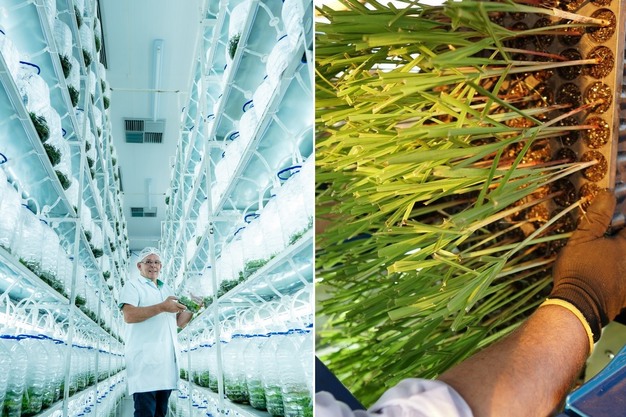
Alewijn adds that the integration of automation, robotics, and vertical farming environments further expands the potential of the technology. "From the laboratory to the greenhouse and ultimately the field, automation allows us to produce millions of plants with a relatively small team," he says.
 © SBW
© SBW
Expanding applications beyond sugarcane
While TIB systems have been widely used in crops such as sugarcane, the same principles can be applied to other species.
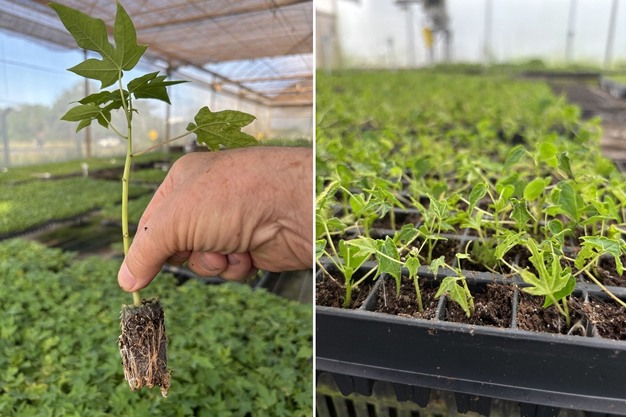
At SBW do Brasil and MulticropsPlus, researchers have developed hundreds of tissue culture protocols for a wide range of crops. Some, such as papaya, have required years of development.
"Papaya was one of the most challenging crops we worked on," Broere says. "But perseverance paid off. Today we are producing thousands of plants per week with uniform growth and earlier fruiting."
 © SBW
© SBW
Large-scale micropropagation also supports emerging crops and new agricultural value chains. For example, agave is being explored in Brazil as a potential feedstock for bioethanol production.
"To transform research into commercial production, you need healthy and uniform starting material," he elaborates. "Our role is to provide that propagation capacity."
 © SBW
© SBW
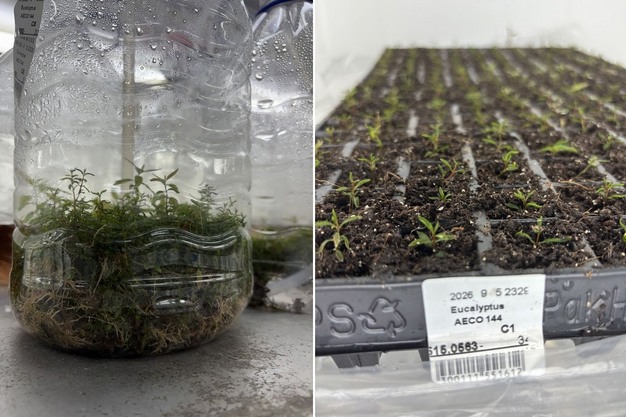
Further developments are already underway, including automated propagation systems for crops such as eucalyptus. In these systems, tissue culture shoots produced in TIB bioreactors can be transferred by robots into trays and rooted in vertical farming environments before being moved to final containers.
 © SBW
© SBW
"The combination of tissue culture, robotics, and controlled environments allows the entire propagation process to become far more efficient."
For more information:
SBW do Brasil
Alewijn Broere, Director
[email protected]
https://sbwbrasil.com.br/