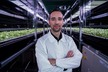


David Ashton grew up outside of Sacramento, California, and went to college in San Luis Obispo during the historic drought of the late 2000s. He spent years driving the 300-mile stretch between Sacramento and San Luis Obispo, enthralled by the never-ending lettuce farms, acres of leafy green plants against a bleak, dry background. The fact that these lush, green crops were grown in drought conditions to be shipped to other parts of the country stuck with Ashton and later became the inspiration for his robotic farming startup Canopii, which looks to shrink produce supply chains.
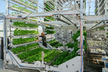
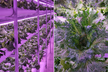
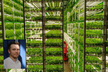
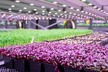
Portland, Oregon-based Canopii builds robotic greenhouses that can autonomously run the whole crop-growing process from seeding to harvest without human intervention. These greenhouses can produce up to 40,000 pounds of produce a year while requiring only one spigot of water and taking up the same space as a basketball court. The farms are manufactured by GK Designs and are currently designed to grow herbs and specialty greens like baby bok choy and gai lan, a Chinese broccoli.
Ashton told TechCrunch that he started really sowing the seeds for Canopii after the Portland-based agtech company he was set to work at filed for bankruptcy while he was driving up the coast to move there. He worked on the plans at night while his wife was in medical school. After three years, he applied for a $250,000 grant with the National Science Foundation to build a prototype of his vision. After that was successful, he applied for a $1 million grant to build a full-scale prototype.
"Now, five years later, we have hit a major milestone [for] the farm," Ashton said. "We have an autonomous farm that grows everything from seed to harvest without any human intervention, and we did so with a very small team and very little capital, which I think is very different from what the rest of the industry had experienced."
Read more at Tech Crunch