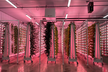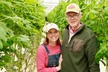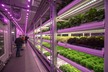


When three Washington DC attorneys decided to leave law behind, they did not go quietly. Ali Sherifzada, his brother Ibrahim, and childhood friend Jason Stern founded District Farms in 2017 with a single directive: grow lettuce locally at commercial scale through automation and algorithmic design. The result is a five-acre greenhouse facility in rural Frederick, Maryland, producing between 140,000 and 150,000 heads of lettuce per week.
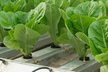
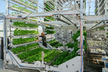
The facility operates a nutrient film technique system in which plants progress through metal troughs on an automated conveyor as they grow. Unused nutrient solution drains, is captured, filtered, treated, and recirculated throughout. The company says the system uses approximately 90% less land, 80% less water, and significantly less fertilizer runoff than conventional field production.
Automation is an iterative process at District Farms. Seeding is mechanized, transplanting remains manual, and harvest and packing is the next bottleneck the team is working to solve. A distribution partnership with Mastronardi puts more than 15,000 heads daily into grocery stores across Maryland, giving the facility direct retail access.
The founders frame their long-term outlook around what they call the TPC thesis: the shift of tomatoes, peppers, and cucumbers from field to greenhouse production over time. "Our thesis is that what happened with tomatoes, peppers, and cucumbers will inevitably happen with lettuce. And we also are looking to expanding elsewhere as well in a more highly automated manner based on everything we've learned here," says Sherifzada.
Source: Maryland Farm and Harvest