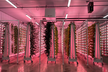


When Area 2 Farms co-founder Oren Falkowitz talks about the future of vertical farming, he doesn't start with the technology. He starts with the farmer. The company grows certified organic produce, sold directly to local residents through weekly CSA baskets that combine leafy greens, herbs, and soil-grown root vegetables. It recently announced a franchise model designed to put individually owned, community-facing farms into urban neighborhoods across the United States. The ambition is large: a farm within 10 miles of 90% of the US population, owned and operated by people rooted in the communities they serve.
"Rather than distributing food, we wanted to distribute farms. We call that: move the farm, not the food. If you're going to have hundreds of farms, it makes the most sense for those farms to be led by a farmer. That person has an ownership stake and a commitment to excellence and craft that's required to produce really great things." Falkowitz points to the structure of the broader agricultural sector as proof of concept.
"Companies like Driscoll's Berries, Land O'Lakes, and Ocean Spray are already networked farm models," he argues. "The franchise structure is less a disruption than a formalization of something that has always worked. Farmers have always worked together, and networks of farms are always better for people. A lot of the value is in there being an individual farmer who's the leader, who's the touch point, who receives most of the value on the economic exchange."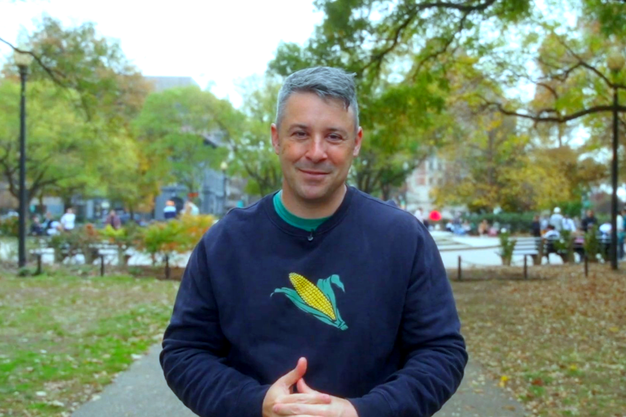 © Area 2 Farms
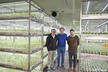
Oren Falkowitz
Soil in a vertical farm
Area 2's approach differs from most vertical farming operations: it grows in soil as well as in a proprietary vertical SILO system. The combination was driven by a commercial logic as much as an agronomic one. A farm that only produces herbs and leafy greens is too narrow a basket to anchor a community relationship.
"Having a more well-rounded basket was really essential," says Falkowitz. "We wanted to have carrots and turnips and radishes, and that's worked really well." The farm is certified organic and currently grows carrots, potatoes, sweet potatoes, turnips, radishes, celery, herbs, leafy greens, and microgreens. Tomatoes are in development. Composted soil that is no longer used for growing is sold to community gardens, school programs, and garden shops.
The choice of soil also reflects a view on pest management. Falkowitz draws a parallel with greenhouse operations, which often rotate crops when pest pressure becomes unmanageable rather than treating the problem directly. "We have more of a living organism. The soil doesn't get thrown away, doesn't get dumped. It becomes something that has a life even outside of our farm."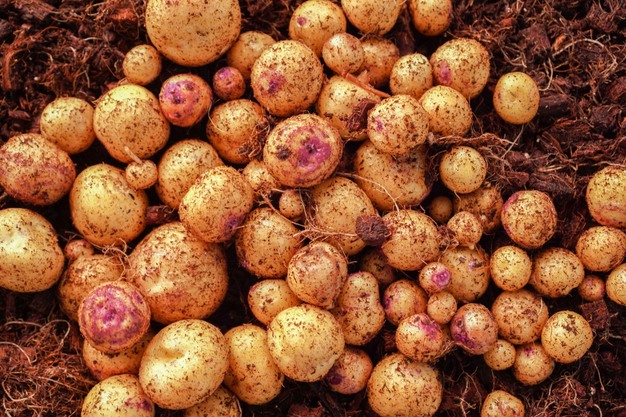 © Area 2 Farms
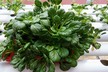
Soil allows Area 2 to grow root vegetables that are included in its weekly CSA baskets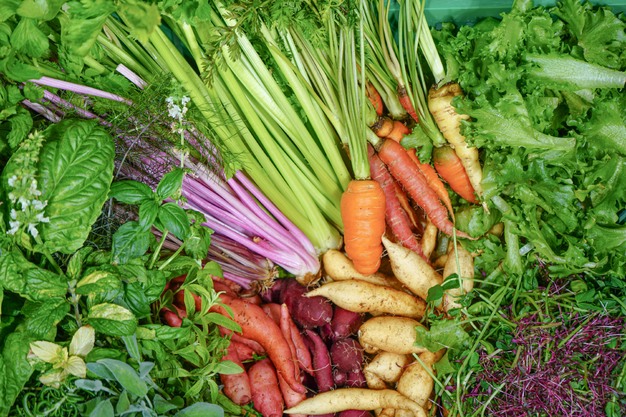 © Area 2 Farms
Each CSA basket combines leafy greens, herbs, and soil-grown root vegetables
The SILO system
The vertical component of the farm is built around what Area 2 calls its SILO, a modular, robotic system designed to work with the physics of vertical growing rather than fight them. Heat rises in stacked growing systems, creating temperature gradients that typically require expensive HVAC infrastructure to manage. "It's 12 degrees warmer at the top than at the bottom, so we're not fighting the physics, we're working with it. We're moving the plants through it, and that allows us to remove 25% of the LED lights," says Falkowitz. "We don't need multi-million dollar HVAC and very expensive energy. It's a fraction of the cost to produce the systems and to operate them."
The SILO is modular, which Falkowitz says allows it to be deployed in oddly shaped spaces and repurposed buildings, a practical consideration for urban locations where ideal square footage is rarely available. Production across all Area 2 farms is standardized at a maximum of 400 community-supported agriculture (CSA) baskets per week.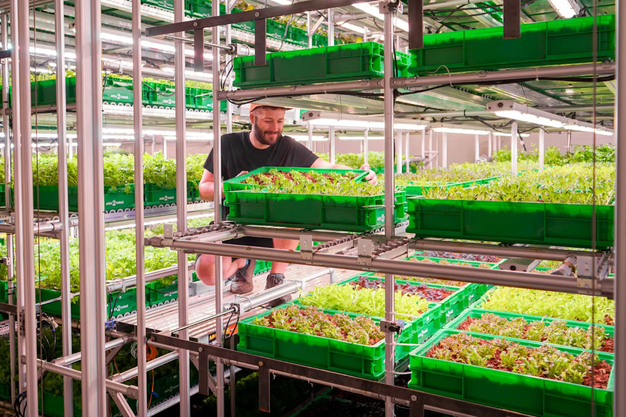 © Area 2 Farms
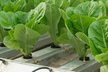
The SILO's robotic mechanism cycles plants through the structure, removing the need for expensive, energy-intensive HVAC infrastructure
What the franchise includes
The franchise package covers the full operational stack, from seed selection and R&D trials to harvest systems, staffing guidance, and community engagement support. Area 2 retains corporate-run farms specifically to generate the operational data that underpins its franchisee support. "We've been at 100% of produced to sold for a really long time at our existing farms. If someone has an issue, our soil scientists have conducted trials, and we make a recommendation. We will touch base in two days to see if the problem has mitigated itself. We could not do that if we weren't operating farms ourselves."
Initial capital outlay runs from $308,000 to $471,000, covering all equipment, technology, tools, and input costs for the first growing seasons. A new farm should be operational within 30 to 60 days of opening, with growing time for the first baskets added on top.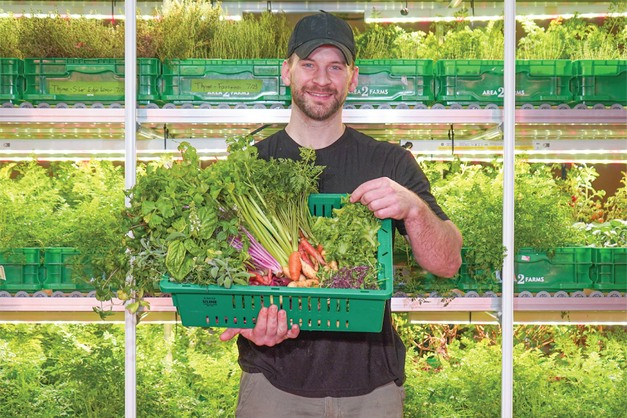 © Area 2 Farms
A farmer displays a freshly harvested CSA basket. Area 2 reports a 100% produced-to-sold ratio at its existing farms
Who the company is looking for
Area 2 is targeting urban markets where population density supports a direct-to-consumer model. Priority cities include Atlanta, Charlotte, Nashville, Columbus (Ohio), Austin and Dallas (Texas), and South Florida. Each franchisee receives territorial protection. No competing Area 2 location within 10 miles.
Agricultural experience is not a requirement. Business experience is. "What's essential is that you have some business acumen. You've run teams before. You understand how to read a profit and loss statement. We can teach a lot of the agricultural things," says Falkowitz. "There are some growers who just want to grow and never talk to people. This doesn't work when you're running a community-organized farm. If you have the desire to interface with people and to create a thick relationship rather than a thin virtual one, I think the combination of those things can be very successful."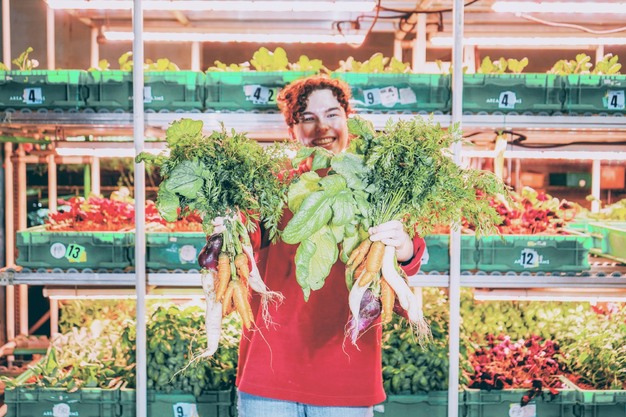 © Area 2 Farms
Community engagement is central to the model. Area 2 farms are designed as open spaces where people interact with the growing process
Initial reception
Falkowitz describes the reception to the franchise announcement as strongly positive, with many people in his personal network asking whether they could participate. He attributes part of that interest to broader uncertainty about the future of work. "There's a lot of uncertainty about what work will look like, what jobs will look like, what our cities will look like."
"We do have a lot to prove. Our next step is to see if we can build a network, going from two farms to 10 farms run by other people, then keep moving towards having a farm within 10 miles of 90% of the US population. That's four or five hundred farms across the United States. That will take time, but that's what we're in for."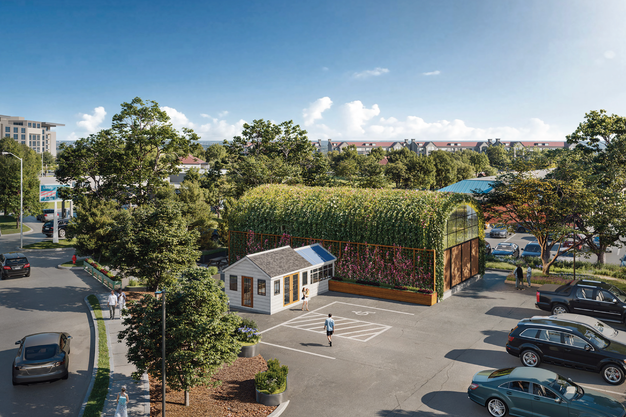 © Area 2 Farms
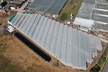
A render of an Area 2 Farms facility, showing the compact footprint and community-facing design intended for urban neighborhoods
For more information:
Area 2 Farms 
Oren Falkowitz, Co-Founder
[email protected]
www.area2farms.com