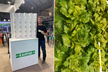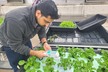


A sophomore at Savannah State University is combining his passion for marine life and environmental science to explore innovative research that could impact both food sustainability and ocean health. Khaifani Lewis-Pousada, a marine science major, is pursuing his goal of becoming a wildlife rehabilitator while gaining hands-on experience in biological research. On March 15, 2026, he presented his latest work on aquaponics—a sustainable farming method that grows plants without soil—to marine science professor Dr. Sue Banks.
Aquaponics is a system that uses fish and water to help plants grow. Waste produced by fish releases nutrients into the water, which are then absorbed by plants, allowing them to grow faster while naturally filtering the water.
"In many parts of the world where soil quality is poor, growing crops can be difficult," Pousada said. "Aquaponics offers a way to grow plants more efficiently and often faster than traditional soil-based methods."
Pousada explained that in an aquaponics system, fish or other aquatic organisms produce ammonia-rich waste that is circulated through a tank. This water is then filtered through a raft system, where plants absorb the nutrients. The process not only supports plant growth but also cleans the water, creating a sustainable cycle. "Aquaponics is good when you don't have a lot of space that you might need for soil because you can do it vertically, you can do different shapes," he added.
Read more at The Tiger's Roar