


Avisomo's Crispi baby leaf lettuce has been on the shelves of Coop Mega stores under the Reindyrka brand since last month. The retail environment presents a demanding test: temperature fluctuations, light exposure, and extended holding periods that challenge product integrity, but testing results validate the production system's output quality.
"The results from Coop Norway's sensory and microbiological testing are in, and they exceed even our highest expectations," says Martin Molenaar, CEO at Avisomo. "Testing was conducted on packaged Crispi stored under cold conditions and evaluated on days 3, 14, 21, and 28 after harvest."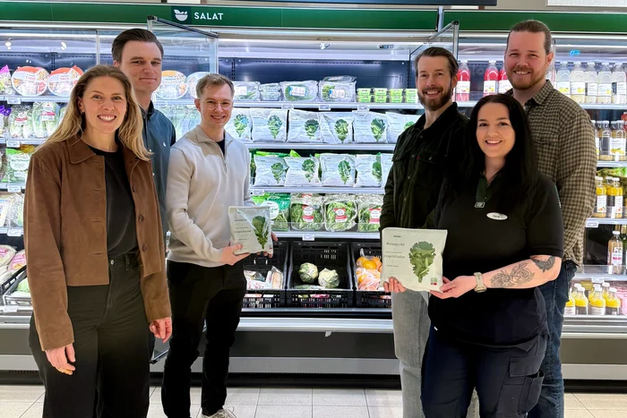 © Avisomo
Microbiological performance
"We've seen exceptionally clean results, with levels below the limit of detection for coliforms, E. coli, yeast or mold, and no development observed over a 28-day period," Molenaar says.
The microbiological data confirm this assessment. Across all four test points, E. coli, coliform bacteria at 37 degrees Celsius, yeast, and fungal spores all registered below detectable thresholds. Two pathogenic strains tested, Salmonella and Listeria monocytogenes, showed no detection across the month-long holding period. The absence of microbial development underscores the controlled growing environment's ability to produce pathogen-free lettuce at scale.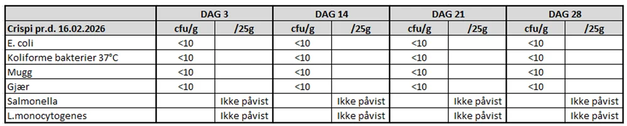 © Avisomo
Visual quality retention
After 28 days in retail cold storage, the leaves remained fresh and green with crisp texture and no visible signs of deterioration, such as pinking. Photography documenting the product's condition from harvest through week four shows consistent visual integrity, with no browning, slime formation, or texture breakdown visible. The leaves maintained structural firmness and color saturation throughout the storage period.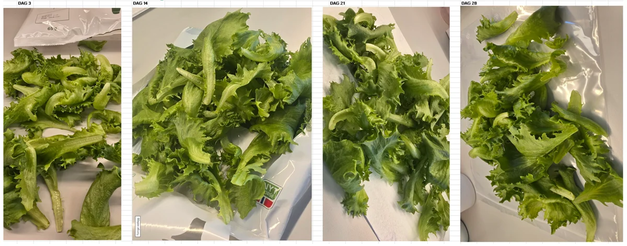 © Avisomo
Crispi baby leaf lettuce, sampled at days 3, 14, 21, and 28 after harvest. Visual condition remains stable across the four-week test window, with no visible browning, texture loss, or deterioration markers
Sensory consistency
A radar chart tracking sensory attributes across the four test points reveals performance stability. Attributes measured, such as appearance, color, aroma, flavor, off-flavor, texture, and overall impression, clustered tightly around optimal scores on a one-to-ten scale, where one represents ideal quality.
Line tracking for days 3, 14, 21, and 28 shows minimal variation across the sensory panel assessments, with all four day-points occupying nearly identical positions on the chart. A slight improvement in scores between day 21 and day 28 reflected normal variation between sensory panels at different testing stages and confirmed that no quality loss occurred between week three and week four.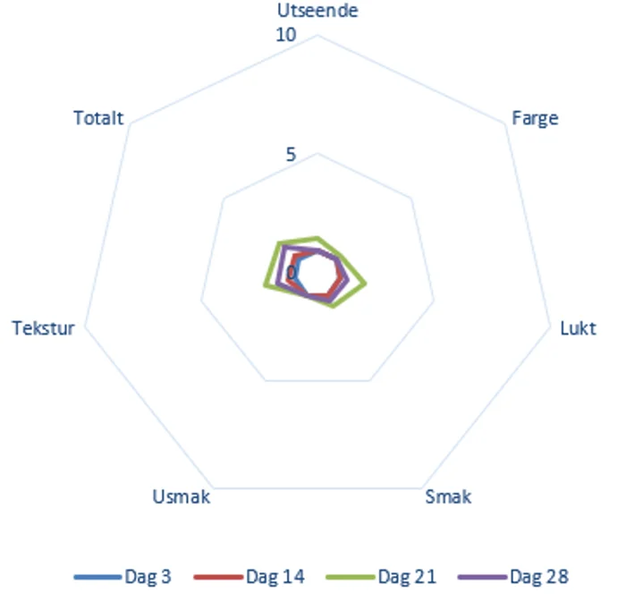 © Avisomo
For more information:
Avisomo
Martin Molenaar, CEO
[email protected]
www.avisomo.com