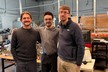


In the semi-arid plains of Ongata Rongai, on the southwestern edge of Nairobi, conventional fish farming has a poor track record. Water scarcity has seen pond after pond dry up, leaving a trail of failed ventures across Kajiado County. Vertical Lake, co-founded by Jack Oyugi and Dr Jez Lofts, is taking a different approach, one that borrows its logic from nature rather than fighting it.
"We understood how a lake operates," says Oyugi, CEO of Vertical Lake. "It has a natural cleaning mechanism. Waste is removed and digested by microorganisms. We asked ourselves: why can't we replicate what happens in a lake exactly where we need it?"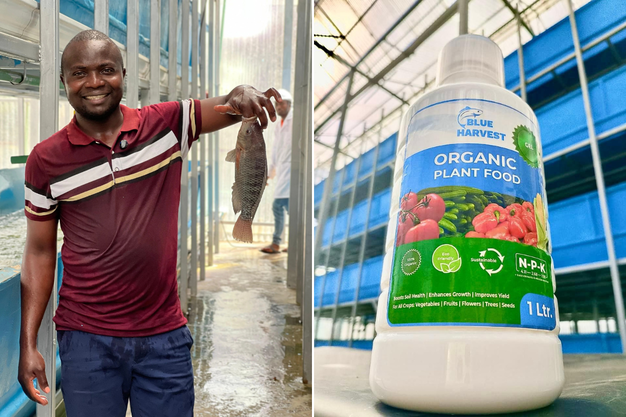 © Vertical Lake
A lake in stacked tanks
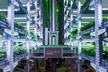
The answer is a vertically stacked closed-loop aquaculture system running entirely on solar power and harvested rainwater. Water flows continuously through interconnected tanks and a biological filtration system, recycling 98% of its volume, saving an estimated 6.4 million litres of freshwater per module annually compared to conventional pond farming. The system produces tilapia without antibiotics or chemicals, with each unit occupying around 100 square metres of space while matching the output of 15 or more traditional ponds.
The current facility houses more than 20,000 tilapia across eight tanks, with fish progressing from upper to lower levels as they approach market size of 500 to 600 grams, reached within six to eight months.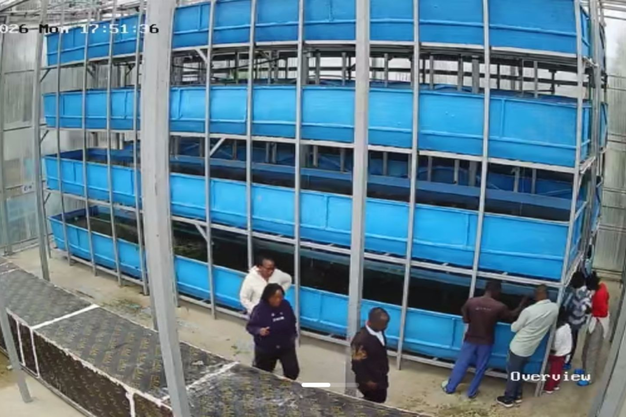 © Vertical Lake
Three outputs, one closed loop
Fish production is only one part of the model. Oyugi describes Vertical Lake as a circular organic aquaculture platform, one that converts every output into a marketable product.
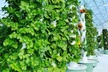
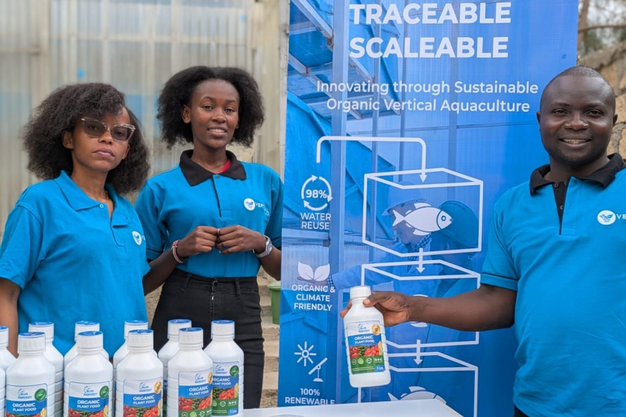
Fish waste collected at the base of the tanks is processed into BlueHarvest, an organic biofertiliser available in gel and liquid formulations containing NPK nutrients, trace minerals, beneficial microbes, and chitin. Over the past six months, the product has been tested across seven Kenyan counties. A first mid-scale drone application was completed across 50 acres of sugarcane in Homa Bay County in under two hours, in partnership with ShambaSync Kenya and Fahari Aviation.
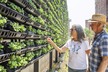
"We chose to design food systems that work like nature: nutrients cycle, water flows, and nothing is wasted," says Oyugi. A third output, collagen processed from fish bones, scales, and skin, is being piloted for wound care applications in hospitals, with skincare and nutritional derivatives in development.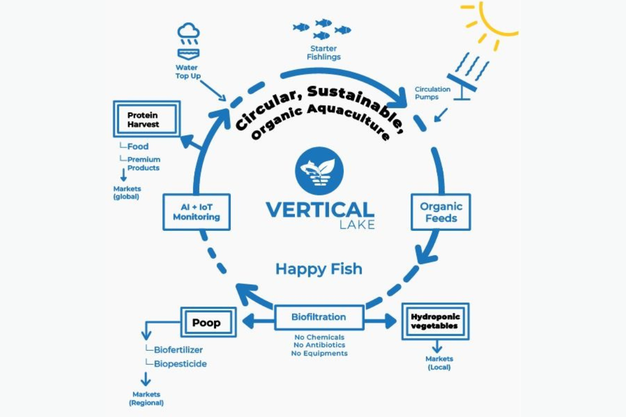 © Vertical Lake
  © Vertical Lake
Retail and recognition
On the fish side, Vertical Lake has secured its first retail partnership with Greenspoon, a Nairobi-based organic supermarket, supplying traceable, antibiotic-free tilapia fillets under branded packaging.
The operation has drawn attention beyond Kenya's borders. Vertical Lake was nominated for the 2025 Earthshot Prize, received £100,000 in funding from the Royal Academy of Engineering, and was selected as one of five companies for the Green Business Building Manufacturing Accelerator, supported by Manufacturing Africa, the British High Commission Nairobi, and McKinsey.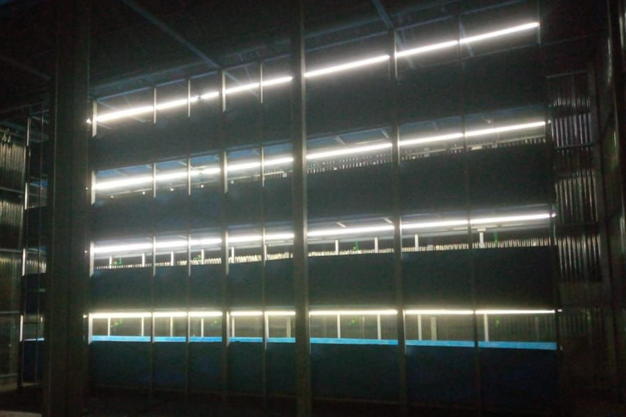 © Vertical Lake
Doubling down
Construction is now underway on Phase 3 of the facility, which will double current production capacity for both fish and BlueHarvest. "Scaling circular food systems isn't just about ambition," says Oyugi. "It's about steady, deliberate growth."
The expansion comes against a widening national supply gap. Kenya produced 168,424 metric tonnes of fish in 2024, a 4.4% increase on the previous year, but remains well short of the 510,000 metric tonne demand projection based on African average per capita consumption targets, according to the Kenya Fisheries Service.
"Fish can play a very important role in enhancing food security, especially in arid and semi-arid areas," says Stanley Mworia, CEO of the Aquaculture Association of Kenya. "It provides a resilient source of nutritious food and income where conventional agriculture is limited by water scarcity and harsh climatic conditions."
For more information:
Vertical Lake 
Jack Oguyi, CEO
[email protected]
www.vertical-lake.com