

"When I first saw several large vertical farms in online videos from the United States and Japan, I was impressed by their scale and technological ambition", shares Seungwan Lee, founder of BK Conveyor Culture. "At the same time, however, one simple question immediately came to my mind: Who will work up there?"
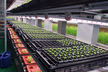
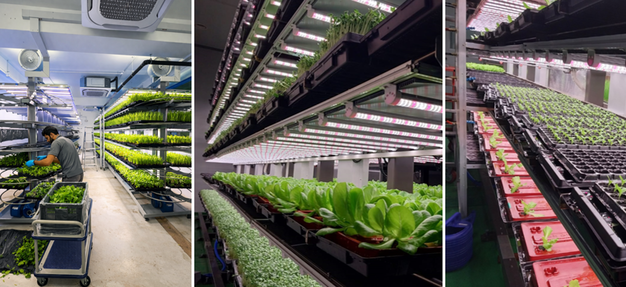
In many of these farms, crops are grown on tall multi-layer racks. "Workers had to reach into narrow spaces to harvest lettuce one by one with a knife. Some facilities claimed production volumes of several tons per day."
Seungwan began to wonder how many people would actually be required to operate such systems. Another question concerned maintenance and cleaning. "In many vertical farms, countless water vessels and pipes are installed above the workers' heads. Even simply walking underneath them looked uncomfortable, and cleaning or maintaining such environments seemed even more complicated."
 © BK Conveyor Culture
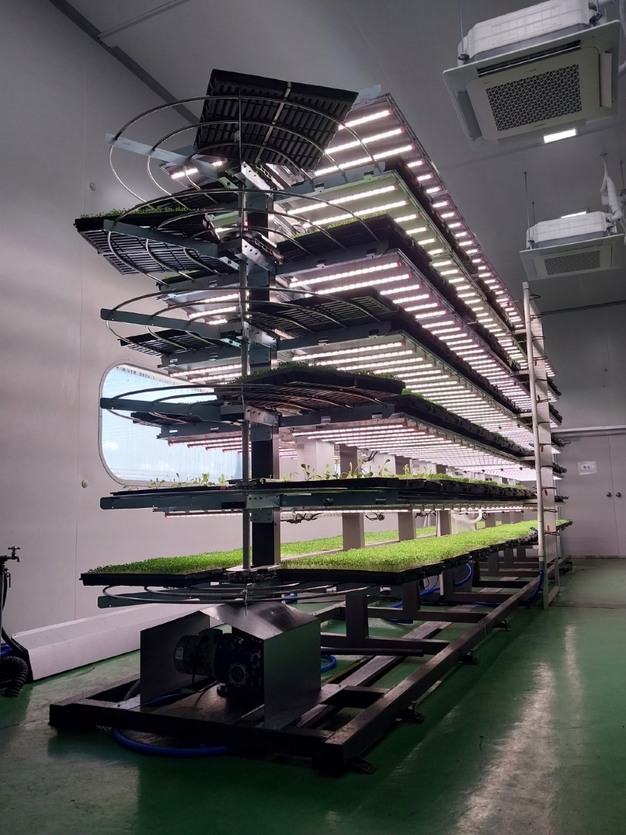
Interestingly, BK Conveyor Culture (BKCC) was not originally developed as a response to vertical farming. "The idea actually dates back to the late 2000s, when even the iPhone had not yet been released and the concept of "smart farming" was still largely unknown", he recalls. "At that time, container-based barley fodder systems were gaining attention. From the irrigation perspective, one issue stood out: mold."
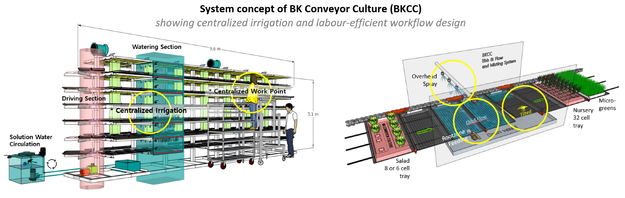
The idea was simple: concentrate irrigation at one point and move the trays instead. This reduced the number of nozzles and enabled Ebb-and-Flow irrigation with fewer clogging issues. The system could also switch between root-zone feeding and overhead spray depending on the crop. Over time, this concept evolved into what is now known as BK Conveyor Culture.
Then, in the late 2010s, the global rise of microgreens and baby leaf production began to create new opportunities. By that time, the technical principles of BKCC had already been established.
 © BK Conveyor Culture
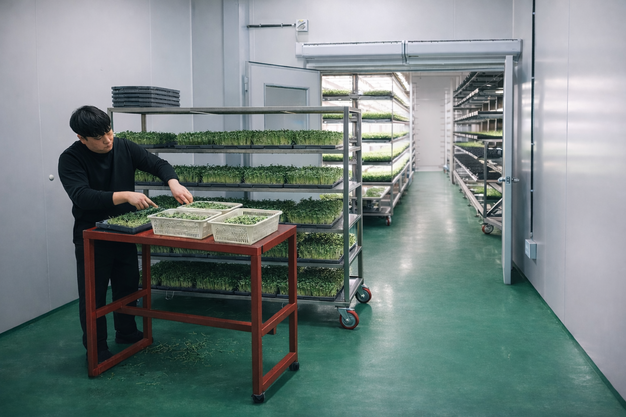
He explains that several characteristics became central to the system. One of them was a single working point. "Workers no longer need to climb up and down growing racks and to move around, reducing labour requirements to less than one-third of fixed rack systems." With the same point of view, a single irrigation point was developed. "Irrigation is centralized, reducing the number of nozzles and making monitoring and maintenance much simpler." Switchable irrigation methods enabled the cultivation of a wide variety of crops.
Thanks to ergonomic tray handling, trays can be handled easily with one hand. Growing and processing areas are separated. "Trays are loaded and unloaded in the growing area, while harvesting, planting, packing, and cleaning take place in a separate processing zone." A simple mechanical structure: allowing easy maintenance and easy access to components
 © BK Conveyor Culture
 © BK Conveyor Culture
Modular and scalable design
While global investment in vertical farming has rapidly expanded, many systems are still designed primarily around plants and technology on fixed multi layers. BK Conveyor Culture takes a different perspective. "The system was developed with a strong emphasis on human-centered workflow. The goal is not only to grow plants efficiently but also to create a farming environment where people can work comfortably and safely", Seungwan explains. "Eventually, making agriculture more accessible and practical for people—especially younger generations— is just as important as improving crop productivity."
For more information:
Farmers Lab Ltd (BK Greenhouses)
Seungwan Lee, CEO
WhatsApp number: +82 10 9046 5551
www.bkgreenhouses.com
[email protected]