
When the first containers of Indoor Vertical.Farm's pilot system arrived in Bridgetown earlier this year, it marked the beginning of a new phase for controlled environment agriculture in the Caribbean. The project, in partnership with the Government of Barbados, introduces a fully off-grid, vertical farming installation designed for research, training, and education.
"We landed the first government deal in December 2024, and the farm is now built and running the first tests," says Bernard Sleijster, Chief Executive Officer of Indoor Vertical.Farm. "It's a pilot that shows how local production, training, and renewable energy can work together to strengthen food security in island nations."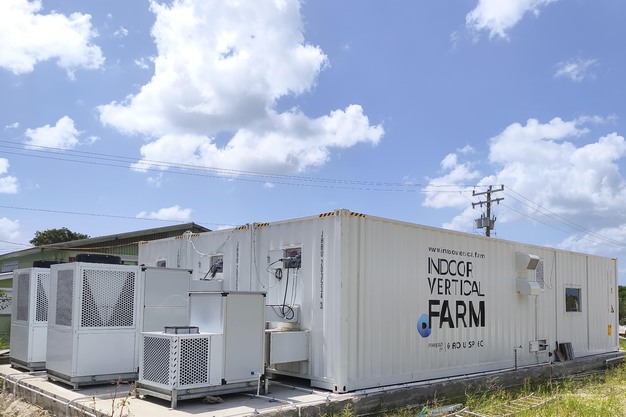 © Indoor Vertical.Farm
Training and testing at the heart of the pilot
The Barbados installation consists of three container units, two for production and one for nursery and support, which will operate under a solar-battery microgrid with grid and generator backup. Each unit is independent, equipped with its own HVAC, fertigation, and irrigation system.
"At the moment we're still waiting for the full grid connection, but testing is underway using a temporary generator," Sleijster explains. "The Ministry of Agriculture is installing a complete solar solution that will provide 100 percent of our power needs, so the system will be fully off-grid."
"We are training local farmers and schools, bringing vertical farming technology into education. The government wants to see which crops grow best under local conditions, and the quality we can achieve."
"In addition to the container farm, we'll be delivering four Compact Ultra units, which will be distributed across government departments, R&D centers, and educational institutions. These units will not only serve as production systems but also as living classrooms, empowering students, researchers, and future farmers to explore sustainable agriculture hands-on."
Aeroponics, recycling, and modular control
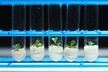
Inside the containers, crops grow on aeroponic systems under energy-efficient LED lighting with optimised spectra for consistent, high-quality growth. Each unit maintains a separate climate zone to limit risk and improve precision.
"Most of the water used in the system is recycled," Sleijster explains. "Outside, we have a reverse-osmosis unit, and each container includes additional filtration. Every HVAC and fertigation component sits outside the growing area to maximise internal space and climate control."
The pilot includes an air-shower entry, stainless-steel work surfaces, and a seedling area designed to run in parallel with the grow rooms. "By growing seedlings and mature crops at the same time, we can maintain a continuous cycle."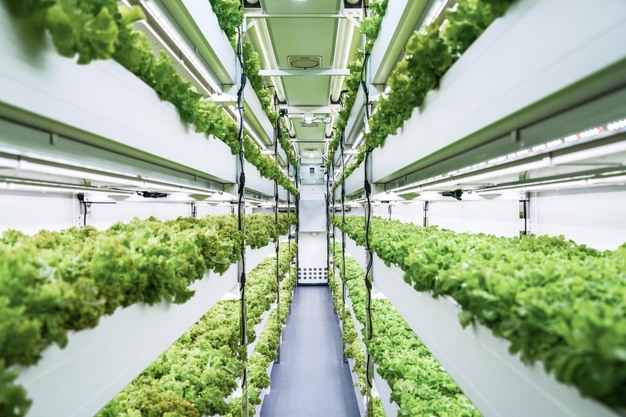 © Indoor Vertical.Farm
EU-supported collaboration for resilient food systems
Indoor Vertical.Farm's partnership with the Barbadian Ministry of Agriculture aligns with regional goals to reduce food-import dependence. "About eighty-five percent of food in Barbados is imported," Sleijster says. "The goal is to show what can be produced locally, improve quality, and reduce transport costs and waste."
Indoor Vertical.Farm recently participated in the Caribbean Week of Agriculture in St. Kitts and Nevis, the region's premier annual event bringing together governments, farmers, investors, and development partners to promote innovation and policy action for food security.
During the session titled "EU-Caribbean Initiatives for Resilient and Sustainable Food Systems," organized by the Delegation of the European Union in the Caribbean in collaboration with CARICOM/CARIFORUM, Sleijster presented how European companies can support local governments in developing climate-resilient food systems across island nations.
Two business models, one technology base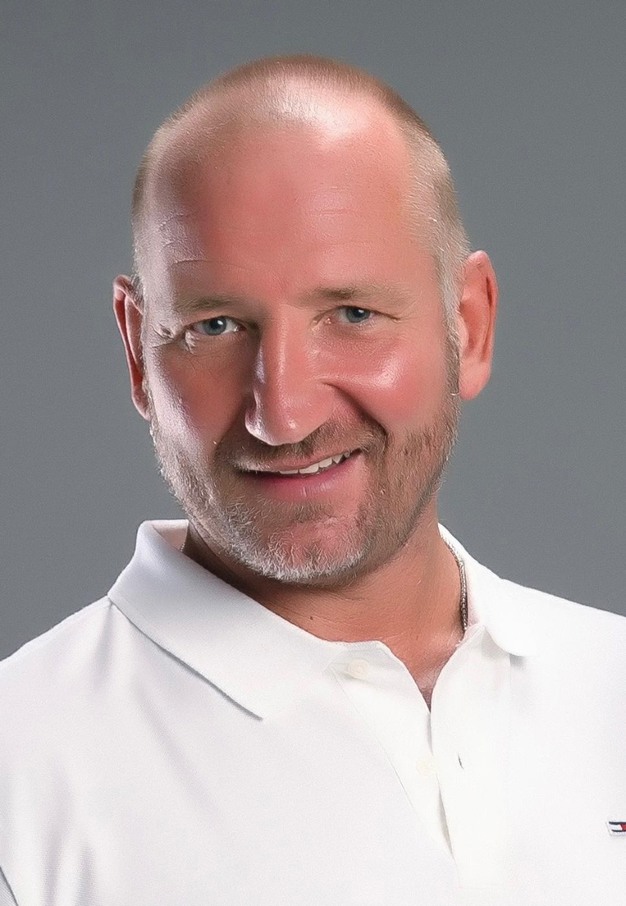 © Indoor Vertical.Farm
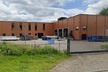
Beyond the Caribbean, Indoor Vertical.Farm is preparing to open an experience and R&D center in Hasselt, Belgium, where visitors can see most of the company's technology and test new crops and growing methodologies.
"We have two complementary business models. One is supplying equipment and services from installation to training and operations. The other is developing and operating our own farms, where we take responsibility for production and distribution. That combination balances short-term revenue from equipment with long-term value from ongoing operations."
The company has already signed five letters of intent with additional Caribbean partners and plans to expand the program to other islands over the coming year.
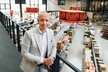
Bernard Sleijster (right)
A model for off-grid resilience
The Barbados pilot demonstrates how modular, solar-powered vertical farming can adapt to small-island environments where imported food, high energy costs, and climate risk intersect. "It's about creating local capability. By training farmers and integrating renewable energy, we can help communities grow fresh produce sustainably, right where it's consumed."
For more information:
Indoor Vertical.Farm 
Bernard Sleijster, CEO
[email protected]
www.indoorvertical.farm