

As the global food system faces mounting pressure from extreme weather, water scarcity and increasingly fragile supply chains, South African agri-tech company InvertiGro is making the case for a fundamental rethink of how fresh produce is grown. The company describes its approach as "climate-proof agriculture", a model built on controlled-environment growing that it says can deliver reliable, nutritious food anywhere in the world, regardless of season or climate conditions.
Taking the unpredictability out of farming
At the heart of InvertiGro's proposition is the belief that traditional agriculture's greatest weakness is its dependence on variables beyond a grower's control. Soil quality, rainfall and sunlight have always governed what can be grown, where and when, but InvertiGro argues that controlled-environment agriculture (CEA) changes that equation entirely. By creating crop-specific optimal growing conditions every single day of the year, the company's systems allow growers to achieve predictable yields of consistently premium-quality produce, located close to the point of consumption and entirely independent of external climate conditions.
Engineering for resilience and profitability
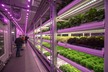
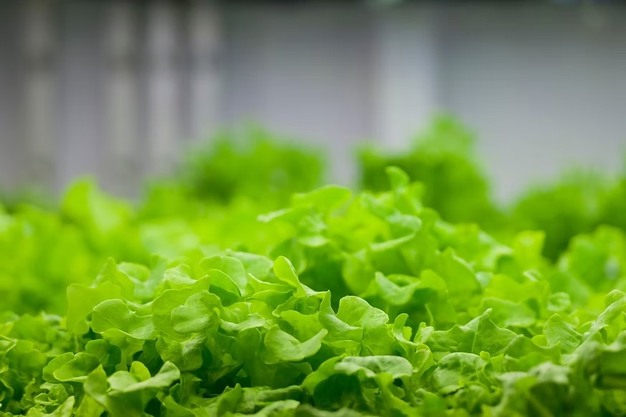
InvertiGro's technology has been designed with commercial viability front of mind. Its systems allow growers to precisely manage light spectrum and intensity, water and nutrient delivery, giving plants exactly what they need, and nothing more. Proprietary operating software, pre-loaded with tested grow recipes, puts that control into the hands of growers without requiring specialist agronomy expertise. The farms are also modular by design, enabling operators to scale incrementally in line with business needs, balancing economies of scale against capital requirements to accelerate the path to profitability. InvertiGro also provides end-to-end support, from farm design and installation through to ongoing operational guidance and a Farming as a Service offering for those who need it.
 © InvertiGro
Addressing the climate crisis head-on
InvertiGro frames its technology as a direct response to the accelerating climate crisis. With droughts, floods and extreme temperatures increasing in both frequency and intensity, indoor controlled-environment agriculture offers a layer of protection that open-field growing simply cannot. Beyond climate resilience, the company highlights food security as a core benefit: by enabling a wide range of crops to be grown hyperlocally, its solutions can help communities reduce dependence on long-distance supply chains and imports. The systems are also designed to use significantly less water and land than conventional agriculture, are compatible with renewable energy sources, and eliminate the need for herbicides and pesticides through protected indoor growing.
A complement to traditional farming, not a replacement
InvertiGro is careful to position its technology not as a challenger to conventional agriculture, but as a complementary extension of it. The company sees its indoor growing solutions as a way to augment greenhouse and broadacre operations, providing consistent fresh produce supply during seasonal or climate disruptions, supporting seedling production, diversifying crop risk and enabling food production in urban and remote locations where traditional farming is not viable. Together, the company argues, these approaches build a food system that is meaningfully more resilient and sustainable.
Building food system resilience at scale
InvertiGro's stated mission is to make fresh food production possible anywhere, anytime and at any scale, from hospitality venues and remote communities to large urban operations. As climate pressures continue to intensify, the company believes the case for resource-efficient, localised, dependable food production has never been stronger. In its view, the farms it enables are not simply growing facilities, they are building blocks of long-term food system resilience.
For more information:
InvertiGro
www.invertigro.com