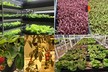


Urban Vertical Farming helps mitigate problems associated with limited crop growth due to unstable land and climate conditions.
It is expected that, under suitable control, such as soilless technology, environmental control systems, automated management, and other core working principles, food crops can be grown continuously without being affected by seasonal variations. However, the amount of energy required to create optimum cultivation conditions can lead to high operating costs (especially in Europe) and other environmental impacts.
In this study, researchers discuss those issues in relation to the construction, operation and management of an urban vertical farm, via life cycle analyses. The study is conducted with SimaPro, considering scenarios that combine the supply of building materials, building design life and transportation distance of the products, while exploring ways to reduce carbon emissions through wind energy harvesting. The results obtained indicate that the investigated urban vertical farm yields a GWP of 5.43 kg CO2 eq per kilogram of lettuce under the current grid structure, which is 9–14 times higher than that of traditional open field farming. However, the main reason for the exponential increase in GWP is the power consumption of artificial lighting and HVAC systems. Among these, 3.61 % of life-cycle carbon emissions can be saved by recycling waste lettuce at the use and production phase.
The dismantling and recycling phase can recover 4.06 % of the life-cycle carbon emissions by recycling materials. Furthermore, the study results indicated that the clean energy produced by wind turbines can reduce carbon emissions by up to 2.39 %.
Xie, Simeng & Martinez-Vazquez, Pedro & Baniotopoulos, Charalampos. (2025). Life cycle assessment of an urban vertical farm benchmark from construction to dismantling and recycling. Building and Environment. 286. 113729. 10.1016/j.buildenv.2025.113729.
Source: Research Gate