

It all started with an affordable housing concept that never got off the ground. Jason Brown, a founding member of the FarmBox Foods team, was working on a project to build housing inside shipping containers. The plan included outdoor gardens in the form of vertically integrated, food-safe tubes (foreshadowing is a narrative device, etc.). As is not unusual in these situations, construction timelines and permitting challenges got in the way. "When we broke ground, we realized it took years before we could start," he says. "So let's just build the farm inside the container."
A few days later, he ordered a shipping container and started figuring it out.
 © FarmBox Foods
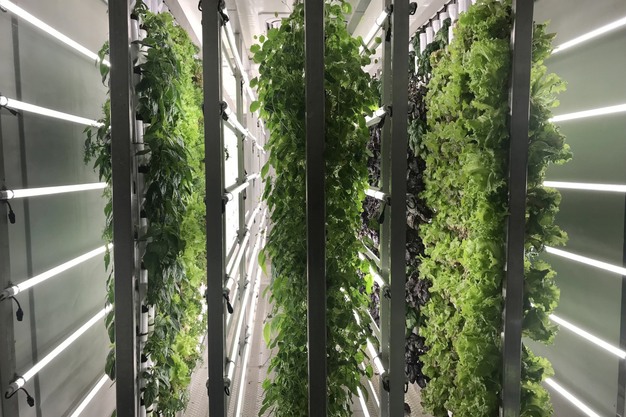
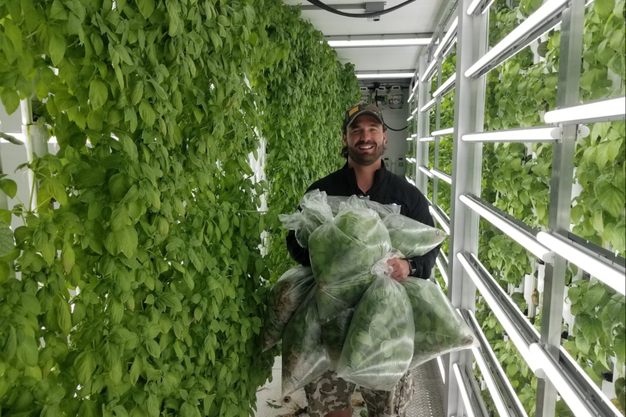
That was 2017. Jason had spent years in construction, built large-scale grow rooms around Denver, and had a biology degree collecting dust from a career pivot he'd made when the theory clashed with the practice of monthly bills. "At the time I was having a kid," he says. "Biology didn't pay the bills." But not all that's been done is useless; sometimes it takes a bit of time for meaning to sprout. That degree turned out to be more essential than he expected. FarmBox Foods takes pre-insulated shipping containers, outfits them with custom-fabricated vertical hydroponic systems and purpose-built electrical infrastructure, and ships them to customers across 12 industries. "Nothing is off the shelf," Jason explains. "The hydroponic system is designed specifically to fit the container footprint, and so is the electrical layout."
Very early on, Jason obsessed over these small and apparently insignificant details when designing the container farm prototype. The old biology degree was now supporting Jason's construction expertise, which was characterized by years of work on CEA build-outs. One was the main takeaway from those times: the ballgame is named efficiency. "In the leafy green world, you can only sell lettuce for so much," he says. "If you're paying a thousand a month in electricity, it's not worth your time." The result is a unit that runs on an average of 190 kilowatt hours per day. "That's kind of an ace in the hole for us." The cannabis industry, by contrast, didn't push him to think that way. "There was a boom, everybody was throwing cash without really thinking twice," he says.
Controlling a shipping container farm
When it came to controls and automation, Jason started from zero. He researched, made calls, and toured facilities. In 2017, the space was sparse, and most companies he approached weren't interested in a container farm to grow food rather than cannabis. "Cannabis guys didn't wanna touch it," he says. "You're not growing weed, this is not cool." What he was looking for was a company whose hardware actually matched the thought behind the software. When he found Agrowtek, something clicked. "The first thing that turned me on was how they designed and put their stuff together," he says. He ordered some parts, and in April 2018 flew out to Agrowtek's old Chicago location to meet the team in person. "Ever since then, it's had a proven track record. Minimal failure, great support, great products."
The relationship went both ways. FarmBox put Agrowtek's equipment through situations the company hadn't necessarily anticipated. "We really ran some of their parts through the ringer. We called them multiple times with things we wanted to do and they asked what we were even doing," Jason recalls with a laugh. "Agrowtek is proud to have a relationship with FarmBox since its inception and they continue to impress us with their innovation and growth over the years," says Mike from Agrowtek. "FarmBox pioneers both cultivation application and technology to the entire vertical farming sector. Their continued passion to find more ways to impact the food supply chain and find efficiencies for farmers is a testament to the people on their team and we are happy to be along for the ride."
More than ROI
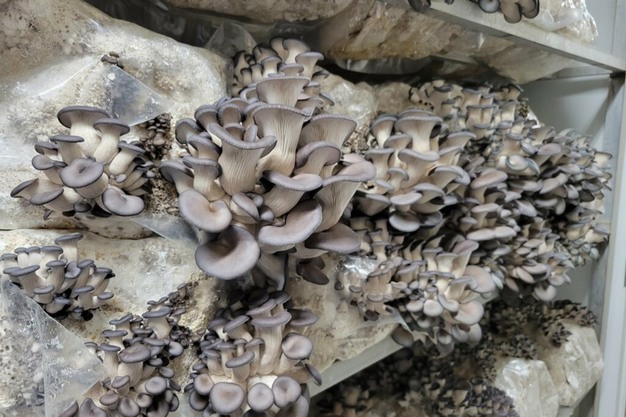
The product line has expanded since those early leafy green units. Two years in, Jason's FarmBox containers now even house mushroom farms. "The margins are very attractive, and a single unit yields around 350 pounds a week." That's not all, because containers are also being used for fodder systems and microgreen setups. Each purchase comes with a year of free post-deployment support. "We collaborate with individuals that never farmed before," says Chris Michlewicz, who oversees communications for the company.
 © FarmBox Foods
But if the versatility of these containers wasn't enough, Jason points out that their life span is another remarkable attribute. The first prototype, built in 2018, has been relocated multiple times and is still running. "Of all the farms we've manufactured, we don't have any shut down and abandoned units," Jason says.
 © FarmBox Foods
Farms are running in the Caribbean, in Canada, and in areas where supply chain access is a real problem. "When you are growing in a food desert, suddenly our farm doesn't look as daunting," says Chris with a chuckle. A container farm deployed at a school, he points out, could run for 20 to 25 years, and every student who passes through it is part of the return on investment," he concludes.
For more information: © Agrowtek
Agrowtek
3365 Gateway Rd, Brookfield, WI 53045
Phone: (847) 380-3009
Fax: (224) 538-2320
[email protected]
agrowtek.com

FarmBox Foods
www.farmboxfoods.com