


Gazipur Agricultural University hosted a workshop titled Innovative Automation for Speed Breeding and Sustainable Year-Round Crop Production through Agricultural Research in Controlled Environment at the university's old auditorium on Thursday. The workshop marked the formal launch of a transformative initiative in modern agriculture, said a press release.
The workshop aims to integrate advanced automation with controlled environment agriculture to accelerate crop breeding cycles and ensure sustainable, year-round production. The programme was implemented under the Higher Education Acceleration and Transformation project. GAU vice-chancellor Professor GKM Mustafizur Rahman attended as chief guest while Professor Mohammad Sharif Raihan, sub-project manager, presided over the session.
GAU pro-VC Professor M Moynul Haque and treasurer Professor Md Safiul Islam Afrad attended as special guests while Nasik Akkas, managing director of Sincos Group, joined as an industry partner at the workshop.
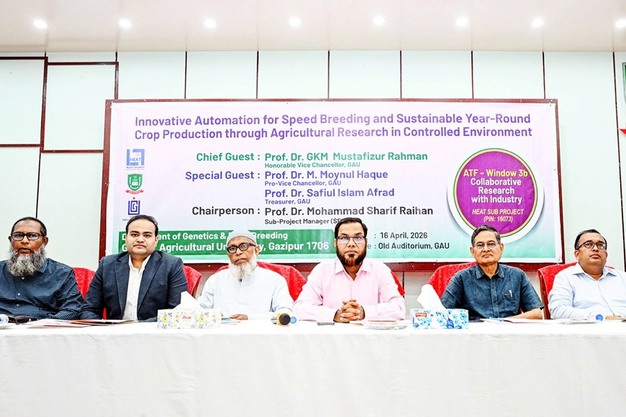 © Gazipur Agricultural University
The event brought together distinguished participants from leading agricultural research organisations and industry, including BARI, BRRI, BINA, Lal Teer, Supreme Seed, ACI Seed, East-West Seed and Paramount Agro, along with faculty members, researchers and students from GAU and other universities.
The programme began with a welcome address by associate sub-project manager Professor AKM Aminul Islam. Professor Sharif Raihan presented the keynote, outlining the project's objectives, planned activities and future roadmap.
An interactive questions and answers session followed, led by the vice-chancellor, where participants engaged in constructive discussions on the project's potential, challenges and opportunities to position GAU's research at national and international levels.
Emphasising that technology-driven agricultural research is no longer optional but essential, the VC highlighted that integrating automation with controlled environment agriculture would enhance productivity, efficiency and climate resilience, contributing significantly to food security.
Source: Gazipur Agricultural University